CSM accuses politicians, NGOs, and publications of campaigns to discredit justice / Judges denounce the "harassment" they would have been subjected to publicly, citing Lia Savonea as an example.


Always see our news on Google
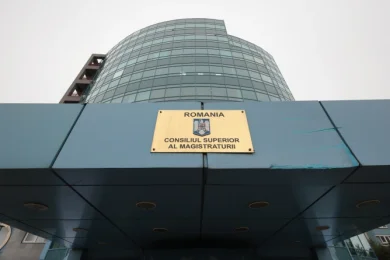
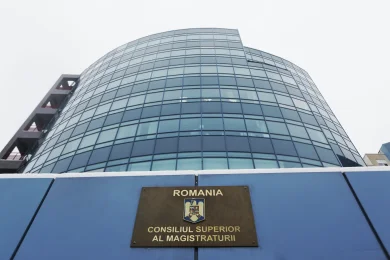
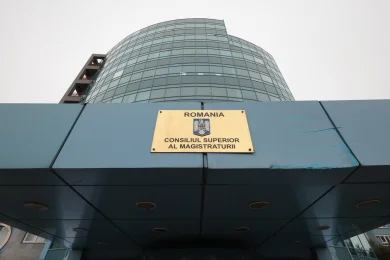
The Superior Council of Magistracy (CSM) has published a resolution in which it accuses politicians, NGOs, and media outlets of a "unprecedented" campaign to discredit justice in Romania and of "harassment" of judges, including members of the Council and the president of the High Court of Cassation and Justice, Lia Savonea, "through public requests for resignations" or "threats of disciplinary actions."
The document, drafted with the support of 3,580 judges, "denounces" attacks on the independence of justice and the "constant degradation of the rule of law" "through the sustained attempt to subordinate the judiciary to political power."
CSM makes a "list of guilty parties" that includes members of the former governing coalition, especially USR and PNL, and mentions names such as Dominic Fritz, Cristian Ghinea, Cătălin Teniță, and Ana Birchall or Ionel Stoica, the former investigative journalist who worked for Clotilde Armand at the Sector 1 City Hall. The dismissed Prime Minister Ilie Bolojan is also not forgotten from this list.
"The campaign was based on lies constantly repeated by one part of the coalition currently in power, especially by the political side under the authority and influence of the Prime Minister, their press vectors, as well as NGOs that traditionally affiliate with their messages," the resolution of the judges' section published by CSM shows.
Additionally, publications such as G4Media and Recorder are accused of disinformation.
Regarding the documentary "Captured Justice," CSM states that, "although it is well made from an artistic point of view," "this documentary constituted a new episode of the concerted campaign carried out recently against judges, aimed at discrediting them."
CSM emphasized that these campaigns have affected the reputation of the judicial system and called for the protection of judges' independence. Furthermore, CSM addressed the issue of the statute of limitations for criminal liability, arguing that many cases have been affected by the expiration of limitation periods during the criminal investigation phase.
"In public perception, the court has thus become the apparent holder of responsibility for the statute of limitations, although statistical analysis shows that this intervened, in reality, against the backdrop of the almost complete consumption of the term in the previous stage of judgment," the CSM resolution further states.
Sources


Latest News
22:56
22:47
22:28
21:57
21:23
See more news
NEWS ON THE SAME TOPICS