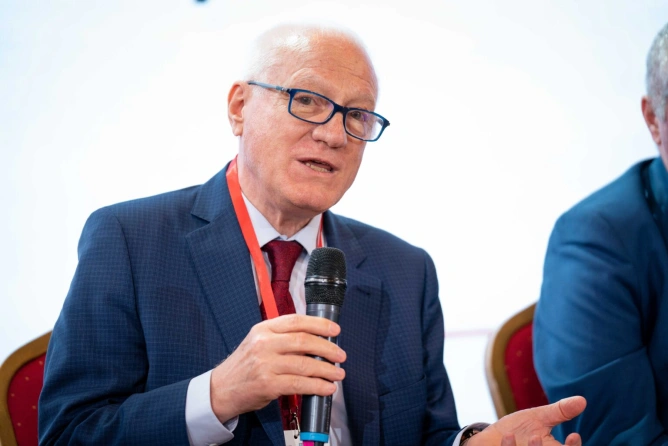
Bill Gates' predictions about the impact of AI on humanity



Always see our news on Google
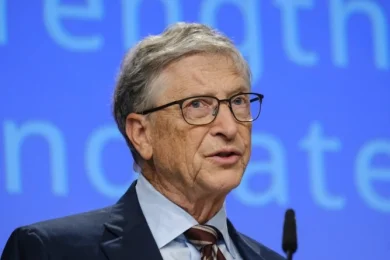
Artificial intelligence is entering a phase that will rapidly transform work, education, medicine, and administration. Bill Gates warns that the same technology could become either "the greatest equalizer" in history or a new source of injustice — and the decisions made now will set the direction of change.
A different revolution
In Bill Gates' vision, AI is not just a new stage of automation, comparable to the advent of the personal computer. Unlike previous technological revolutions, artificial intelligence can be rapidly adopted, operates on existing devices, and communicates in natural language. It does not require people to first learn a technical language, but adapts to users.
Gates believes that AI will come to perform tasks that involve vision, hearing, speech, reasoning, and ultimately, physical activity. For this reason, the impact will not be limited to a single domain but will traverse almost the entire economy: from customer service, law, and programming to medicine, manufacturing, and construction.
The author acknowledges that he has financial ties to the tech industry but asserts that his perspective is primarily motivated by concern for equity and for using AI for the benefit of vulnerable people.
The three major risks
The first risk is the disappearance of a significant number of jobs. Gates estimates that entry-level and mid-level positions will be affected first, especially in fields such as sales, customer service, programming, and paralegal legal work. Subsequently, automation could reach data analysis, credit approval, patient triage, and other tasks currently performed by trained employees.
Unlike past economic transformations, this transition could take place over a period of about a decade, not across several generations. New jobs will exist, but many will require hard-to-acquire skills, and their number may be smaller than that of the eliminated positions. Young people are particularly vulnerable as they will enter a job market with fewer entry-level positions.
Gates also warns about the combined effect of artificial intelligence and robots. As companies reduce costs through automation, competitors will be pressured to do the same. Without public policies, productivity gains could concentrate in the hands of a small group, while numerous communities would bear the social costs of unemployment and professional retraining.
The second risk involves the use of AI by malicious actors. The technology can facilitate fraud, misinformation, video and audio fakes, cyberattacks, or large-scale surveillance. The same tools that identify vulnerabilities to fix them can be used to exploit them.
Essential infrastructures — hospitals, banks, water and energy networks, or government systems — could become easier targets for attacks. Gates also includes the risk of bioterrorism: AI could accelerate both the development of vaccines and medicines, as well as the design of dangerous pathogens.
The third risk concerns child development and human relationships. AI assistants can always be available, polite, and adapt to user preferences. This very availability can create dependencies and deprive children of the difficult experiences through which they develop empathy, resilience, and social skills.
The author is also concerned that excessive use of AI in education could weaken critical thinking. In a period dominated by deepfakes and personalized misinformation, the ability to verify information becomes essential.
Benefits for millions of people
Gates does not advocate for the rejection of AI but for its deliberate and fair use. He sees major potential in scientific research, where models can analyze vast amounts of literature and identify patterns or promising experiments. Thus, the development of treatments, clean energy, and solutions for climate change could be accelerated.
Health is one of the fields with the fastest possible benefits. AI can assist hospitals that lack enough specialists, can detect strokes or other emergencies, can transcribe consultations, and can reduce the volume of administrative paperwork. Doctors could spend more time discussing with patients, and people could receive clearer explanations about tests and treatments.
In low-income countries, AI could partially compensate for the lack of medical staff. Gates mentions a partnership between the Gates Foundation and OpenAI, called Horizon 1000, which aims to support 1,000 primary healthcare clinics in Africa by 2028, starting with Rwanda. The stated goal is for AI to support healthcare professionals, not to replace them.
Agriculture is another field with transformative potential. Farmers in poor countries could receive better recommendations about weather, seeds, crop and animal diseases, or soil health. In the context of population growth and climate change, such tools could increase production and resilience in rural communities.
AI could also simplify access to public services. Applications for health insurance, social assistance, or scholarships are often too complicated for those who need them most. A digital assistant could explain procedures, fill out forms, and reduce waiting times.
In education, AI can personalize the pace of learning, identify students' difficulties, and give teachers more time for individual work. However, Gates insists that tools must be designed in such a way as to preserve "productive effort" — the process through which the student thinks and discovers the solution on their own, not just receives the answer.
A public plan, not just corporate
Bill Gates believes that technology companies cannot be the only ones to set the rules of the new era. Decisions must be made through a democratic process involving politicians, teachers, doctors, researchers, local leaders, employers, and employees.
He proposes building national institutions capable of coordinating the effects of AI on work, education, health, taxation, security, energy, and elections. In parallel, an international organization would be necessary to manage cross-border risks, following models such as nuclear inspection regimes, international aviation standards, or agreements to protect the ozone layer.
Cooperation between major powers, including the United States and China, would be indispensable. In Gates' opinion, rules must be established before geopolitical and economic pressures make collaboration impossible.
Jobs "reserved for humans"
One of the central ideas of the article is the creation of a domain called "Human Reserved" — activities deliberately kept for humans, even if robots or AI systems could perform them.
Gates' personal example is caring for his father, who has Alzheimer's. He argues that the empathy and ability of caregivers to understand the needs of a vulnerable person have a value that cannot be reduced to technical efficiency.
Some professions could be protected for economic reasons, to avoid massive layoffs, while others for moral reasons. In medicine, for example, a robot could deliver a devastating diagnosis, but Gates believes that such moments should remain, at least in certain situations, the responsibility of a human.
The limits of this domain should be established publicly and reviewed over time. They may vary from one country to another: a society with an aging population and few caregivers might more easily accept robots in elderly care.
Taxing robots and capital
To finance professional retraining and social protection, Gates reiterates the idea of a "robot tax" or a tax on the intensive use of AI. Currently, hiring a human generates payroll taxes, while purchasing a robot can be treated as a deductible expense. The tax system thus indirectly encourages the replacement of human labor with machines.
A well-designed tax could slow the transition and provide resources to support laid-off workers. Gates admits that the measure could reduce economic efficiency in certain cases, but argues that the social value of work justifies this cost.
The choice ahead
The message of Gates' analysis is one of cautious optimism. AI can accelerate medical discoveries, expand access to education, and reduce the costs of some services, but the benefits will not automatically reach everyone. Markets tend to reward profit, not necessarily equality.
That is why Gates calls for action before unemployment rises, communities are affected, and public trust erodes. He proposes new institutions, protecting certain human activities, rethinking taxation, and including in the debate those who will directly bear the consequences — workers, students, parents, teachers, community leaders, and religious organizations.
For Gates, the fundamental question is not whether AI will change the world, but who will decide how the change will occur and who will benefit from it. The future may bring unprecedented prosperity, but only if society uses its capacity to anticipate risks and act in solidarity.
Latest News
22:25
22:21
22:20
22:03
21:44
See more news
NEWS ON THE SAME TOPICS
.webp)
















.webp)