"Fjord", seen from new angles. A synthesis of reception.



Always see our news on Google
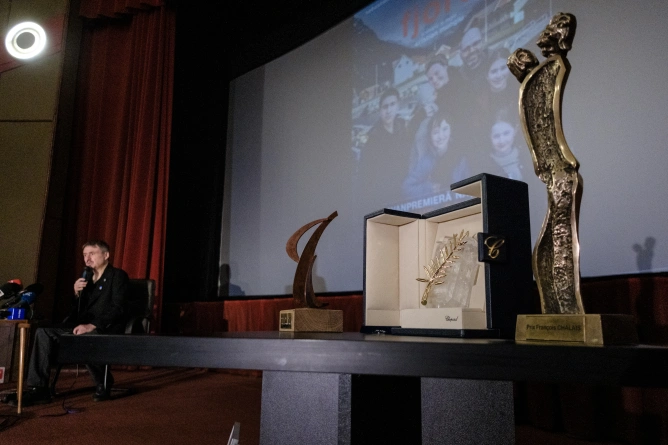
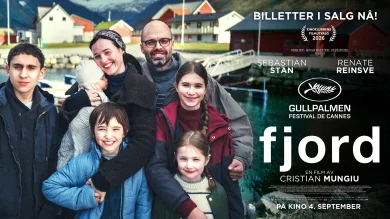
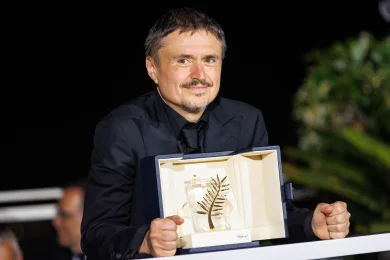
The preview of Cristian Mungiu's film Fjord brought full houses in the 52 locations and 90 cinemas where it was screened. The unique screening of a film about which everyone had an opinion before seeing it, through the international echoes of the awards from Cannes, where Mungiu received the Palme d'Or, was an extremely effective marketing method. Even without the screenings in the fall, when the film will officially be released, Fjord has already established itself as a leader of the Romanian box office.
Inspired by a real situation that polarized Romanian society for years and gave rise to the ultra-conservative pro-family movement, Fjord promised, through simple reenactment, to reactivate some latent tensions in society. Since the initial reports, after the film's presentation at Cannes, raised concepts like "woke," "progressivism," "conservatism," and "patriarchal communities" into discussion, many of those present at the flash screening on June 13 were drawn into the film's political agenda – or lack thereof.
Indeed, the impressions left by those present at the preview mainly reflect on the values of the message. And the constant is that almost all include the words "progressivism" and "conservatism."
Echoes
Film critic Andrei Gorzo conducted an extensive analysis published under the title "The Ideology of Cristian Mungiu." The article begins with "4, 3, 2," the film that established Mungiu and includes a selective filmography, which also includes "After the Hills," "Graduation," "R.M.N.," and "The Heist of the Century."
"Through a spokesperson character [...], Mungiu states his humanist-liberal creed: yes, he defended these conservatives (members of an unnamed Protestant sect in the film), because, in a progressive society, they constitute a minority that needs protection; if the society around them were conservative (the lawyer continues), their sympathy would lean towards the minorities there (as Mungiu's sympathy leans, in After the Hills, towards the lesbian at the monastery). If your principle is to always be on the side of the victims, you must be willing to question conservatism when everyone around you is conservative, but also to problematize progressivism when you are surrounded by progressives. Because the victims change, and the consensuses tend to secretly create a "the other" just ripe for demonization. [//] The justice of this principle can be debated. What is certain is that the act of ideological provocation committed by Mungiu in his name is not an opportunistic act."
Vasile Ernu
A much more engaged reading of the film is offered by writer Vasile Ernu in the article "IN THE NAME OF THE FATHER, THE SON, AND DIVERSITY — REPENT! Fjord by Cristian Mungiu and the never-ending culture wars." The article begins with a disclaimer in which Ernu states that he lived for a long time both in the conservative-religious-Protestant camp and in secular (progressive) society and that in both he is the "black sheep."
The analysis recalls Mungiu's statements, who refused to label the film as belonging to one of the two camps. "It is a film about what happens when two equally rigid value systems collide and neither has the capacity to see the person in front of them." However, Ernu observes that a director can control a film only until it is presented on screens. After that, the audience (and the film itself) takes on an active role.
"Films do not listen to their authors. Once released into the world, they produce effects that the script did not plan and emotions that the direction did not explicitly authorize. And Fjord — this is the starting point of the current analysis — produces a pro-family reading not because Mungiu wanted it, but because the dramatic architecture of the film could not produce anything else. Neutrality is technical. Sympathy is the effect. Between the two lies everything worth discussing." Read the article here
Remus Ioan Ștefureac
The social/political/cultural engagement of the film transforms it into a subject of interest not only for film critics and other artists but also for researchers in the social sciences. Sociologist Remus Ioan Ștefureac saw in the film a quasi-manifest centrist.
"An exceptional film that kept me engaged from start to finish, which is very, very rare lately. I went through all the states, I was both progressive and conservative, I felt both victim and judge. In the end, beyond the surgically dissected human story, I was left with the strongest centrist, balanced, simple, and human manifesto I have seen so far."
Antonio Momoc
Journalist and university professor Antonio Momoc experienced the film as a masterpiece.
"It's an Oscar film, one of the best I've seen in recent years. From the actors' performances to sound and image, from script and direction to editing and costumes, from intrigue to the gradual construction of suspense and tension.
No frame is filler, no dialogue is unnatural, nothing is forced just to introduce the mentioned contrasts. On the contrary.
You have conflict and division of profoundly different values: conservative community versus progressive society. You have the role of television and social media bubbles in inflaming and manipulating public opinion. You have civil partnership versus traditional family. Love and hate. Sympathy, friendship, and jealousy among teenagers. Rights, intolerance, and abuses against minorities. A modern state that wants to do good at any cost. A religious family that provides Christian education against the current and technological ascent. You have humor and drama, tragic and comic characters.
Actors Sebastian Stan and Renate Reinsve moved the audience to tears. Nothing is caricatured, nothing is thesis-driven, nothing is forced just to introduce the mentioned contrasts. The natural conviction of each person that the truth is with them and that the other is wrong shines through."
Cristian Preda
Political scientist and politician Cristian Preda, often labeled as "progressive" or even "radical progressive," chose not to interpret the film as a political document but as an artistic production:
"I really liked Fjord, Cristian Mungiu's latest film, awarded the Palme d'Or at Cannes. Just like in R.M.N., we have a picture of a community where the coexistence of people with different beliefs cannot avoid conflict. This time, it is no longer about Transylvania, but about Norway. A film rated 10!"
Ciprian Ciucu
The mayor of Bucharest, Ciprian Ciucu, has a similar interpretation:
"It is a profoundly humanist film: people struggling to determine their own lives according to their beliefs, but are brutally interrupted by well-meaning people (in their minds), but with different beliefs.
As I understood it, the film is about a dialogue of the deaf. A dialogue that grows in intensity, a dialogue in which suffering is ignored (in the name of one's own values) by a state lost in procedures and personified even by members of the community. Refractory, like any state, to alterities, which it only claims to accept on official days dedicated to the Sami indigenous people."
Andra Nistor
From the perspective of a spectator, blogger Andra Nistor, who writes about marketing, cars, and experiences, was not as impressed by the film.
"For me, who lived in a family with violence as a daily occurrence, it was not a strong, impactful film that shows the reality of the Romanian mentality. I admit I would have preferred a stronger film, not an average, static one."
Arthur Suciu
The case that inspired the film provoked public protests at the time in Suceava. The protagonists were locals. Tickets for the film inspired by that case sold out faster than in other places. Writer Arthur Suciu saw the film there:
"Cristian Mungiu applied an unforgiving gaze ethic, which risks taking the film out of the artistic sphere (with all the strange frames of the north and the fjord), but it is inevitable, considering the theme of the film. It is inevitable, yet somewhat didactic. The director offers us a lesson on how we should see things. In my opinion, the marks of humanity, which oppose people with fixed eyes, are humor, the act of making mistakes, inconsistency, the act of not taking everything seriously. To be crazy means to be perfectly coherent ideologically. [In the film,] only one scene has humor (the breathing course for controlling anger), the rest is a structured analysis of two psychopathy, which even end up swapping places, progressivism becoming Nazism, and conservatism, a neoprotestant quibble. If love wins, as Christians say, it is still about a love between two girls, as progressives would have it. Still, love is important, however it may be, because only it truly saves us from psychopathy, regardless of its political color."
And Arthur Suciu's conclusion is that: "In Fjord, Cristian Mungiu tries with all his might to find a foundation for ethical values. We, who have studied philosophy, already knew that this is impossible."
Oltița Cîntec
The theater critic Oltița Cîntec prefers to interpret Cristian Mungiu's film not as a finished product but as an invitation to reflection and debate:
Mungiu's FJORD is, beyond the real case it fictionalizes, about the harmfulness of societal/familial excess in all its forms, about the need for balance. It is a film that simply obliges debate, a personal, internal debate with yourself/yourself, then with others who think like you or completely differently. The artistic team has delivered the material to us (the structure of the script, the filming, the editing are extremely rigorous, a compositional architecture built on symmetries, one might say mathematical, wrapped in images laden with layered metaphor), treats us as equal partners through reception, subtly transferring to us the "obligation" to question ourselves, to think. To believe in values without becoming blind, without radicalizing ourselves.
Many of these reactions are warm, minutes or hours after leaving the screening room. The film will continue to have echoes and reverberations.
More than any other recent production, cinematic or literary, Mungiu's film has probably hit the most painful nerve of contemporary Romania. Not only because that case in Norway captured attention for weeks in a row during that period. Not only because its core, the intrinsic violence of patriarchal society, proves to be, for many Romanians, a true object of intangible heritage. And not only because in Romania, more than in other countries, we know what it means to confront a robotic and absurd administration.
Latest News
23:00
22:55
22:47
22:39
22:33
See more news
NEWS ON THE SAME TOPICS
.webp)
.webp)