The suspension that WILL NOT take place
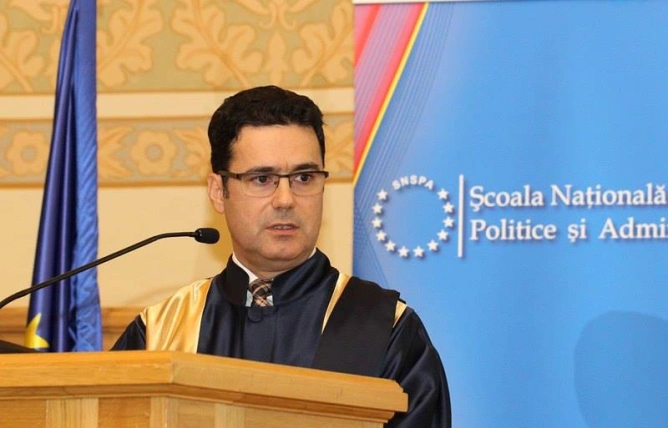
Remus Pricopie, revistacultura.ro


Opinions
Foto SNSPA

Always see our news on Google
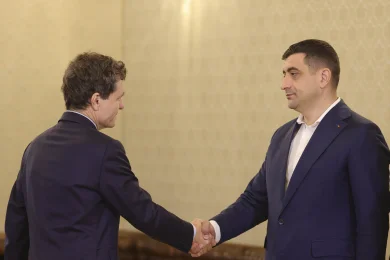
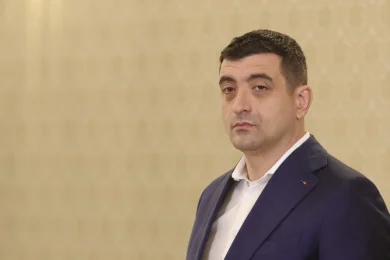
George Simion obsessively reiterates the theme of suspending the President of Romania.
He did it during Klaus Iohannis's term, repeated it during Ilie Bolojan's interim period, and continues to do so today, when Nicușor Dan is at Cotroceni. For him, it does not matter who the president is. What matters is to have a symbolic opponent against whom a new wave of indignation can rise. Thus, the suspension becomes not a constitutional act, but a rhetorical mechanism meant to produce distrust and fuel a perpetual opposition.
In reality, the theme has no legal basis. The constitution does not provide reasons for such a discussion, and none of the accusations circulated by Simion – from "coup d'état" to the president's "medical issues" – have factual support. For the AUR leader, however, facts do not matter, but the emotional effect. He relies on collective distrust, on the exhaustion of public discernment, on the ability to turn any political episode into a crisis. Instead of reason, he proposes a state of continuous tension.
This is, in fact, the strategy of controlled chaos, a formula that the Kremlin has perfected over the last decade and a half in the Euro-Atlantic space: destabilization not through force, but through confusion. It started with BREXIT. It continued with ALL other Western capitals, including Washington, D.C. Serious reports – some of them debated in national parliaments – reveal these things. The techniques are always "carbon copies." The idea that institutions are compromised is insinuated, it is repeated daily that the state is captured, it is suggested that no one has moral authority anymore. When people begin to believe that everything is corrupt, no one defends democracy anymore. In this sense, the suspension of the President of Romania is not Simion's goal, but the tool through which he keeps Romania in a state of symbolic agitation. It is the way he cultivates a sense of collective insecurity, presenting himself as the only defender of the "betrayed" people.
This form of opposition, increasingly visible in Europe in recent years, is not only populist but toxic – an opposition ideologically fueled and, at times, financially supported by the Kremlin. For years, infiltrated or influenced politicians by Russian networks in Western states were considered "negligible cantons": eccentric, marginal figures, without real impact. Today, however, all major democracies – including the United States – understand the real risk: by confiscating the opposition discourse, Moscow is not only seeking chaos but also seizing power through subversive means, discrediting institutions and weakening democratic cohesion. The case of Romania, especially through the episode of Călin Georgescu, has become an eloquent example of this strategy.
But beyond George Simion's rhetoric regarding the suspension of President Nicușor Dan, there is also a more concrete explanation, a fear that accelerates the extreme positions of the "opposition leader." More and more information shows that Romanian authorities have begun to investigate the funding of the electoral campaigns for 2024 and 2025, including external money transfers, contracts for influencers, and hard-to-justify digital promotion networks. In this context, Simion's discourse takes on a defensive function: he feels "the fly on the wall" and is preparing the ground for victimization. If investigations advance, he will say he is "victimized by the system"; if evidence emerges, he will talk about "political repression." In both cases, he will try to turn the truth about money into a secondary subject, covered by the noise of his accusations.
The parallel with Călin Georgescu is inevitable. Recently, the press reported that judicial authorities have established three international rogatory commissions to trace the flow of money used in Georgescu's electoral campaign. Financial flows from four countries, suspicious accounts, and transfers are being verified, in a context where the presidential administration has already confirmed the existence of a digital infrastructure created in Russia for his online promotion. Georgescu's campaign, based on fake networks and anti-Western messages, shows exactly how a hybrid influence mechanism works.
Simion has every reason to be uneasy. The Georgescu case shows that money and networks can become evidence, not mere assumptions. And the link between radical discourse and opaque funding sources is no longer speculation but an investigative hypothesis. Both leaders come from the same ideological soil – anti-European, anti-rational, anti-institutional – and use the same legitimizing mechanisms: theatrical nationalism, instrumentalized religion, and victimization in the face of the "globalist system."
In fact, what brings them closer is the contempt for truth and – very likely – the same "sponsor" from the East. For Georgescu, the "theopolitical war" is a metaphor meant to justify ideological delirium; for Simion, the "coup d'état" is the perfect pretext to avoid uncomfortable questions. In both cases, the "moral" noise covers the financial reality.
Romania is currently facing a new type of populism: a populism with transnational financial infrastructure, which uses nationalist emotion as a cover for hidden influence operations and funding. It is no longer just about extremist discourse, but about a sophisticated mechanism of disinformation, manipulation, and socio-political sabotage. The only democratic way to counter this pro-Russian and anti-Western political assault, methodically built by the Kremlin over the last 15 years, is NOT censorship, but the development of networks and financial instruments that support them. And in this picture, the circuit of illegal money represents the clearest evidence. Public data shows that the Romanian State is seriously working on this chapter, strengthening international cooperation in investigating illegal campaign financing – an endeavor that inevitably sends shivers down the spines of "patriots" of dubious integrity. It will not be easy, it will take time, but it will happen.
George Simion, in the logic of the hybrid war carefully orchestrated by the Kremlin, has never been considered to govern, but to destabilize. In fact, in October-November 2024, the Kremlin started the subversive engines of support and electoral promotion for Călin Georgescu, not for Simion. George Simion's role has always been that of a "socio-political guerrilla," a kind of political Al Capone, present on the political scene by day, but very "efficient" at night, in actions undermining the democratic foundation of Romania. It seems he has been trained for a long time, to no longer have any sense of ridicule, nor respect (or fear) for legal norms. He has never sought political balance, but political distrust. His tools have never been arguments, but scandal. I am not sure he understands that when you play with Russia against your own people, you cannot be a winner. It is enough to read a little history to find this out.
George Simion's current unease, however, is linked to how Romanian authorities relate to Călin Georgescu. The Georgescu case shows that chaos, lies, illegal funding, and subversive actions can be identified and surgically removed from our democratic life. There is a moment when electoral fiction collides with documents, and the noise of evidence. The truth does not disappear, even if the moment of its revelation is sometimes delayed by judicial procedures.
In this picture, we better understand all the delirious statements coming from George Simion, including on the topic of "suspending the president." Most likely, in the coming months we will witness NOT a suspension of the President of Romania, but a suspension of the illusions that pro-Russian elements have cultivated so skillfully, but without reaching to reap the "fruits" of their labor. The decision of the Romanian Constitutional Court on December 6, 2024, to annul the presidential elections has ruined a plan that had been worked on for many years and with a lot of money. And now the moment of the "financial audit" has come. Romanian prosecutors, in collaboration with prosecutors from other Western states, are about to clarify who illegally finances political radicalism in Romania (but not only) and for what purpose. And financial crimes can have a wide range of actions, very well described by the Penal Code.
The rest is noise – and noise, no matter how loud, is never the truth.
PS: The reference to Al Capone is not coincidental.
He did it during Klaus Iohannis's term, repeated it during Ilie Bolojan's interim period, and continues to do so today, when Nicușor Dan is at Cotroceni. For him, it does not matter who the president is. What matters is to have a symbolic opponent against whom a new wave of indignation can rise. Thus, the suspension becomes not a constitutional act, but a rhetorical mechanism meant to produce distrust and fuel a perpetual opposition.
In reality, the theme has no legal basis. The constitution does not provide reasons for such a discussion, and none of the accusations circulated by Simion – from "coup d'état" to the president's "medical issues" – have factual support. For the AUR leader, however, facts do not matter, but the emotional effect. He relies on collective distrust, on the exhaustion of public discernment, on the ability to turn any political episode into a crisis. Instead of reason, he proposes a state of continuous tension.
This is, in fact, the strategy of controlled chaos, a formula that the Kremlin has perfected over the last decade and a half in the Euro-Atlantic space: destabilization not through force, but through confusion. It started with BREXIT. It continued with ALL other Western capitals, including Washington, D.C. Serious reports – some of them debated in national parliaments – reveal these things. The techniques are always "carbon copies." The idea that institutions are compromised is insinuated, it is repeated daily that the state is captured, it is suggested that no one has moral authority anymore. When people begin to believe that everything is corrupt, no one defends democracy anymore. In this sense, the suspension of the President of Romania is not Simion's goal, but the tool through which he keeps Romania in a state of symbolic agitation. It is the way he cultivates a sense of collective insecurity, presenting himself as the only defender of the "betrayed" people.
This form of opposition, increasingly visible in Europe in recent years, is not only populist but toxic – an opposition ideologically fueled and, at times, financially supported by the Kremlin. For years, infiltrated or influenced politicians by Russian networks in Western states were considered "negligible cantons": eccentric, marginal figures, without real impact. Today, however, all major democracies – including the United States – understand the real risk: by confiscating the opposition discourse, Moscow is not only seeking chaos but also seizing power through subversive means, discrediting institutions and weakening democratic cohesion. The case of Romania, especially through the episode of Călin Georgescu, has become an eloquent example of this strategy.
But beyond George Simion's rhetoric regarding the suspension of President Nicușor Dan, there is also a more concrete explanation, a fear that accelerates the extreme positions of the "opposition leader." More and more information shows that Romanian authorities have begun to investigate the funding of the electoral campaigns for 2024 and 2025, including external money transfers, contracts for influencers, and hard-to-justify digital promotion networks. In this context, Simion's discourse takes on a defensive function: he feels "the fly on the wall" and is preparing the ground for victimization. If investigations advance, he will say he is "victimized by the system"; if evidence emerges, he will talk about "political repression." In both cases, he will try to turn the truth about money into a secondary subject, covered by the noise of his accusations.
The parallel with Călin Georgescu is inevitable. Recently, the press reported that judicial authorities have established three international rogatory commissions to trace the flow of money used in Georgescu's electoral campaign. Financial flows from four countries, suspicious accounts, and transfers are being verified, in a context where the presidential administration has already confirmed the existence of a digital infrastructure created in Russia for his online promotion. Georgescu's campaign, based on fake networks and anti-Western messages, shows exactly how a hybrid influence mechanism works.
Simion has every reason to be uneasy. The Georgescu case shows that money and networks can become evidence, not mere assumptions. And the link between radical discourse and opaque funding sources is no longer speculation but an investigative hypothesis. Both leaders come from the same ideological soil – anti-European, anti-rational, anti-institutional – and use the same legitimizing mechanisms: theatrical nationalism, instrumentalized religion, and victimization in the face of the "globalist system."
In fact, what brings them closer is the contempt for truth and – very likely – the same "sponsor" from the East. For Georgescu, the "theopolitical war" is a metaphor meant to justify ideological delirium; for Simion, the "coup d'état" is the perfect pretext to avoid uncomfortable questions. In both cases, the "moral" noise covers the financial reality.
Romania is currently facing a new type of populism: a populism with transnational financial infrastructure, which uses nationalist emotion as a cover for hidden influence operations and funding. It is no longer just about extremist discourse, but about a sophisticated mechanism of disinformation, manipulation, and socio-political sabotage. The only democratic way to counter this pro-Russian and anti-Western political assault, methodically built by the Kremlin over the last 15 years, is NOT censorship, but the development of networks and financial instruments that support them. And in this picture, the circuit of illegal money represents the clearest evidence. Public data shows that the Romanian State is seriously working on this chapter, strengthening international cooperation in investigating illegal campaign financing – an endeavor that inevitably sends shivers down the spines of "patriots" of dubious integrity. It will not be easy, it will take time, but it will happen.
George Simion, in the logic of the hybrid war carefully orchestrated by the Kremlin, has never been considered to govern, but to destabilize. In fact, in October-November 2024, the Kremlin started the subversive engines of support and electoral promotion for Călin Georgescu, not for Simion. George Simion's role has always been that of a "socio-political guerrilla," a kind of political Al Capone, present on the political scene by day, but very "efficient" at night, in actions undermining the democratic foundation of Romania. It seems he has been trained for a long time, to no longer have any sense of ridicule, nor respect (or fear) for legal norms. He has never sought political balance, but political distrust. His tools have never been arguments, but scandal. I am not sure he understands that when you play with Russia against your own people, you cannot be a winner. It is enough to read a little history to find this out.
George Simion's current unease, however, is linked to how Romanian authorities relate to Călin Georgescu. The Georgescu case shows that chaos, lies, illegal funding, and subversive actions can be identified and surgically removed from our democratic life. There is a moment when electoral fiction collides with documents, and the noise of evidence. The truth does not disappear, even if the moment of its revelation is sometimes delayed by judicial procedures.
In this picture, we better understand all the delirious statements coming from George Simion, including on the topic of "suspending the president." Most likely, in the coming months we will witness NOT a suspension of the President of Romania, but a suspension of the illusions that pro-Russian elements have cultivated so skillfully, but without reaching to reap the "fruits" of their labor. The decision of the Romanian Constitutional Court on December 6, 2024, to annul the presidential elections has ruined a plan that had been worked on for many years and with a lot of money. And now the moment of the "financial audit" has come. Romanian prosecutors, in collaboration with prosecutors from other Western states, are about to clarify who illegally finances political radicalism in Romania (but not only) and for what purpose. And financial crimes can have a wide range of actions, very well described by the Penal Code.
The rest is noise – and noise, no matter how loud, is never the truth.
PS: The reference to Al Capone is not coincidental.
Latest News
22:57
AI companies and chipmakers lose more than $1 trillion amid concerns over financing
22:46
Salvamont rescuers are warning drivers and tourists after snow began falling on the Transfăgărășan and in Poiana Brașov
22:39
The Niculescu Government proposes exempting mothers from paying CASS and maintaining the child-rearing allowance after returning to work
22:25
Niculescu Government targets a deficit below 3% of GDP by 2030 / Spending, tax evasion and revenue collection are priorities
21:55
The government proposed by Luca Niculescu wants to attract a strategic investor to TAROM in 2027, including for a majority stake
See more news
NEWS ON THE SAME TOPICS

Personalized news feed, AI-powered search, and notifications in a more interactive experience.