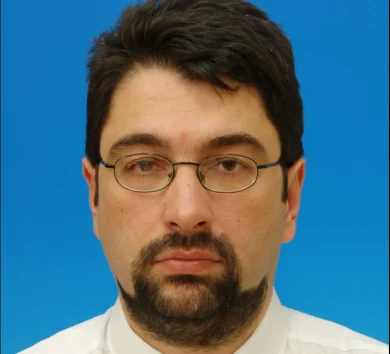
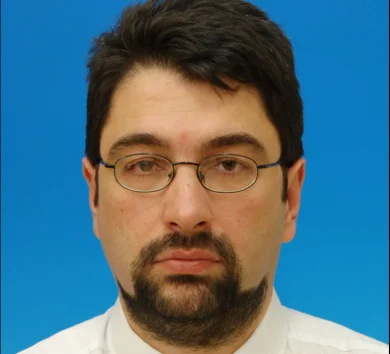
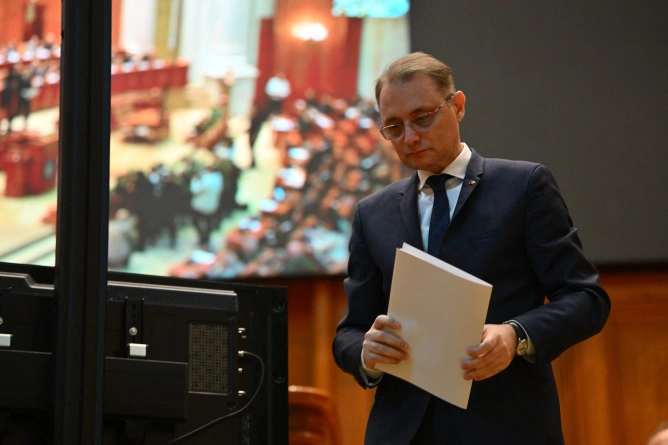
Sever Voinescu, Dilema.ro: "the civilization of screens has not brought any moral progress"




Always see our news on Google
In the last century, the unfortunate century from which I come, Romanians had a certain respect for the "educated man", that is, for the learned man, for the man who had gone through schools. One could say that one of the most important and influential traits of popular culture, in its broadest, anthropological, even folkloric sense, was the respect of the uneducated man or less educated man for books, for the more educated man. Every Romanian, from the academician to the broom maker with four classes, believed it was important to have an education and to positively, respectfully value educated people. Back then, having an education meant a certain social status, somewhat superior, and legitimate because the mechanism that generated it was as normal as possible: the child/teenager learned (that is, made an effort), graduated from increasingly higher forms of education (that is, passed increasingly difficult exams and fulfilled increasingly strict requirements), and then had a job commensurate with that education (that is, had a job with great responsibility). The more education one had, the more responsibilities one bore, and consequently, the higher the expectations of everyone were. Generally, but not always, this job commensurate with education, obtained after the effort of learning and passing exams, involved "leading people". Not everyone got to lead people, and the number of people one had to lead was directly proportional to one's education – more education meant more people to lead. On the other hand, certain professions, for which passing through difficult schools was required, such as those of doctor, lawyer, mathematics teacher, airplane engineer, etc., brought with them social respect, regardless of whether they were or were not associated with an administrative rank (for example, hospital director or court president or school or factory director).
This status was obtained, legitimately, precisely through the effort of learning proven by the multitude of exams. Those who learned more, better, more diligently received the laurels of social recognition. I anticipate the reactions of the recent ones, so I specify immediately: social respect did not guarantee the character of the man, his morality or his good sense, and yes, there were impostors back then too, people with connections, sinecures, as they always are. Still, the social recognition of those who, learning, knew more functioned as a mechanism of social order imposed by no formal authority, but imposed by the authority of a tradition. Self-taught individuals, those who had come to "have education" coming from disadvantaged backgrounds, those who reached the performance of higher schools despite starting from disadvantaged situations – in these cases, it was assumed that the person had made an extra effort to compensate for the "disadvantages at the start", so the respect was even more reverent.
In general, children were encouraged by their families, even by families that were barely literate, to go "to school", to "learn books". Teachers were respected and had extra credit in case of a conflict of testimonies (for example, if one said the child had misbehaved, another said the teacher, generally the teacher's voice had more credibility and serious evidence was required for the child to be believed against the teacher). Simply put, the teacher was respected and his authority was recognized in his classroom, precisely because he knew more, he had education. Well, this kind of social respect for educated people no longer exists today.
Social antipathies existed, of course, before. But they were, for the most part, somewhat like those of today: the poor despised the rich who, in turn, despised the poor, the weak socially envied the strong, and the strong abused the weak; hypocrisy, arrogance, cheating were seen as bad, just as they are now. As I said before, the moral sense of the community was not fooled by diplomas and studies – it was known that higher studies said nothing about character and morality.
Today, social status has no connection with "education", with how much school you have done or how much you know. In general, parents are no longer so interested in seeing their children knowing books, but in graduating from certain schools. They no longer want them to be knowledgeable, they want them to be resourceful; they no longer want them to be knowledgeable, they want them to be skilled. Those who know nothing feel no inferiority complex in front of those who know, being uneducated is no longer a reason for shame. This is not just a change, it is, as Mr. Andrei Pleșu said in an interview to be put in a frame, a mutation. Not only have people and society changed – that is natural and always predictable – but in a very short time, another human species has simply appeared. It has other benchmarks, other criteria, it functions with other stimuli. If generational changes were, until now, changes in understanding and defining benchmarks and in the nature of reactions to the same stimuli, this time we simply have other benchmarks and other stimuli. There will always be those who will not agree with me. I will be told that it is not so, that I am incapable of understanding the newer ones. Still, I believe that those from my generation who claim to understand them and know the recent ones overestimate themselves.
The major difference induced by the mutation I refer to is generated by the relationship with the screen. Practically, I belong to the last generation that, although fascinated by screens, can live without them. After my generation, I do not believe there are people who can live without screens.
It is hard to say whether the new type of human, dependent on screens, is better or worse – and the new people (the recent ones, as I often call them under the inspiration of the great thinker Horia-Roman Patapievici) are capable of doing good and doing evil just like the people among whom I grew up, older or those of my age. What is certain is that the civilization of screens has not brought any moral progress. But perhaps it never intended to. The mutation places the recent ones in a different relationship with reality, and it is about a relationship of knowledge. The screen has become more than just a teacher, confessor, and source of any knowledge that guides the recent one through the maze of the world, it has become the God of the recent. The disappearance of respect for "book knowledge" is the profound effect that completely changes the data of our civilization.
Some have been content to describe this change as a transition from Gutenberg to pixels. A good formula, but I fear it is superficial, as the mutation is not just a change of a logistical order, it is not just the replacement of the library with the cloud, it is not just the transition of the book into an online format. The mutation is indeed the death of the library and the book as a civilizing factor. From here, the uselessness. From here, the disappearance of respect for educated people. If anyone has a screen, it means that anyone knows or can easily know. The effort of learning thus becomes unnecessary. If back in my youth it was still said that whoever has education has a share, now anyone has a share. It is enough to have a screen. And who does not have a screen?
Latest News
22:59
22:55
22:44
22:40
22:40
See more news
NEWS ON THE SAME TOPICS