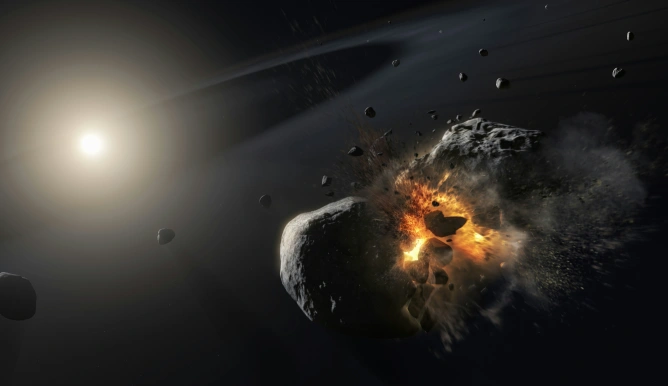
The samples from the asteroid Ryugu contain all the building blocks of DNA and RNA, suggesting that the essential elements for life are abundant in the Solar System.



Always see our news on Google
The samples collected from the asteroid Ryugu, brought to Earth by the Japanese spacecraft Hayabusa-2, contain all the nitrogenous bases necessary for the formation of DNA and RNA, including uracil, adenine, guanine, cytosine, and thymine. These findings suggest that the fundamental elements for life are widespread in the Solar System. The study, published in the journal Nature Astronomy, highlights the importance of primitive asteroids in preserving essential molecules for prebiotic chemistry.
Although it is not proven that life existed on Ryugu, the presence of these bases supports the hypothesis that carbon-rich asteroids contributed to the chemical inventory of early Earth. Compared to other extraterrestrial samples, researchers observed differences in the proportions of nitrogenous bases, suggesting distinct chemical histories. The discoveries have significant implications for understanding the formation of biological molecules in the Universe.
Sources


Latest News
22:56
22:53
22:47
22:45
22:38
See more news
NEWS ON THE SAME TOPICS