A recent study shows that the Earth's magnetic field efficiently transfers particles to the Moon, suggesting that it could function as a natural archive of the evolution of the Earth's atmosphere.
Raluca Ioana Draghici


IT&C knowledge
www.shutterstock.com

Always see our news on Google
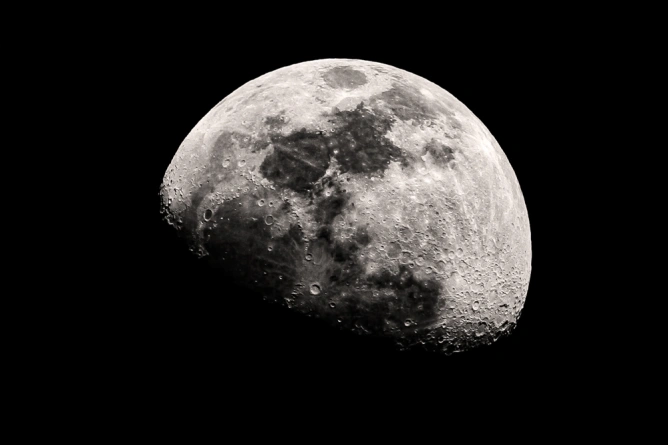
A new study published in the journal Nature Communications Earth & Environment, conducted by astrophysicists from the University of Rochester, provides surprising evidence about the Earth's magnetic field and its impact on the Moon. The study analyzes the unexpectedly high abundance of volatile elements, such as nitrogen and oxygen, found in lunar regolith, which cannot be explained solely by micrometeorite impacts or solar wind.
Researchers compared an early Earth, without a magnetic field, to a modern Earth, with a strong magnetic field. The results suggest that the Earth's magnetic field transfers particles to the Moon more efficiently than previously thought. The study contradicts the idea that the magnetosphere completely blocks atmospheric loss, showing that solar wind can displace particles from the terrestrial atmosphere, which are then guided towards the Moon.
This process, which has been occurring for about 3.5 billion years, suggests that the Moon could be a natural archive of the evolution of the Earth's atmosphere. The discovery opens new research directions for future lunar missions, which could analyze lunar regolith to reconstruct the history of the terrestrial environment.
Researchers compared an early Earth, without a magnetic field, to a modern Earth, with a strong magnetic field. The results suggest that the Earth's magnetic field transfers particles to the Moon more efficiently than previously thought. The study contradicts the idea that the magnetosphere completely blocks atmospheric loss, showing that solar wind can displace particles from the terrestrial atmosphere, which are then guided towards the Moon.
This process, which has been occurring for about 3.5 billion years, suggests that the Moon could be a natural archive of the evolution of the Earth's atmosphere. The discovery opens new research directions for future lunar missions, which could analyze lunar regolith to reconstruct the history of the terrestrial environment.
Sources


Latest News
23:03
German trade unions denounce abuses on farms in the state of Hesse, where many Romanian seasonal workers work up to 12 hours a day without being paid properly
22:44
Dominic Fritz: “Many of Nicuşor Dan’s voters tell us that they are disappointed”
22:40
The Foreign Ministry warns of traffic restrictions and diversions in Belgrade on October 22
22:37
Meta receives a record $25 billion fine / Judge accuses company of misleading the public
22:34
Kallas: The EU and Turkey support an arrangement for freedom of navigation in the Black Sea
See more news
NEWS ON THE SAME TOPICS
Current Affairs
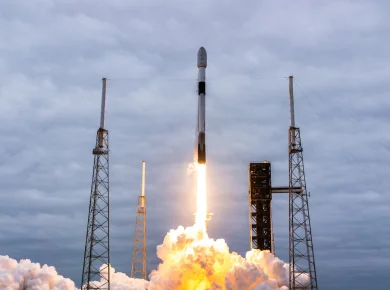
A SpaceX rocket will collide with the Moon/ The impact will provide research opportunities on the lunar composition
IT&C knowledge
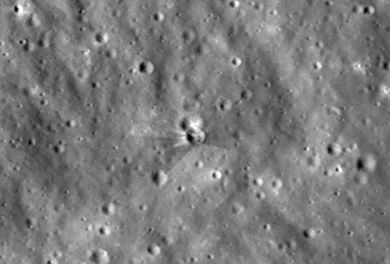
NASA has confirmed that a higher stage of a SpaceX rocket crashed on the Moon, leaving behind a crater.
IT&C knowledge
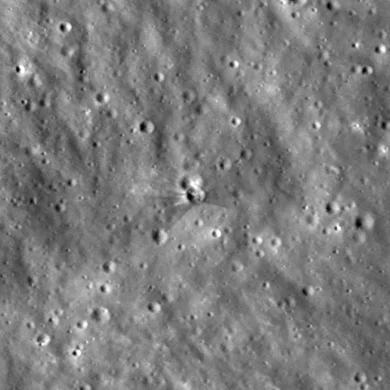
PHOTO │ NASA has published images of the crater formed by the impact of a SpaceX rocket with the Moon

Personalized news feed, AI-powered search, and notifications in a more interactive experience.