DOC/ The jellyfish that refuses to age and its lessons for regenerative medicine



Always see our news on Google
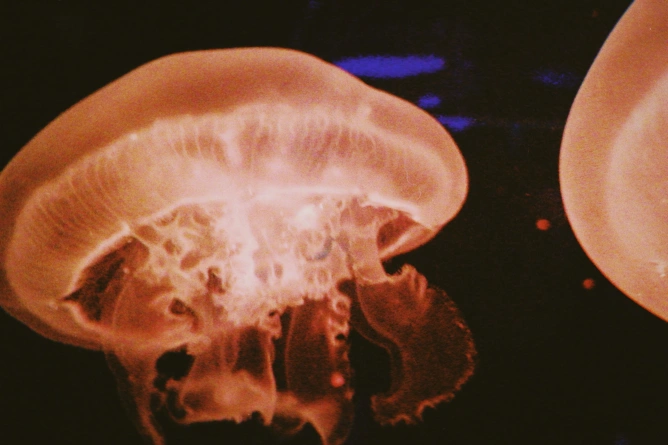
In the depths of the sea lives Turritopsis dohrnii, a jellyfish just a few millimeters long that can revert to an early stage of life when it is injured or subjected to stress. It is not invulnerable and not impossible to kill, but it has a rare ability in the animal world: it can "reset" its development and avoid death caused by aging.
In a world where aging seems inevitable, a nearly transparent jellyfish offers researchers one of the most unusual mysteries of biology. Turritopsis dohrnii, popularly known as the "immortal jellyfish," can do what seems impossible: after reaching maturity, it reverts to a juvenile form and resumes its life cycle.
A step back in time
The life of this jellyfish begins, like that of other jellyfish, as a microscopic larva. The larva attaches to the sea floor and transforms into a polyp, a form resembling a marine plant. From the polyp, the adult jellyfish develops, capable of reproduction.
In Turritopsis dohrnii, the process does not end here. When it is injured, starved, or exposed to difficult conditions, the adult jellyfish can transform into a cyst-like structure, reattach, and revert to the polyp stage. From there, the development cycle starts again.
It is as if an adult butterfly could revert to the caterpillar stage and then transform back into a butterfly. Biologists call this process transdifferentiation: mature cells change roles and form other types of cells, suitable for an earlier stage of life.
Immortality, but not invincibility
The term "immortal jellyfish" can be misleading. The animal can die if eaten by a predator, affected by a disease, or destroyed by environmental conditions. What makes it special is the fact that, in theory, it can repeat the return to the juvenile stage multiple times, avoiding biological aging.
Therefore, we are not talking about a creature that cannot die, but about one that seems not to be obliged to follow the usual life path: birth, maturation, aging, and death.
What researchers have discovered
In a study published in the journal Proceedings of the National Academy of Sciences, researchers analyzed the jellyfish's genome and compared it to that of a closely related species, Turritopsis rubra, which does not seem to have the same rejuvenation ability.
The results indicate several genetic peculiarities that could contribute to the jellyfish's ability:
more efficient mechanisms for copying and repairing DNA;
better protection against cellular damage;
the ability to better maintain telomeres, the structures at the ends of chromosomes;
activation of genes involved in reorganizing and changing cell identity.
In humans and many other animals, telomeres gradually shorten as cells divide. This phenomenon is associated with cellular aging. In the case of the jellyfish, the way these mechanisms are controlled could explain, at least in part, why its body can revert to an earlier stage.
Why it interests humans
Researchers are not looking for a magic recipe for eternal life. The biology of a jellyfish cannot be directly transferred to humans, and there are huge differences between the two species. However, its study may help in understanding how cells repair DNA, change function, and resist degradation.
This information could, over time, be relevant for regenerative medicine and research on diseases associated with aging. For now, however, scientists are trying to decipher the mechanism, not to turn it into a treatment.
A lesson about adaptation
The secret of the jellyfish lies not only in genes but also in how it reacts to crisis. When the environment becomes hostile, it does not simply continue to age, but reorganizes its body and reverts to a simpler form.
In this sense, Turritopsis dohrnii is not just a symbol of "immortality," but also a spectacular example of adaptation. The small jellyfish shows us that, in nature, survival does not always mean resisting unchanged, but sometimes having the ability to completely transform.
Documentary made with the support of Perplexity
Latest News
22:52
22:51
22:27
22:24
22:23
See more news
NEWS ON THE SAME TOPICS