Romania in a tired Europe. Old reflections in a brutal world.



Always see our news on Google
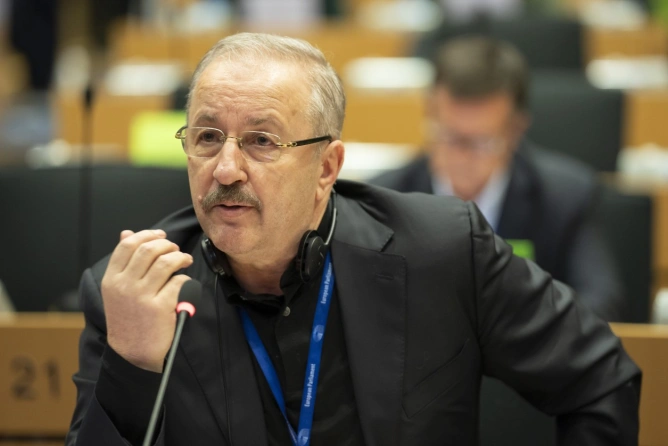
Vasile Dîncu, vice president of the European Parliament's special committee for the European Shield of Democracy, believes that Europe is not collapsing, but it is exhausting its direction. At the same time, Romania has not failed, but it must adapt to a model that no longer produces the future. Between the old reflexes of conformity and a world that operates increasingly brutally in terms of power, the text addresses the limits of the European project, the costs of strategic silence, and the need for political maturation that transforms belonging into an instrument, not a refuge. The analysis proposes a way out of European nostalgia and a lucid repositioning of Romania into a global order that no longer waits.
The perplexity at the beginning of the year
On January 3, after the theatrical blow dealt by Donald Trump in Venezuela, a strange silence settled. European leaders did not comment. It took time to recover. Not out of diplomatic prudence, but out of a lack of reference points.
Romanian politicians also did not know what to say. Until yesterday, they invoked values, principles, red lines. Overnight, these reference points were weighed against the force exposed head-on by Donald Trump. Without ambiguity and without moral decorum.
The moment was revealing. Not by what was said, but by what could no longer be said. The value discourse was blocked. The reflexes were delayed. When force is asserted directly, values require courage to be defended, and courage was lacking.
Reactions came late. Uncertain and adjusted on the go. In the meantime, everyone understood the same thing: the world is changing suddenly, and the old language no longer provides protection. Only discomfort.
That day was a signal: Europe was not prepared to respond, nor was Romania. Not because it would have given up on values. But because they did not know how to defend them in a world that increasingly speaks in terms of power.
Europe under pressure
Europe is not in collapse. This statement deserves to be made clear from the beginning. Institutions are functioning and treaties remain in force. Elections are organized, funds circulate, rules are applied. And yet, something essential has been lost. Not stability, but direction. Not order, but meaning. Europe is not falling, Europe is getting tired.
The ideas in this article stem from a broad and lucid conversation between Ivan Krastev and Yascha Mounk, two analysts with whom I resonate, published at the end of 2025, about the world entering 2026. The discussion is not about the United States, although it starts from there. It is not about China, although it inevitably reaches there. It is fundamentally about Europe. About the fragilization of a project built for a world that no longer exists.
Europe was conceived as a historical solution to trauma. World war. Destruction. Radical nationalisms. Fragmentation. The European response was integration. Small steps. Compromise. The rule. Managing differences. This model worked as long as the world around remained relatively stable, and the future seemed a predictable extension of the present. That world has ended.
Today, Europe faces three structural pressures simultaneously: military pressure from the East, ideological pressure from the West, economic pressure from Asia. None are managed coherently. Responses are fragmented. The language is defensive. The project is reactive.
In the aforementioned conversation, Ivan Krastev makes a sharp observation: Europe is not collapsing spectacularly. Europe is aging politically, consuming energy in managing crises without producing a horizon. This is the essential difference. A society in crisis has, paradoxically, a clear future. A tired society has only a continuous present.
This fatigue is visible in the way Europe speaks about itself. The language is technical, moral, procedural. Rarely strategic. Europe continues to define itself by values, while the rest of the world defines itself by interests. The difference is not one of moral superiority, but one of historical lag. The world is entering a multipolar phase. Not as an ideological project, but as a practical reality. States no longer choose sides. They choose maneuvering space. They choose ambiguity, flexibility. Europe is not prepared for this type of game. It was built for internal discipline, not for external competition.
In this context, the recurring discourse, promoted especially from the West European capitals, particularly from Paris, of the "coalition of will," even if it sounds mobilizing, historical, or European, hides an uncomfortable reality: it is merely a symbolic substitute for the lack of a common direction. The coalition of will appears when real consensus has disappeared, and will, in itself, is not strategy. It is an emergency language, used to mask the absence of structural decisions. Europe speaks more and more about will because it speaks less and less about the future. This European confusion has direct consequences for the states within the Union. Especially for those that joined later. Especially for Romania.
Romania has played the European game correctly. It has internalized the rules, learned the language, accepted tough conditionalities. It has mimicked models and built institutions according to the manual. The national strategy has been simple and, for two decades, effective. Adaptation to Europe, alignment, convergence. However, this strategy has reached its limits. The problem is not Romania. The problem is Europe itself. Adapting to a stagnating model no longer offers a competitive advantage. It no longer produces security and no longer guarantees development. Romania risks becoming the exemplary student of a school that has lost its curriculum.
Worse, Romania continues to think strategically exclusively in terms of Europe, in a world that no longer operates exclusively in European terms. Foreign policy remains reflexive, and economic policy remains dependent. Demographic policy is absent, and security policy seems entirely delegated. This combination produces vulnerability, not stability.
The discussion about the future of Europe is not an academic or political one. It is an existential one. For the Union and for the member states, the question is not whether Europe will disappear. The question is what kind of Europe will survive and who will know how to live outside its comfort zones.
This article starts from an uncomfortable hypothesis. Europe remains necessary, but it is no longer sufficient. Romania can no longer afford the luxury of passive adaptation. The world is changing faster than our political reflexes, and those who continue to hide behind vague formulas about will, values, and unity risk remaining without a project, without a position, and without a future.
I. Multipolarity. Europe caught between worlds
Europe enters a new global order without a strategic compass. Not because it lacks resources, not because it lacks institutions. But because the world in which it was trained to function no longer exists. The bipolar order has disappeared. The hegemonic liberal order has eroded, and what follows is not chaos, it is practical multipolarity.
In this world, the United States no longer offers predictable protection. We are not talking about total withdrawal, we are talking about volatility. About a power that reacts more than it structures. About a foreign policy dependent on electoral cycles, internal emotions, and personalized leaders. For Europe, this is a radical change. For decades, European security has operated on a simple assumption: America remains where it has settled. This assumption is no longer certain.
More importantly, the United States no longer offers a stable ideological framework. The transatlantic conflict is no longer one between political systems. It is one between competing internal visions. Europe does not know with whom it is negotiating. With an administration, with a leader, with a party, with a temporary majority. This uncertainty paralyzes strategic decision-making.
At the same time, China is no longer as frightening. This is one of the most counterintuitive changes of the moment. For years, China's rise has been presented as an existential threat: military, economic, technological. Today, for a large part of the world, China is becoming systemic normality. At least compared to American aggressiveness during the Trump era. China has become a predictable, calculable actor, sometimes harsh and inflexible, but coherent. China is no longer perceived as an ideological project. It is perceived as a power infrastructure: it produces, invests, and waits. It does not moralize, it does not demand symbolic alignment. In a world tired of moral messages, this attitude works. Europe continues to view China through the lens of fear or normative superiority. The rest of the world views it through the lens of opportunity.
This change directly affects Europe's position. Europe finds itself caught between an unpredictable America and a structural China. Between a power that demands loyalty and one that offers contracts. Between a rhetoric of values and a practice of interests. Europe does not know how to play this game because it was not built for it.
The multipolar world does not operate on the basis of camps. It operates on the basis of maneuvering space. States no longer ask who is right, they ask what they gain. India, Turkey, Saudi Arabia, Brazil, South Africa are states that operate simultaneously with multiple poles of power. They negotiate, balance, avoid rigid commitments. Europe remains attached to a binary model: right versus wrong, alignment versus deviation, and this rigidity takes it out of the game.
Here lies the central thesis: Europe is not weak militarily, it is weak strategically. It has significant military resources, defense industries. It has human capacity. What it lacks is the ability to link these elements into a coherent vision of the world. Europe reacts, rarely anticipates; it responds to crises, it does not structure them. It defines foreign policy through common declarations, not through clear priorities; it hides indecision under consensus and masks the lack of direction under calls for unity. In a multipolar world, unity is not a goal, it is merely a tool, but Europe has transformed it into a goal in itself. This is the trap. When maintaining cohesion becomes the main objective, any external strategy becomes secondary. The result is minimal foreign policy, sufficient to avoid internal disintegration. Insufficient to count externally.
There is also another problem: multipolarity requires risk-taking. Europe is structurally risk-averse. Demography, aging, economic stagnation, declining competitiveness all produce a political culture of conservatism. Not of expansion, not of competition. Europe defends what it has, but does not build what it lacks. This difference becomes visible in relation to the rest of the world. Allies test, err, return, correct. Europe negotiates until the context changes. Allies use ambiguity, Europe condemns it. Allies turn crises into opportunities, Europe manages them slowly and cautiously. Multipolarity is not a threat in itself, it is merely an environment. Those who know how to move within it win, those who remain attached to old reflexes lose relevance. Europe risks becoming a respected but irrelevant actor. A rich, safe, moral space, but lacking real influence capacity.
This is the real stake. Not the survival of Europe, but its ability to matter in a world that no longer waits.
II. The coalition of will. The language that hides the void
At a time when Europe can no longer produce direction, it produces formulations. One of the most frequent is "the coalition of will." It appears in official speeches, in common declarations or initiatives symbolically launched from Western capitals, especially from Paris. It sounds mobilizing. It sounds serious. It sounds European. But it is precisely this soundness that betrays the problem.
The coalition of will is not a political project. It is a discursive reflex. It appears when real consensus is lacking, and leaders feel the need to signal action without assuming costs. It is the language of the transition between capacity and impotence. Between decision and delay.
Will, in itself, does not create power. It does not produce resources, does not generate institutions, and does not resolve contradictions. Will is necessary for a strategy, but it cannot replace it. When it becomes central in discourse, it indicates the absence of a clear strategy. Europe speaks more and more about will because it speaks less and less about priorities. About what it defends, what it sacrifices, what it negotiates. What it loses or what it gains. The coalition of will is an elastic concept, allowing adherence without commitment, participation without clear responsibility, and solidarity without cost. Worse, this type of language produces the illusion of action. Citizens hear strong formulations, see summits, press releases. The results are vague. This discrepancy fuels cynicism, not mobilization. Real coalitions are built around converging interests. Not around declarative will. Interests can be negotiated, will cannot. When leaders insist on will, they deliberately avoid the conflict of interests. But that very conflict is the engine of real politics.
There is also a psychological dimension to this discourse. The coalition of will is a self-consolation mechanism. Europe knows it is no longer the center of the world, it knows it no longer dictates the global agenda. It knows it depends on allies for security, energy, technology. Will becomes a symbolic substitute for the loss of control. This language hides a deeper problem. Europe no longer knows who the decision-making actor is: the member states or the common institutions. The capitals or Brussels, majorities or consensus. In the absence of institutional clarity, will is invoked as a universal solution. But will does not resolve the ambiguity of power, it merely masks it.
The coalition of will is, in essence, the expression of a Europe that no longer has the courage to differentiate itself internally. Any strategic project presupposes hierarchies, leaders, asymmetries. Europe avoids these words, prefers formal equality, discursive inclusiveness, although everyone knows that everything is a simulation. The result is paralysis. There is also a perverse effect. This type of discourse allows states to hide. Under the umbrella of common will, each actor can postpone its own difficult decisions: nonexistent budgets, military reform, industrial policy, demographic policies. Everything is postponed in the name of a collective action that does not materialize. Instead of clarifying who does what, the coalition of will dilutes responsibility. No one is guilty, no one is a leader. No one can be held accountable.
For the Eastern states, this language is even more problematic. They hear calls for will, but live the consequences of a lack of capacity. They hear promises, but see delays. They hear unity, but feel informal hierarchies. This tension erodes trust in the European project faster than any populist discourse. Europe does not lack will. It lacks decision-making and assumption. Prioritization. The coalition of will is not the solution, it is the symptom. When will becomes the main political capital, it means that other forms of capital have already been consumed.
The case of Greenland compresses all of Europe's dilemmas into a single point. European territory, strategic space, but militarily dependent on the United States. Europe has avoided putting the subject on the agenda. In Paris, in these days, the leaders of the so-called coalition of will will most likely talk about unity, not about decision. About values, not about real options. The uncomfortable question remains unspoken. What does Europe do if Washington, under the direct impulse of Donald Trump, treats Greenland as a power issue, not an alliance issue? What remains of NATO if a major ally asserts its strategic interest over the heads of others? The European silence already says something. Europe avoids the dilemma because it still has no answer. And in a world of force, avoidance is not neutrality. It is a loss of relevance.
III. Romania. The limits of European adaptation
Romania has been one of the disciplined students of the European project. It has learned the rules and applied them as best it could. It has internalized them, accepted tough conditionalities, corrected institutions. It has adopted the language, and the national strategy has been clear for two decades: adaptation to Europe, convergence, and alignment.
This strategy has worked: it has produced stability, it has produced growth, it has even produced belonging. Today, however, the same strategy is reaching its limit. Not because Romania has failed, but because Europe itself no longer offers a clear horizon. Romania continues to relate to Europe as a project of the future. Europe increasingly functions as a mechanism for managing the past. Here lies the rupture. Adapting to a stagnating model no longer brings competitive advantage. It produces conformity, not power.
Romania's foreign policy remains reflexive, an echo strategy. It reacts, rarely proposes. It waits for signals, almost never emits them. Economic policy remains dependent on decisions made elsewhere, industrial policy is fragmented, demographic policy is almost nonexistent, and security policy is entirely delegated. All of these were rational in a stable Europe, led by a predictable center. In a multipolar world, this behavior produces vulnerability, not security. Romania continues to believe that it is enough to be correctly European. Correctness is no longer a strategic currency. In a world of maneuvering space, what matters is negotiation capacity. Clarity of interests and flexibility of positioning.
There is also a cultural problem with the political elite. Europe has become a substitute for strategic thinking. When a problem arises, the question is not what serves our interest, but what does Europe say. This externalization of decision-making has produced comfort, but it has also produced dependence. Worse, Romania risks sometimes being more European than Europe itself. To defend formulas that no longer work, to invoke consensus when others negotiate hard. To wait for direction from a project that no longer offers either direction or perspective.
This does not mean exiting Europe. It does not mean contesting belonging. It means strategic maturation. It means accepting that Europe is no longer the only relevant framework for adaptation. Romania must adapt to the world. Not just to Europe. The world means competition for investments, it means demographic pressure. The world means unstable regional security, it means asymmetric economic relations.
Without a clear definition of its own interests, Romania remains dependent on others' interpretations. Without an explicit demographic policy, it remains internally fragile and with external migration that leaves it without its most important resource. Without a coherent industrial policy, it remains economically peripheral. Without an articulated foreign policy, it remains predictable and easy to ignore.
European adaptation was a stage, but it is not an eternal project. States that succeed in the new world are those that transform belonging into instruments, not into shelters. Romania is exactly at this point. It can continue to hide behind Europe. Or it can start to position itself through Europe, but for itself.
IV. Romania. The limits of European adaptation. A necessary correction
The narrative of the disciplined student is incomplete. Convenient, but incomplete. Romania has not always been Europe's favorite student. It has been, rather, the tested student. Publicly corrected, penalized, tested repeatedly. Romania has endured symbolic and material sanctions. It has lost cases at the European Court of Human Rights. It has been sanctioned for real institutional dysfunctions. It has accepted tough corrections, endured cuts in funding. It has been subjected to a prolonged monitoring regime. Often, more harshly than other states in comparable situations.
Two episodes have profoundly marked Romania's relationship with the European project. The Cooperation and Verification Mechanism (CVM) and the blocking of entry into Schengen.
The CVM has become a penance without a clear term. Romania has met conditions, changed laws, altered procedures. It has accepted successive evaluations, and often, the criteria have shifted, evaluations have been prolonged. The end has been postponed, and the implicit message has been clear: effort does not guarantee the closure of the file.
Schengen was the second great perceived injustice. A politically masked technical decision, a collective sanction applied selectively. Romania has met the technical criteria, has been positively evaluated. It has still been repeatedly blocked, without convincing explanations, without a term, without compensation.
What is important is one thing: Romania has endured these penances to the end. It has not blocked European institutions, has not blackmailed politically, has not exited the common framework, and has not transformed frustration into official policy. It has borne economic costs, symbolic costs, and image costs. It has remained silent and moved on. This silence, however, has had an internal price: the space left free by official discourse has been occupied by others. Sovereigntists have grown precisely on this wound. They have exploited the feeling of injustice, linked Brussels to humiliation, transformed legitimate frustration into anti-Western discourse. In this void, Putinism has been presented by some as an alternative of dignity.
This is the great strategic error. Not the fact that Romania accepted rules, but the fact that it did not explain the costs and did not articulate publicly and discursively, at least, the injustices. It did not transform the experience of penalization into a mature political lesson. Romania has demonstrated resilience, has demonstrated loyalty, has demonstrated adaptability, but has remained without its own narrative. Without a discourse about itself and without a national interpretation of the European path.
Today, the problem is not the past. The problem is what we do with this past. Romania is no longer a state that must prove obedience. It is a state that must assert its interests. Calmly, argumentatively, and firmly. European adaptation can no longer function as a continuous penance. It can no longer be justified by silence and can no longer be presented as the only horizon. Otherwise, accumulated frustrations will continue to fuel radical discourses. Not because they would be right, but because the void remains unoccupied.
Romania has not been a spoiled student. It has been a student tested to the limit. That is why the next stage is no longer about conformity. It is about positioning and using the hard experience as a source of strategic maturity.
V. European stereotypes. The trap of moral comfort
Europe continues to operate based on stereotypes that were useful in another era. Today, they block strategic thinking. We repeat them because they offer comfort, not because they produce results.
The first stereotype is Europe as a morally superior space. Europe talks about values more than about power. About rules more than about interests. This language made sense in a world where power was already guaranteed. Today, morality without capacity produces marginalization. The rest of the world does not reject European values, it considers them irrelevant in relation to its own urgencies.
The second stereotype is Europe as an automatic guarantee of prosperity. Integration has worked as a growth engine. This fact is no longer replicable indefinitely. Funds no longer compensate for the lack of vision. Rules no longer create competitiveness. Europe distributes stability, but does not generate dynamism. For peripheral states, this gap becomes visible.
The third stereotype is Europe as a substitute for national strategy. For many states, including Romania, European belonging has become a universal solution. When a problem arises, the answer is Europe. When a project is lacking, we invoke Europe. This delegation continues to weaken the state's capacity to think for itself.
There is also a dangerous stereotype. Europe as a space of permanent consensus. Consensus is presented as the supreme virtue. In reality, excessive consensus hides the conflict of interests. It postpones it, it does not resolve it. Strong states negotiate hard, weak states invoke unity. The difference is seen in results.
For Romania, these stereotypes are all the more harmful as they have been internalized without critical filtering. We have adopted the European language without adapting it to our own context. We have confused loyalty with silence. We have confused conformity with maturity and integration with the disappearance of national interest.
This is not a criticism of Europe. It is a criticism of the way Europe is used as an alibi. When the European project no longer delivers direction, it is transformed into a moral decor. A decor that calms, but does not lead.
Romania must not be more European than Europe itself. It must not defend formulas that no longer work. It must not confuse discipline with the absence of ambition. In a competitive world, strategic modesty is not a virtue, it becomes a handicap.
European stereotypes offer psychological refuge. They offer the feeling of belonging to a good world. But politics does not operate based on feelings. It operates based on power relations, interests, and the capacity for adaptation. As long as Romania remains a prisoner of these stereotypes, it will react. It will not act. It will wait, it will not propose. It will explain, it will not negotiate.
Overcoming stereotypes does not mean abandonment. It means lucidity and the transition from moral comfort to strategic realism. This is the minimum condition to remain relevant in a Europe that no longer knows what it wants to be.
VI. Real adaptation. What Romania needs to change
Real adaptation no longer means conformity, it means repositioning. Romania enters a stage where European belonging is no longer sufficient to produce security, development, and influence. Without a strategic adjustment, it risks remaining correct and irrelevant.
The first step is defining its own interest. Not rhetorically and not defensively. Clarity is necessary here. What do we want to protect, what do we want to obtain. What are we willing to negotiate. What we no longer accept as permanent penance. Without this clarity, any foreign policy remains derivative.
The second step is moving from alignment to negotiation. Romania has been trained to align. It has become good at that. The new world requires a different reflex. Negotiation is not conflict, it is a manifestation of maturity. States that matter are those that come to the table with a file, not with declarative loyalty.
The third step is assuming demography as a security issue. Not social and not cultural, but strategic. Without an active population, there is no economy, and without an economy, there is no autonomy. Without autonomy, there is no foreign policy. Romania no longer has time for delays in this area.
The fourth step is building its own economic policy, compatible with Europe, but not dissolved in it. Romania must know which sectors it defends. Which industries it supports, what type of capital it seeks. What dependencies it accepts and which it reduces. Without this selection, it remains functionally peripheral.
The fifth step is exiting excessive strategic discretion. Silence no longer protects. Controlled visibility protects. Romania must speak more. It must explain more clearly. It must publicly formulate its positions. The absence of its own discourse leaves room for others to speak in its name. The silence regarding support for Ukraine, orchestrated "strategically" by the former president, was a true sample of a lack of courage and assumption. Or perhaps even more.
The sixth step is a lucid reporting to multipolarity. Romania must not choose ideological camps. It must maximize its maneuvering space within its alliances. Belonging does not exclude flexibility. A functional alliance is based on contribution, not on obedience.
Finally, Romania must assume maturity. Maturity means no longer waiting for constant validation. No longer transforming external recognition into an internal objective. No longer confusing respect with approval.
Europe remains our natural framework. But it is no longer the unique compass. The world is no longer organized around European comfort. Those who understand this early gain time, those who ignore it remain stuck in a defensive logic. Real adaptation does not mean exiting Europe. It means exiting dependence on its old formulas. Romania has enough experience, including painful, to take this step. The question is not whether it must. But whether it has the courage to do so before the world forces it.
VII. Europe is a project that has reached the limit of its own success
Europe is not a failure. It is a project that has reached the limit of its own success. It has solved the problems of the last century and is trying to manage them indefinitely. The world, however, no longer waits. Neither the big actors nor the small ones.
The real danger is not the disintegration of Europe. It is its transformation into a space of political nostalgia, of the permanent invocation of past values without the capacity to translate them into present power. Europe risks becoming a functional museum. Sure, respected, but good to avoid.
For Romania, the stake is clearer than for others. We cannot afford nostalgia. We cannot afford the moral luxury of stagnation. Neither resentful radicalism nor silent obedience. We have already experienced the costs of both. The rising sovereignism is not proof of a Western betrayal. It is proof of a narrative void. People do not vote against Europe, they vote against silent humiliation. Against postponed promises and against the lack of explanation.
The answer is neither the idealization of Europe nor its demonization. The answer is the mature politicization of belonging. To say what we want, to say what we no longer accept. To say what we can offer, what we ask in return.
Romania has an ignored advantage. It entered late. It has been tested hard, often penalized, but it has survived. This path produces lucidity and not resentment, only if it is assumed correctly and explicitly.
Europe, as a project, no longer offers a future. It offers management of the past, and the future must be built within Europe, but with eyes open to the world. Without stereotypes and without magic formulas or moral refuges. Politics begins when nostalgia ends.
VIII. Politics without nostalgia. Exiting the deadlock
This text does not call for abandonment, it calls for lucidity. Europe remains our framework for political life, but it is no longer the unique compass. Treating Europe as an eternal project means confusing stability with the future, but stability is no longer enough.
The world no longer operates based on patience. It operates based on asserted power, clear interests, and delivery capacity. Those who do not formulate their position disappear from the conversation. They are not punished, they are ignored, and this is the heaviest punishment.
For Romania, the stake is double. External and internal. Externally, it must understand the new grammar of power, and internally, it must break old reflexes: mimetism, waiting for the signal, diplomatic flattery. These produced protection in another world; today they produce invisibility.
Politics without nostalgia means giving up two illusions. The first: that values defend themselves, that values are gained through their own assertion. This is not true. They defend themselves. They need strength, alliances, and courage, sometimes weapons. The second: that declarative loyalty holds a place for strategy. It does not hold. Strategy requires files, priorities, and cost assumption.
Romania has the resources for this step. The experience of penances, the lesson of injustices endured, and even an accumulated discipline. All can become strategic capital, only if articulated. Only if transformed into positions, not into silences.
Europe will continue to exist. It will continue to manage the past and may awaken, in these days, to think strategically about a built future. The future will not come from inertia. It will come from the capacity of states to move in a world without hiding behind formulas. Without invoking will when direction is lacking, without confusing morality with power.
Politics begins where nostalgia ends. Romania is exactly at this point. Just like Europe. I hope we wake up!
https://2eu.brussels/ro/analize/romania-intr-o-europa-obosita-reflexe-vechi-intr-o-lume-brutala
Latest News
23:08
22:58
22:57
22:55
22:54
See more news