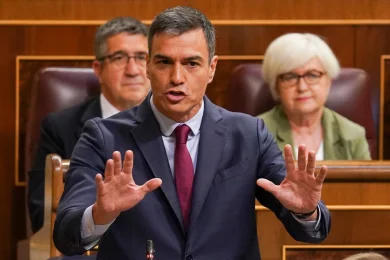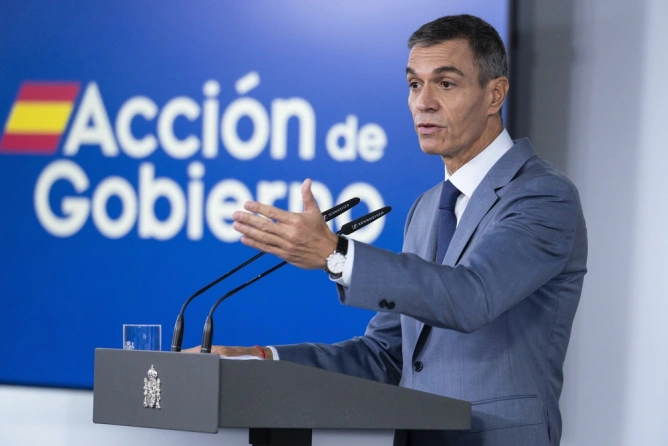

Before the vote scheduled for 29 November, Pedro Sánchez decided to seek a new mandate after parliament rejected two royal decrees related to housing, while protests featuring tents took place in Madrid and other cities, calling for urgent measures to address the housing crisis. Sánchez announced the election in a televised address to the nation, justifying the decision by the need for voters to decide the country’s political direction.
At the same time, the prime minister continued to build his foreign and domestic policy message: in New York, he defended at the UN the way Spain is managing the migrant crisis in Ceuta, insisting that the country would not violate the rule of law and calling, among other things, for reform of the Security Council and the removal of the veto power of permanent members.
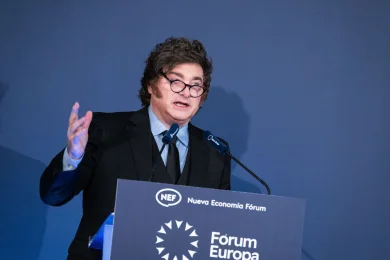
Politically, Sánchez also engaged in rhetorical confrontations with the opposition: during a visit to Madrid, Argentine President Javier Milei called Sánchez a “dictator,” “thief,” and “corrupt,” in a context in which Milei was expressing his support for right-wing and far-right parties ahead of the snap elections on 29 November.