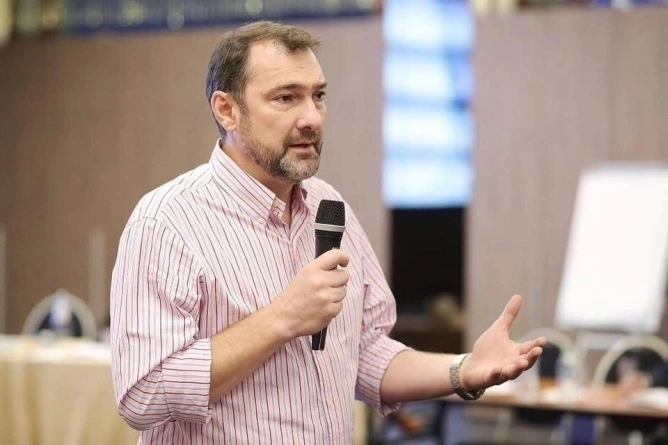
Michael Guillén, a former physicist from Harvard, suggested that God might have a physical location 439 billion trillion kilometers from Earth, a speculative hypothesis rejected by the scientific community.
Liviu Brăteanu



International
Foto: www.shutterstock.com

Always see our news on Google
Michael Guillén, a former physicist from Harvard, sparked controversy by claiming that God could have a physical location in the universe, situated approximately 439 billion trillion kilometers from Earth. This hypothesis is purely speculative and is not part of accepted science. Guillén combines biblical passages with the cosmological concept of 'cosmic horizon', which defines the limit of the universe's observability. He argues that beyond this limit, time would stop, and space could be inhabited by entities similar to light.
However, the scientific community rejects this interpretation, explaining that the cosmic horizon is an observational limit, not a physical place where the laws of the universe cease to function. Time does not stop at the cosmic horizon, and our perception of extremely distant events is influenced by the expansion of the universe. Thus, Guillén's claims, while interesting from a theological perspective, are considered a misapplication of cosmological concepts.
Sources


Latest News
09:40
Donald Trump and Mark Rutte meet at Mar-a-Lago amid tensions between the US and European allies
09:40
November 25, 2026. TV: What was discussed last night on the news channels
09:26
France proposes strategic reserves of rare earths and critical raw materials, modeled on oil reserves
09:26
Two refineries in Russia caught fire following a massive Ukrainian drone attack
09:22
Fitch maintains a neutral outlook for sovereign ratings worldwide in 2027, but warns of debt and geopolitical risks
See more news
NEWS ON THE SAME TOPICS
IT&C knowledge
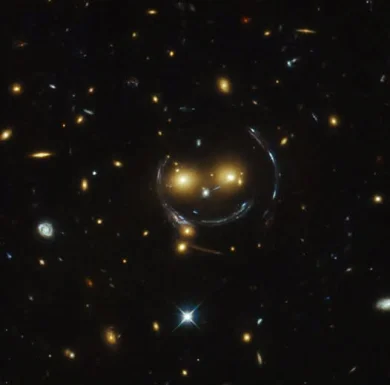
NASA published an image of a “cosmic smile” created by the gravitational lens of a galaxy cluster observed by Hubble


IT&C knowledge
An Anthropic researcher claims to have proven the Riemann hypothesis with the help of Claude AI


Personalized news feed, AI-powered search, and notifications in a more interactive experience.