G20 adopts the first global framework for critical minerals and strengthens Africa's role in the global economy



Always see our news on Google
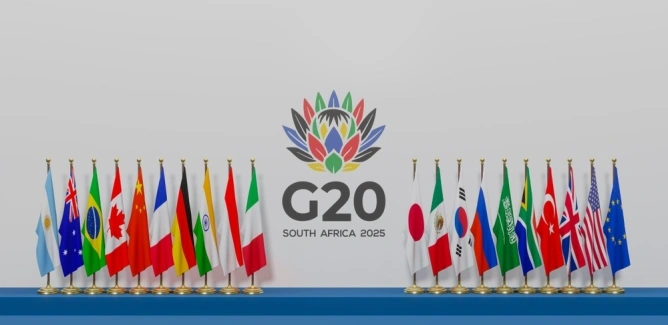
Brussels, November 23, 2025 – G20 leaders meeting in Johannesburg adopted the first international framework for cooperation in the field of critical minerals, supported the acceleration of the global energy transition, and reaffirmed the principles of the UN Charter regarding state sovereignty and the protection of civilians. The final document marks the first G20 summit held on the African continent and places Africa at the center of the global agenda for development, economic security, and clean energy.
The declaration emphasizes the regional and global importance of Africa, focusing on investments in infrastructure, industrialization, agriculture, and technology. In support of this direction, the leaders adopted the G20 Critical Minerals Framework, a voluntary tool aimed at ensuring transparent, stable, and sustainable value chains for essential mineral resources. The document provides for the diversification of sources, investments in exploration, the development of local capacities, increasing value added at the source, and responsible governance in producing countries. At the same time, the G20 affirms that resource-rich states fully retain their sovereign right to exploit their resources for the benefit of their own economies.
In the field of energy and climate, the leaders support the global commitment to triple renewable energy capacity and accelerate energy efficiency growth by 2030, while reaffirming the goal of the Paris Agreement to limit global temperature rise to 1.5°C. The declaration recognizes the need for significant investments to achieve climate goals and emphasizes the important role of clean technologies, modern energy infrastructure, and international cooperation in the transition process. The leaders also welcome the outcomes of COP30 in Belém and set expectations for the COP31 presidency in 2026.
The summit also highlights the challenges related to public debt in low- and middle-income countries, particularly in Africa. The G20 supports the implementation of the common framework for debt restructuring, reforms of the IMF and the World Bank, and improving debt transparency, while encouraging financing mechanisms that provide budget stability to vulnerable states. The document emphasizes the importance of reducing financing costs and expanding investments in sustainable development.
On the digital agenda, the leaders reaffirm the G20 principles on artificial intelligence and launch the AI for Africa initiative, aimed at building the technological ecosystem on the continent through access to digital infrastructure, training, data, and partnerships. At the same time, the UNESCO framework for assistance in developing public policies in the field of AI is welcomed. The declaration reaffirms the importance of international cooperation for a responsible, safe, and fair framework for the use of emerging technologies.
The G20 leaders also address social issues such as combating inequalities, reducing poverty, universal access to social protection, strengthening food security, and reducing illicit financial flows. The summit reaffirms commitments regarding economic inclusion, decent jobs, equal participation of women and youth in the labor market, and strengthening health systems. The document includes support for African initiatives in agriculture, trade, and industrial development, as well as for the expansion of the African Continental Free Trade Area.
The 2025 G20 summit is the first organized on the African continent. The final document reflects the priorities of the South African presidency: global solidarity, the strategic role of Africa, energy transition, food security, reducing inequalities, and adapting to climate risks. The leaders confirm that the G20 remains the main forum for international economic cooperation and the annual meeting of heads of state and government.
Latest News
11:20
11:16
11:12
11:10
11:07
See more news
NEWS ON THE SAME TOPICS
.webp)