Europe lacks an army and the cost of indecision. Why the impossibility of a European army is no longer an answer.



Always see our news on Google
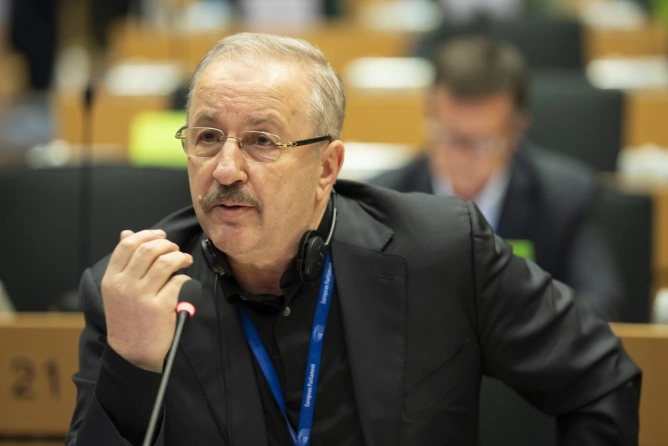
Vasile Dencu, Vice President of the European Parliament's Special Committee on the European Shield of Democracy, responds to the 2eu analysis about the "impossible European army," arguing that the simple observation of impossibility is no longer sufficient and that the real stake is building a realistic framework for common decision-making and action, without transforming the Union into a state. Read the full response to understand the Romanian MEP's argument.
Why the European army seems impossible, by Vasile Dencu, MEP
Any serious discussion about an army starts from a definition. An army is not a collection of units. It is not an infrastructure. An army is the tool through which a state exercises the monopoly of force in the name of a political community. It is where sovereignty becomes fact. The army concentrates three inseparable elements: political decision, command, willingness to sacrifice. Without these elements, the structure becomes military cooperation. It becomes an alliance. It becomes coordination. It does not become an army.
European states maintain control over all three elements. Parliaments decide the deployment of troops. Governments issue orders. Citizens bear the political cost of losses. This chain is not technical; it is symbolic and constitutional.
The European Union was not built to take over this chain. Its treaties clearly delineate the space of military decision-making. Security and defense policy remains intergovernmental. The European executive does not have competence over the use of force. This limitation is not accidental. It is deliberate. An army presupposes a demos. It presupposes a political community willing to accept losses in the name of a common decision. Europe does not have this demos. It has national public spaces. It has different historical memories. It has divergent strategic cultures and distinct traumas.
For some states, the threat comes from the East. For others, from the South. For some, war is a recent experience. For others, it is distant history. These differences do not disappear through treaties; they define the limits of military solidarity.
The issue of legitimacy arises immediately. Who decides to send a European force into a conflict? A vote in the Council? A mandate from the European Parliament? A decision from the Commission? None of these options provide direct political accountability to the citizen sent to fight.
The European Parliament does not control national armies. The Commission does not have an electoral mandate for life-and-death decisions. The Council operates through governments that answer to their own parliaments. Any common decision inevitably returns to the national level.
This explains why the idea of a European army remains a slogan. It ignores the core of the problem. The monopoly of force is non-negotiable without transforming the Union into a state. And transforming the Union into a state involves a political rupture that no government is willing to undertake.
The argument of efficiency does not change this reality. A more efficient army is not automatically a legitimate army. Technology does not substitute political decision. Interoperability does not substitute loyalty.
States can fight together without relinquishing control. Europe is already doing this. But fighting together does not mean deciding together on the use of force. This distinction is essential.
That is why every attempt to advance the idea of a European army fails at the same point. When the discussion reaches command and responsibility, consensus disappears. Not from a lack of vision, but from political structure.
Even leaders who talk about strategic autonomy avoid the term "army." Emmanuel Macron has explicitly formulated this caution. Autonomy does not mean transfer of sovereignty. It means capacity for action. This formulation is not rhetorical. It is the recognition of a limit.
At the same time, the alliance that ensures Europe's security remains NATO. There exists a chain of command. There are clear procedures. There is credible deterrence. States accept this framework precisely because the final decision remains national. Each government knows when and how to commit.
A European army would introduce ambiguity where security demands clarity. Who is responsible for failure? Who explains the losses? Who bears the political cost? Without clear answers, the structure remains unstable.
This is the reality from which any honest analysis starts. Europe does not refuse an army out of convenience. It refuses it because an army is the ultimate expression of the state. The Union is not a state. It does not claim to be one. It does not have the necessary tools to become one without a radical transformation.
Europe is already defending itself. But fragmented.
Viewed from a distance, Europe seems militarily weak. Viewed from within, the picture is different. European states are spending more. They are arming themselves faster. They are coordinating more often. The difference lies between the accumulation of capabilities and the capacity for decision.
After 2022, military spending has increased in almost all member states. The pace is not uniform. Motivations differ. The result is accelerated but uneven militarization. By 2025, defense spending of EU countries was estimated to reach 381 billion euros. Estimated active forces in Europe (NATO European states) were between approximately 2.8 million and 3.5 million soldiers, depending on the definition of inclusion.
Eastern Europe treats defense as an existential issue. Poland allocates over 4% of GDP. It is expanding ground forces. It is building reserves. It is acquiring rapidly. The logic is defensive and urgent. The Baltic states and Finland consistently invest over the 2% threshold. They rely on rapid mobilization and territorial defense. The emphasis is on resilience, not on force projection.
Western Europe has a different profile. France maintains the capacity for external intervention. It has autonomous command chains. It maintains a tested doctrine for the use of force in real operations. The United Kingdom remains a major military actor, outside the Union, but operationally integrated with European partners. Germany is investing massively but is facing difficulties in transforming budgets into operational availability.
Southern Europe perceives different risks. Instability in the southern neighborhood. Migration. Maritime security. These states allocate resources differently. Their capabilities are oriented towards control and stabilization, not towards classical deterrence.
The result is a fragmented military map. Europe has numerous forces. It has industry. It has technology. It does not have a common strategic weight center.
Interoperability exists. It has been built through NATO. Common procedures, technical standards, command chains, and recurring exercises all function within the allied framework. European units have been fighting and training together for years. The Franco-German brigade. The integration of Dutch units into German structures. The British-Dutch amphibious force. The battle groups from the East. These examples show a simple fact: European armies know each other, can operate together. The problem is not military.
The European Union has chosen a different role. It has worked on infrastructure. On mobility. On industry. On common procurement. It has financed research. It has reduced fragmentation. It has created positive industrial dependencies. All of these increase capacity. None resolve decision-making.
For the citizen, these efforts are invisible. There are no ceremonies. There are no well-known European commanders. There are no symbols. Europe invests in defense without saying so clearly. Communication remains technical. The language remains neutral.
This discrepancy creates confusion. The public hears that Europe has no army. At the same time, it sees convoys, exercises, expanded bases. Both statements are true. Europe is arming itself without constituting itself as a unified military actor.
Here lies the central paradox. Capacity is growing faster than the political framework. Interoperability precedes decision. Industry advances ahead of legitimacy. This situation functions in a stable environment. It functions as long as the final decision belongs to someone else. As long as deterrence is guaranteed externally. As long as the ultimate risk does not have to be assumed at the European level.
The war in Ukraine has changed the data. It has not created vulnerability. It has exposed it.
Europe supplies weapons and trains troops. It coordinates sanctions and manages logistical flows. All of these have strategic impact. But direct military decision remains outside the Union. Each state decides separately, each calculates its own risk.
This fragmentation slows down reaction. It creates inequalities in contribution. It produces internal political tensions. Frontline states demand more. Distant states demand caution. Without a common framework, solidarity becomes permanent negotiation.
Europe is not disarmed; it is politically misaligned. This is the essential difference.
Strategic inflection point
Until 2022, Europe could live with a comfortable solution. Dispersed capabilities, national decision, and deterrence guaranteed by the USA. The Union invested in economy and rules, complicating a hellish bureaucracy. NATO held the hard line of security.
The war in Ukraine has not changed the nature of the Union, but it has changed the cost of indecision. Europe has entered a phase where any gesture has strategic effect. The ammunition delivered changes the balance of forces. Training changes the resilience capacity. Sanctions change the available resources. Military mobility changes the speed of reaction. When you have this impact, you are no longer just a regulator. You become an actor, and actors are judged by their ability to decide. This is still not understood, we believe, by European leaders.
At the same time, this capacity remains fragmented. An army, in the classical sense, remains tied to the state, to sovereignty, to oath, to political responsibility for losses. The Union does not have the democratic infrastructure for life-and-death decision-making. The problem is different. We are no longer discussing just possibility. We are discussing resilience in limit scenarios.
The simple and comfortable scenario is the one Europe prefers: NATO functions, the USA remains the pivot, Article 5 remains credible. In this scenario, the Union can continue the current model. More production, more mobility, more interoperability. The final decision remains in capitals, and the allied framework remains the ultimate guarantor.
The uncomfortable scenario is different. It does not assume the formal disappearance of NATO. It assumes a political blockage at a critical moment. An internal dispute, hesitation, delay. An action below the threshold, calibrated, where consensus is hard to obtain. This is exactly where European vulnerability begins.
This scenario does not have to be apocalyptic. It can be realistic. A rapid crisis, a hybrid challenge, a limited military incident, a combination of sabotage and pressure. What matters is time. If time is lost, the cost explodes. This puts pressure on two concrete questions.
The first: how quickly can Europe move militarily, within its own territory.
The second: who can decide to activate a common reaction, without waiting for a political architecture that it does not have.
On the first question, the Union has begun to respond. Not through an army, but through military mobility and infrastructure. The Commission and its partners have pushed the idea of a European military mobility area by 2027. The objective is a space where military transport crosses borders quickly, with harmonized procedures and digital authorizations. The political message uses the expression Military Schengen, but the content is administrative and logistical.
This idea is important but also incomplete. The Court of Auditors and auditors have criticized insufficient funding and the lack of solid prioritization in mobility projects. The criticism does not cancel the project; it just puts it into reality. Europe needs corridors, bridges, railways, depots, rapid procedures. It also needs governance. Otherwise, mobility remains a plan, not a capability.
On the second question, the response remains timid. The Union has introduced an important but limited tool, Rapid Deployment Capacity. It is a modular force, up to 5,000 soldiers, designed for types of crises, not for high-intensity war. It is a step. It is also proof of the limit. Europe accepts the activation of a capacity but avoids discussing the political stakes of sending it into a harsh context. Here enters the industrial side. In Ukraine, the central lesson is an unpleasant one. Modern war consumes. It consumes ammunition, parts, drones, air defense systems. War is not just technology. It is also massive industrial production.
The Union has tried to respond. ASAP was designed as a mechanism to increase the production capacity of ammunition and missiles, to replenish stocks and support Ukraine. It is an industrial policy tool, not a military decision. Exactly the type of solution that the EU can implement without transferring sovereignty.
There is also a tension here. The industrialization of defense is necessary. But it does not solve the central problem. If you have ammunition and no decision-making mechanism, you remain in the same type of dependency. You have capacity without common direction. In this context, public statements from NATO leadership become relevant, not as a moral authority, but as an indicator of political limit.
Mark Rutte, as NATO Secretary General, insists on two simultaneous ideas. Europe must spend more and take on more. At the same time, this assumption must be made together with the USA, not through separation. He explicitly rejects the idea of European military independence from Washington. This is the pressure framework. More European capacity, but within the transatlantic architecture.
This framework creates a slightly paradoxical or contradictory situation. On the one hand, Europe is encouraged to arm itself. Budget increases become the norm. Production increases become urgent. Mobility becomes a priority. On the other hand, Europe avoids building a political mechanism that shows decision-making autonomy. Not from laziness, but from a lack of common legitimacy that we discussed in the first part.
This leads to the question that few ask clearly. What do you do if dependence remains, but predictability decreases? We are not talking about a guaranteed rupture. We are talking about variability. About volatility. About an ally that changes its priorities, pace, attention. In such moments, an alliance functions, but with frictions. And frictions pay off over time.
This is the inflection point. Europe has entered a stage where it is no longer enough to say that a European army is impossible. You must say what is possible in its place. Otherwise, you are left with a correct statement and an unresolved vulnerability.
There is still one indicator. Formulas like coalition of the willing are appearing more frequently. These are groups of states that coordinate support, plan, create guarantees, without waiting for unanimity. This type of architecture is seen in discussions about guarantees for Ukraine and about roles assumed by large states. It is a sign. Europe is moving towards modular solutions because the comprehensive solution is blocked.
Europe has not become a state, has not created an army. It has not resolved the legitimacy of common military decision-making. But it has begun to build the infrastructure of a common military capability. Mobility, industry, limited reaction forces, common procurement, programs, exercises, interoperability. Now it needs to take the conceptual step. To abandon the wrong question. To define a realistic solution.
The wrong question
Every time the term European army appears, the debate gets stuck. Reactions become reflexes. Some governments withdraw, others preemptively attack the idea. The public quickly divides. No one discusses intermediate solutions anymore.
It is clear: the problem is not military; it is semantic and political. The word army immediately refers to the state. To unified command. To transfer of sovereignty. To oath. To sacrifice imposed by a central authority. In Europe, this chain of meanings triggers automatic opposition. It does not matter how many qualifications you add. The reaction occurs before explanation.
This is the conceptual trap. The discussion starts from a maximum form, not from a concrete need. Europe does not need an army in the classical sense. It needs the capacity to act militarily together when interests coincide and time presses. The difference is essential.
An army presupposes monopoly. A common force presupposes structured cooperation. An army demands exclusive loyalty. A common force operates through limited commitments. An army implies permanent subordination. A common force is activated punctually.
The confusion between these levels blocks any serious discussion. Military federalism is often invoked as a scarecrow. But no one explicitly proposes it. Not even the most vocal leaders call for the complete transfer of military sovereignty. What is often discussed, albeit confusedly, is what a common capacity looks like without this transfer.
To advance, Europe must change the question. Not whether a European army is possible. But what type of common military instrument is compatible with the existing political plurality. This reformulation completely changes the framework. We are no longer talking about state versus Union. We are talking about mechanisms. About procedures. About activation thresholds. About distributed political control.
In reality, Europe already functions through such mechanisms in other sensitive areas. Monetary policy is common for some and national for others. Judicial cooperation operates through mutual recognition, not through a unified penal code. The Schengen area functions without centralized European police. These examples cannot be mechanically transferred to the military domain. But they show a type of institutional thinking.
The real question becomes one of political design. How do you build an instrument that allows for common action without imposing automatic participation? How do you avoid the paralysis of unanimity without forcing reluctant states? How do you protect small states without blocking capable states?
These questions do not require a constitutional leap. They require clarity.
In place of an army, Europe can build a modular common military force. The term matters. Modularity implies options. It implies entry and exit. It implies differentiated contributions. It implies political control retained at the national level.
This idea is not theoretical. It is already appearing in practice. Groups of states align their planning. Common missions activated through separate decisions. Operational command temporarily delegated. Common funding for specific objectives. The problem is the lack of formalization. Without an explicit framework, these solutions remain improvisations. They function as long as the context is favorable. They become fragile when pressure increases.
To say that a European army is impossible remains correct. To stop the discussion here becomes insufficient.
Europe must accept that security is no longer a fully delegable domain. Not because it wants power. But because it already exercises strategic influence. Influence without decision-making capacity is risk. Abandoning the term army is not a communication artifice. It is the condition for a mature discussion. Only in this way can the solutions that exist between the status quo and federalism be analyzed.
How would a realistic European military force function, however?
If we abandon the idea of an army, the maneuvering space widens. It does not disappear, but it becomes manageable. The discussion shifts from identity to mechanism and from symbol to procedure. From abstract sovereignty to concrete decision.
A realistic European military force starts from a simple principle. The decision to participate remains national. Everything that follows is built around this core.
The first element is political decision. Each state decides whether to participate in an operation. The decision is made through its own constitutional procedures. Government. Parliament. Explicit mandate. There is no automatic obligation. There are no political sanctions for non-participation.
This point is essential. Without it, the entire mechanism collapses. Small states would refuse from the start. Exposed states would demand impossible guarantees. Legitimacy would disappear before the first deployment.
The second element is prior common planning. Although the decision is national, planning must be common. Not after a crisis, before a crisis. Scenarios, rules of engagement, command chains, logistics, transport, communications. All must be established in advance.
Here the Union already has an advantage. It has planning structures. It has civilian and military personnel. It has accumulated experience in missions. What is missing is a clear mandate to transform planning into rapid operational options. Common planning does not obligate participation. But it makes participation possible without improvisation. It reduces time. It reduces political cost. It reduces the risk of failure.
The third element is a European operational command activated punctually. We are not talking about a permanent war command. We are talking about a command structure that activates when a group of states decides to act together. The mandate is limited. The duration is limited. The objectives are clearly defined. The commander is appointed through political agreement, usually by rotation. The command chain is transparent. Responsibility is clearly assigned. At the end of the mission, the structure deactivates.
This model is not new. It is used in multinational operations. The difference would be its formalization at the European level, without ambiguity, without improvisation.
The fourth element is modular contribution. States do not contribute identically. Some send troops. Others provide logistics. Others supply intelligence. Others ensure transport or medical support. Contributions are politically recognized as full participation. This flexibility protects states with limited resources. It allows involvement without disproportionate exposure. It creates functional solidarity, not symbolic. Modular contribution solves an old problem. It avoids the embarrassment between participants and spectators. Each state decides the level of accepted risk. Each assumes its part explicitly.
The fifth element is guaranteed right of withdrawal. No participation is irreversible. States retain the right to withdraw, according to established procedures. Without political stigmatization. Without hidden penalties. Without automatic consequences in other files. This right does not weaken the force; it makes it possible. Without it, many parliaments would not approve initial participation. The stability of the operation comes from clarity, not from coercion.
The sixth element is the protection of small states. In any common structure, the risk of asymmetries appears immediately. Large states have capabilities. Small states have vulnerabilities. A realistic design recognizes this fact. Protection is done through rules. Rotation of command functions. Equal access to planning. Transparency in defining objectives. Right of veto over the commitment of their own troops. Without these guarantees, a common force would be perceived as an instrument of the powerful. Perception would destroy legitimacy.
The seventh element is parliamentary control. Military participation must remain under national democratic control. Parliaments approve, parliaments monitor, parliaments can withdraw the mandate. At the European level, the role is different. We have the European Parliament: information, debate, budgetary control over common instruments. Not direct decision-making for sending into battle. This separation maintains responsibility where the political cost manifests. At the national level.
The eighth element is limited common funding. Common costs must be clearly defined: transport, command, logistics, infrastructure. Not salaries, not compensation for casualties. These remain national responsibility. The common budget supports the operation. It does not substitute the state. This limitation is essential for political acceptance.
Overall, this model does not create a European army. It creates a framework for common military action. Without a unique uniform, without a common oath, without a monopoly on force.
Critics will say that this already exists. Partially. The difference is the degree of formalization. Currently, many such arrangements function informally. They depend on leaders, on context, on urgency. Without Ukraine, we would not even have known that a certain European military integration exists.
Formalization does not mean rigidity. It means predictability. You know what follows before you need it. You know who decides. You know who is responsible. This is the step that Europe avoids. Not because it would be impossible, but because it forces political honesty.
Such a force does not solve all scenarios. It does not replace nuclear deterrence. It does not substitute existing alliances. It does not guarantee automatic reaction. But it reduces a major risk. The risk of paralysis in a limit moment. The risk of improvisation under pressure. The risk of decisions made too late.
European force and NATO. Without illusions.
Any serious discussion about European security inevitably leads to NATO. Not as a slogan, but as a real power infrastructure. There exists credible deterrence. There exists integrated command. There exists the capacity to wage high-intensity war.
A realistic European military force does not start from the idea of replacing this framework. It starts from the recognition of its political limits. NATO operates on the basis of consensus. This provides legitimacy. It also produces frictions, but in most situations, consensus appears. In limit situations, consensus delays. Exactly this time interval is the problem.
The classic scenario remains stable: a clear attack, a recognized aggression, leads to the activation of Article 5. Collective response. In this case, Europe acts through NATO. Any parallel structure would be redundant and destabilizing.
The uncomfortable scenarios are others. Actions below the threshold, deliberate ambiguity, or calibrated pressure. Provocations that do not automatically trigger allied reaction. Here cracks appear. The case of Russian drones that reached Romania or Poland is a good example. In these situations, a common European force does not compete with NATO. It complements it. Not as a substitute, but as a political and operational buffer. The difference is one of function. NATO remains the deterrence framework. The European force offers limited, rapid reaction capacity in situations where the alliance does not move in time or does not move at all.
This complementarity must be explicitly affirmed. Without ambiguity, without rhetoric about total strategic independence. Without contradictory messages to Washington.
Europe has no interest in weakening the transatlantic link. It has an interest in reducing the risk of paralysis when the link is strained. This requires political discipline. Any European force must be interoperable with NATO, with common procedures, common standards, constant communication, and without unnecessary duplication.
The American pressure for increased European spending must be read correctly. It is not a sign of automatic withdrawal. It is a signal of rebalancing. Europe is being asked to contribute more. Not to separate. In this context, a credible European capacity does not undermine the alliance. It stabilizes it and reduces the temptation of unilateralism. It reduces political uncertainty, increases predictability.
The real risk is not the existence of a European force. The risk is the lack of a plan in case existing mechanisms function imperfectly. This is the underline line that Europe must traverse. Strengthening without separation, operational autonomy without total political autonomy. Capacity without the illusion of unique sovereignty.
The decision that Europe avoids
Europe is not devoid of military power. It is devoid of a coherent political framework for its joint use. To say that a European army is impossible remains correct. To use this truth as an excuse for inaction becomes dangerous.
The Union has entered a phase where its decisions produce strategic effects. Investments in defense, external military support, arms industry, troop mobility. All of these change balances. When you influence balances, you must manage risk. Enemies arise that you may not have had before.
The proposed common military force here does not promise absolute security. It does not promise automatic reaction. It does not promise symbolic unity. It promises something more modest and useful. Procedural clarity, decision-making speed, and reduction of improvisation. Protecting national sovereignty within a common framework. I repeat, Europe does not need to become a state to act. But it must accept that security requires explicit decisions, not just technical coordination.
The real question is not whether Europeans are ready to die under a common flag. This is a false, emotional, paralyzing question. The real question is whether Europe accepts to build the mechanisms through which its states can decide quickly, together, when interests coincide and time presses. As long as this question remains unspoken, Europe will continue to arm itself without knowing exactly when and how it will use its power.
The greatest problem is not the lack of an army, but the lack of common decision.
Latest News
16:08
15:56
15:52
15:49
15:48
See more news