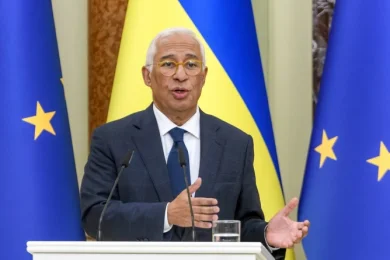
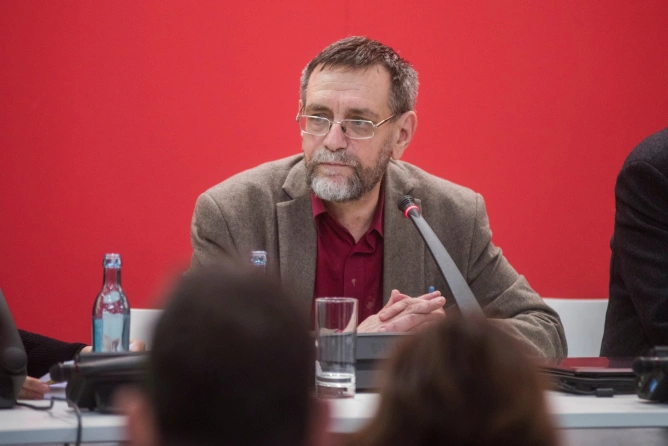
The race for the presidency of the Eurogroup. Kyriakos Pierrakakis and Vincent Van Peteghem present their visions ahead of the vote on December 11.


Always see our news on Google
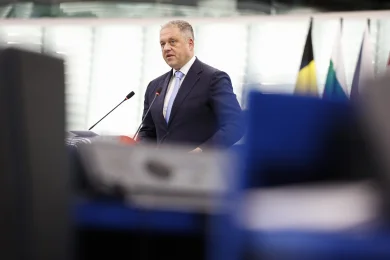
Brussels, November 28, 2025 - Greece and Belgium enter the competition for the leadership of the Eurogroup, after the Greek Minister of Economy and Finance, Kyriakos Pierrakakis (photo), and the Belgian Deputy Prime Minister and Minister of Budget, Vincent Van Peteghem, officially submitted their candidacies. The election of the new president will take place on December 11 and will require a simple majority of at least eleven votes from the twenty finance ministers of the euro area, according to the EU Council. The position, which became vacant after the resignation of Paschal Donohoe, will define the direction of fiscal policies, strategic investments, and financial stability in the euro area for the next two and a half years.
In short Two ministers, from Greece and Belgium, are running to lead the Eurogroup, the forum where euro area countries coordinate economic and fiscal policies.
Kyriakos Pierrakakis emphasizes investments, technology, and a Eurogroup that acts quickly and cohesively, while Vincent Van Peteghem prioritizes fiscal discipline, financial stability, and the global role of the euro.
The euro area ministers will vote on December 11, and the winner will influence Europe's economic direction for the next two and a half years.
Both candidates describe the moment as decisive for the future of the Economic and Monetary Union and underline the geopolitical pressures, the acceleration of technological transformations, and the intensification of global competition. In their letters, Pierrakakis and Van Peteghem speak about the need for more coherent coordination of economic policies, about rebuilding European competitiveness, and about strengthening the international role of the euro.
Kyriakos Pierrakakis builds his candidacy around the idea that Europe does not lack savings, but rather the ability to direct these resources towards strategic investments. He proposes the creation of a Union of Economies and Investments to reduce financial fragmentation and dependence on non-European capital. In his letter, he emphasizes that the Eurogroup must act with clarity, speed, and unity in the face of current challenges. His experience in the digitalization of the Greek public administration, including the implementation of national digital platforms, supports a vision where digital euro, payment infrastructures, data, and artificial intelligence become essential components of a more resilient and competitive European economy.
Vincent Van Peteghem organizes his platform around the idea of fiscal credibility, competitiveness, and a global role for the euro. He insists on the consistent implementation of the reformed EU fiscal rules and on close coordination between the Eurogroup and Ecofin, believing that a coherent fiscal stance is essential to maintain market confidence and to create space for growth-oriented investments. As president of Ecofin during the Belgian Presidency in 2024, Van Peteghem coordinated complex negotiations on economic governance reform. His biography highlights fiscal reforms in Belgium, the €32 billion multiannual budget consolidation plan, and crisis management measures during the pandemic and energy crisis.
From an institutional perspective, the two candidates propose different models for the functioning of the Eurogroup. Pierrakakis supports a strategic, well-prepared Eurogroup focused on specific euro area themes, without overlaps with Ecofin and with a clearly defined agenda. Van Peteghem proposes continuity and a disciplined agenda, focusing on the ability to reach agreements among member states, relying on his experience in managing negotiations at the European level.
The geopolitical context occupies a central place in the speeches of both candidates. Pierrakakis sees the digital euro and digital infrastructures as tools of economic sovereignty in a period marked by global tensions, technological competition, and the need to reduce strategic dependencies. Van Peteghem focuses on the international role of the euro and on strengthening European autonomy in payment systems, expressing concerns related to crypto-assets and stablecoins, which he considers relevant for the financial stability of the euro area.
The Eurogroup will vote on December 11. If no candidate obtains a simple majority in the first round, additional rounds will be organized, during which candidates may decide to withdraw. The mandate of the future president is renewable and lasts for two and a half years. Until a new president is elected, the position is temporarily held by Makis Keravnos, the Minister of Finance of Cyprus, according to the EU Council.
Latest News
22:52
22:34
22:28
21:56
21:29
See more news
NEWS ON THE SAME TOPICS