SPECIAL Informat.ro / "Fjord", between ovations and controversies: how Cristian Mungiu's new film became the most disputed title at Cannes


Always see our news on Google
"Fjord" was received at Cannes as one of the event titles of the competition, with a rare combination of enthusiastic applause in the hall and a clearly divided critical front, between praise at the level of "Palme d'Or worthy" and the verdict of "anticlimactic film, below expectations".
Synopsis of "Fjord"
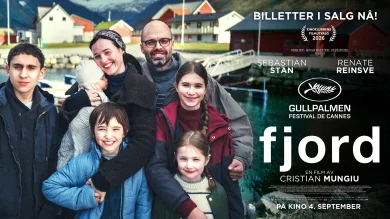
"Fjord" follows the Gheorghiu family – Mihai, a Romanian engineer, and Lisbet, his Norwegian wife, conservative Christians who move with their five children to a picturesque village on a Norwegian fjord, Lisbet's hometown. They try to integrate: Mihai works in IT at the international school, Lisbet is an assistant in a nursing home, and the children befriend the neighboring Halberg family, whose father, Mats, is the school principal.
Tension explodes when one of the daughters shows up at school with bruises, and child protection services intervene and take all the children into care, triggering an investigation and a trial that scrutinizes both physical violence ("occasional slapping," according to Romanian standards) and the family's way of life – the prohibition of phones, secular music, and the view of homosexuality as a "mortal sin." The film becomes a tense procedural: the parents try to regain their children in the face of a Norwegian administrative apparatus that presents itself as protective and progressive. Critics such as those from the BBC or IonCinema describe the Gheorghiu family's journey through the Norwegian child protection system as an almost Kafkaesque bureaucratic labyrinth, while Mungiu speaks about "the pressure of political correctness", about how institutional systems can be "abusive" or that "standards become absolute."
The general tone of critical reception
Overall, "Fjord" has so far received a globally positive critical reception, with polemical accents. Rotten Tomatoes indicates a critical score of around 90-92% (over 20 reviews), while Metacritic places it in the "generally favorable" zone (approx. 79/100). At the same time, the Screen International grid and echoes from the festival show a clear polarization: critics who give it the highest score and consider it a serious candidate for the Palme d'Or, alongside others who find it "anticlimactic" and "below Mungiu's powers."
BBC Culture, by Nicholas Barber, describes it as one of the most debated films of the edition, with reviews ranging from one star to four stars on the Screen grid – "a film that is not necessarily worthy of the Palme d'Or, but which provokes discussions and changes of sympathy along the way."
The Guardian, by Peter Bradshaw, speaks of "an anticlimactic, undernourished film" that "no longer reaches the complexity and revelations" that Mungiu has accustomed the audience to and criticizes the ending as "inert, without suspense."
On the opposite side, The Film Stage talks about "a triumphant, opulent display" and an ending that "knocks you off your seat," calling the film "overwhelming" and clearly placing it on the list of competition favorites. Data collected by the media monitoring platform NewsVibe Romania and Rotten Tomatoes converge for now: high critical score, with a distribution of ratings that shows rather a split criticism between enthusiasm and serious reservations, rather than a warm consensus of "good-medium film."
What critics criticize and praise
Themes and ideological perspective
BBC notes that "Fjord" is unusual for festival cinema in that it looks skeptically at liberal characters and is empathetic towards a conservative Christian couple, which directly contributes to the polarization of reactions. Barber emphasizes that Mungiu "visibly favors the Gheorghiu family" and that the Norwegian child protection system is presented as "a slow and unempathetic bureaucratic purgatory," run by "insufferably condescending" lawyers.
Alison Willmore, at Vulture, speaks of a "negative photo" of Mungiu's previous filmography: this time, not an authoritarian Eastern state, but a progressive Nordic state becomes the "overwhelming institutional force" that imposes its norms on a culturally minority family. She notes that the film is always on the edge: it is clear that the Gheorghius love their children, but their rigid faith and anti-LGBT stance make them simultaneously vulnerable protagonists and bearers of potentially oppressive conservatism.
IonCinema sees in the film a satire of mutual extremisms: a progressive system so rigid that it ends up resembling forms of totalitarianism, but also a conservative Christianity that "knows how to occupy others' space even when the intentions seem benign." Critic Nicholas Bell emphasizes that "the road to hell is paved with good intentions" and that Mungiu explores how liberalism can adopt "the same rigidity as fascism" when applied dogmatically.
On critical lines, The Guardian considers, however, that the film raises questions (whether the abuses exceed "occasional slapping," whether anti-Christian or anti-Romanian prejudices are relevant), but does not provide satisfying dramatic answers. Bradshaw criticizes that the process and the ending leave the issue of concrete facts "in suspension," without this ambiguity being capitalized into something truly disturbing.
Narrative structure and tone
Several reviews note that the film slides into legal procedural in the second half, with extended courtroom sequences and interactions with child protection services. For IonCinema, this evolution accentuates the satirical dimension, with a CPS (Gunda) official who becomes emblematic of "the delirious power of an uncontrolled social apparatus."
In contrast, The Guardian sees in the length and the way the film concludes a weak point: "inert ending, without suspense," with a scene at the ferry terminal that reveals too late an unexplored dimension of the relationship between the teenager Elia and Noora.
The Film Stage and other reviews lean towards the opposite sense: the meticulous construction of bureaucracy and the slow escalation would make the ending (especially the resolution of the case in court) have the force of an intense "courtroom climax." BBC notes, in turn, that, despite the "gaps in logic and sketch-like characters," the film keeps you "desperately wanting to know how the civil trial will resolve."
How Sebastian Stan and Renate Reinsve's roles are viewed in international critiques
BBC, Vulture, and IonCinema converge on the idea that Sebastian Stan delivers one of his most ambitious and surprising performances to date. Barber calls him "one of the most interesting and versatile actors of the moment," noting the contrast between his Marvel image and this Mihai "bearded, bald, with glasses, completely unlike the Winter Soldier." Vulture emphasizes that Stan plays "a good part of the role in Romanian" and that Mihai is deliberately constructed as a character who "constantly tests the audience's sympathy" – a conservative protagonist, with little humor, who, however, becomes a victim of a system.
IonCinema is somewhat more reserved about the casting, suggesting that Stan's star power and physical transformation (ostentatious baldness) can sometimes distract from the film's intention of realism, but acknowledges that the role is built as a "subservient family head, self-righteous, partially a victim of his own blindness." However, most reviews consider the performance solid and credible, especially in courtroom sequences and in confrontations with authorities.
Renate Reinsve is frequently praised for a more restrained presence, yet emotionally very strong. IonCinema states that Reinsve "brutally sustains the stoicism of being separated from her infant child," suggesting that the film finds in Lisbet a clearer pole of empathy and vulnerability than in Mihai. BBC notes the "tacit, reserved" nature of the couple, but points out that Mungiu favors the Gheorghius in representation, making them victims of both xenophobia and suspicion towards conservative Christianity.
Vulture insists on the couple's dynamic: Mihai and Lisbet are presented as a family that, although strict and dogmatic, loves their children and tries to "stick to the rules" in a culturally hostile environment. This nuance gives both actors space for a performance that avoids demonization or canonization – a positively noted aspect in most texts.
What Sebastian Stan and Reinsve said about their roles
In press statements from Cannes, Sebastian Stan explicitly spoke about his role in "Fjord" as a reconnection with his Romanian roots. Reuters (cited by HotNews) notes that the actor said the film gave him "the opportunity to reconnect with his Romanian roots," after having left the country "in a chaotic way" and feeling the need "to educate himself" regarding Romania. He describes the character Mihai as a Romanian IT technician who moves his family to a Norwegian village for his wife, in a drama centered on "a conflict of values" that becomes extreme when child protection services intervene.
From Stan's perspective, the film is an exploration of how cultural differences in parenting and belief transform into a "broader confrontation between conservative and progressive values," which also corresponds to the critical reading of the film.
There are fewer direct quotes from Renate Reinsve's statements in the consulted sources, but her previous profiles (including in BBC, related to "Sentimental Value") and the fact that she previously worked with Stan in "A Different Man" are invoked to coherently underline her professional trajectory: she continues to choose roles in auteur films that explore strong social and psychological tensions.
Mungiu as an author "at Cannes" and the context of the Palme d'Or
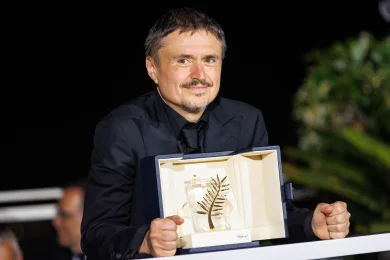
Cristian Mungiu is already a canonical name at Cannes: he won the Palme d'Or in 2007 with "4 Months, 3 Weeks and 2 Days" and later returned to competition with "Beyond the Hills" (awards for screenplay and female performance) and "Graduation," consolidating the image of an author who radiographs Romanian social and moral systems. BBC opens the analysis of "Fjord" by explicitly reminding that Mungiu "is a Romanian screenwriter-director who won the Palme d'Or in 2007," thus emphasizing that the new film comes with high expectations.
In an interview with ProTV, Mungiu says he wanted the audience to leave the hall "asking questions," not seeking confirmations of their own beliefs and criticizes what he calls the pressure of "political correctness" on art. He rejects the idea that the film would be "reactionary propaganda," arguing that his interest is to provoke real discussions about the double standards of societies that consider themselves progressive.
Chances for a second Palme d'Or and positioning in the competition
From the perspective of the "race" for the Palme d'Or 2026, "Fjord" is perceived as one of the strong titles of the competition, but not necessarily the clear favorite. A few relevant elements:
Vulture notes that the film received a 10-minute ovation at its premiere at Cannes, the longest standing ovation of the edition, a fact also noted by Euronews Romania and other media, which describe it as "a favorite for the grand prize."
Deadline (cited by BBC) calls it "Palme d'Or worthy... a fierce, intelligent, and captivating film," a strong signal that part of the Anglo-Saxon criticism sees it as a serious candidate. At the same time, The Guardian and other voices from the British press emphasize that the film seems to be "a small deviation" of Mungiu into a territory of international co-production where he "loses focus," which tempers expectations regarding a second Palme.
NewsVibe, through the report that aggregated the media tone, confirms a "distribution on two peaks" in discourse: a cluster of articles that push it into the "big favorite" zone (especially American industry press and cinephile platforms), and a cluster of texts, especially from the British and European area, that reproach it precisely for what Cannes juries often appreciate in Mungiu – moral clarity and psychological density – as being diluted here.
If we relate to the competition (Almodóvar with "Bitter Christmas," other strong titles mentioned in festival reviews), commentators note that the jury has to choose between films that address meta-cinema or author introspection (Almodóvar) and films with explicit socio-political stakes (such as "Fjord" or Asian and Latin American films in the program). BBC and Vulture emphasize that "Fjord" is "the most talked-about film" at Cannes 2026, which visibly increases its chances for an important award – if not Palme, then for screenplay or male/female performance.
In strictly probabilistic terms, criticism seems to position it in the "front line" of favorites, but the polarization of opinions (especially articulated negative reactions like Bradshaw's) can be a minus for a jury sensitive to accusations of "conservative propaganda."
How divided are critics' opinions
From the overall sources (BBC, The Guardian, Vulture, IonCinema, The Film Stage, aggregators like Rotten Tomatoes and the NewsVibe report), a clear picture emerges:
On form (direction, structure, writing):
Some critics see the film as a solid but not revolutionary continuation of Mungiu's style – formal rigor, long takes, interest in institutions; for them, the weaknesses (dialogue in English with the children, the ending) are minor.
Others believe that this "international co-production" dilutes the author's identity, and the film seems to be "a misguided, anticlimactic move."
On substance (ideological message):
Critics like Willmore (Vulture) or Barber (BBC) appreciate the courage to turn the lens on the progressive state and find in the film a fertile ground for discussions about assimilation, cultural norms, and double standards. More severe reservations come from critics who suspect the film could be co-opted as a "fantasy of cultural war" by the right, especially in scenes with caricatured lawyers and officials.
On performances: there is a much clearer consensus that Sebastian Stan and Renate Reinsve deliver solid to exceptional performances, even when critics are skeptical about the film as a whole.
Rotten Tomatoes and Metacritic, through high scores but with a numeric average around 7.8/10, indicate a "high floor, high variance": few total rejections, many reviews oscillating between 3 and 4 stars out of 5, which corresponds well to the impression of a very discussed film, but not unanimously admired.
Read also:
*****Synthesis made with the help of a data monitoring flow provided by the media monitoring platform NewsVibe Romania. The analysis, data, and images presented have been enhanced with the help of Machine Learning and Artificial Intelligence tools.
Latest News
00:32
22:56
22:37
22:23
22:09
See more news
NEWS ON THE SAME TOPICS
.webp)

.webp)