ANALYSIS / Elections in Russia: The Kremlin puts the war in Ukraine at the center of the vote



Always see our news on Google
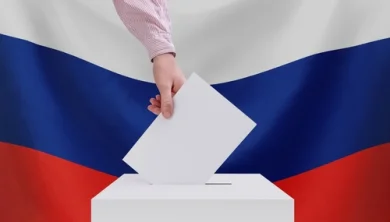
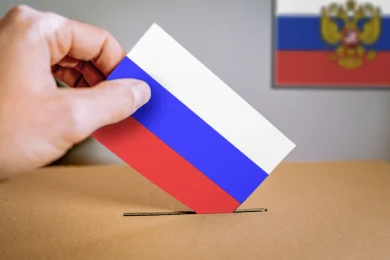
The elections for Russia’s State Duma, held from September 18 to 20, are the first parliamentary elections organized by Moscow since the launch of the full-scale invasion of Ukraine. The dominance of the United Russia party is considered a predictable outcome, but the vote carries important political significance. The Kremlin seeks to demonstrate domestic stability, integrate the war into its new political elite, and reaffirm its claims over the occupied Ukrainian territories.
What is being elected
Citizens are electing the 450 members of the State Duma, the lower house of the Russian parliament, for the 2026–2031 legislative term. Half of the seats are assigned in single-member constituencies, while the other half are allocated through party lists. At the same time, elections are being held for 11 governors, 39 regional parliaments, and several local administrations.
The elections take place over three days, and the authorities have opened polling stations even in border regions affected by the threat of drone attacks. In some areas, including Sochi, polling-station operations were temporarily interrupted for security reasons, while authorities in the Moscow region mobilized approximately 3,000 employees of the Ministry of Emergency Situations to protect the elections.
Favorites and candidates
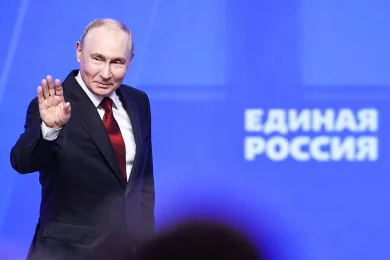
United Russia, the ruling party, is expected to win the majority once again. In 2021, the party won more than two-thirds of the Duma seats, while the current parliamentary opposition, consisting of the Communists, LDPR, A Just Russia, and New People, has limited room for competition and does not challenge the Kremlin’s strategic directions.
United Russia’s high-profile list reflects the regime’s priorities in the fifth year of the war. Prominent candidates include Foreign Minister Sergey Lavrov, Moscow Mayor Sergey Sobyanin, war veteran Vladislav Golovin, Children’s Rights Commissioner Maria Lvova-Belova, and military correspondent Evgeny Poddubny.
The emphasis on veterans is more than electoral: it indicates the Kremlin’s intention to promote people directly associated with the military campaign and build a loyal political elite with a patriotic and militarized profile. In the Moscow region, the local news flow has visibly placed the participation of veterans and their families in the vote in the foreground, as part of the official message concerning social “unity” around the war.
A controlled competition?
The elections are taking place in a political environment in which the independent opposition, critical media, and civic organizations have been severely restricted. The anti-war opposition has little chance of gaining representation, while the candidacy of Polina Lermant, who is campaigning with the message “vote for peace,” is a visible but marginal exception compared with the electoral and media infrastructure available to those in power.
Moscow did not invite OSCE/ODIHR election observers. The OSCE described the decision as concerning and stressed that holding the vote in the occupied Ukrainian territories contravenes Russia’s international commitments: the institution states that the results of such an election cannot have international legal validity.
Elections in occupied territories
Russia is also organizing elections in Crimea, Sevastopol, Donetsk, Luhansk, Zaporizhzhia, and Kherson, territories that Moscow controls wholly or partially and claims as part of the Russian Federation. From the Kremlin’s perspective, including them in the elections is an instrument for the administrative and political consolidation of the annexations.
For Ukraine, the European Union, and the OSCE, the vote held in these areas is illegitimate. The stakes are not merely symbolic: by registering the population and electing deputies who represent these territories, Moscow is attempting to make the annexation more difficult to reverse administratively and propagandistically.
Scenarios and effects
The most likely scenario is that United Russia retains a comfortable majority, with the systemic opposition parties kept in the Duma as formal proof of pluralism. Such a configuration gives the Kremlin a predictable parliament for approving budgets, security legislation, social measures, and regulations related to the war economy.
The result is not expected to produce a change in policy toward Ukraine. On the contrary, the political rise of veterans and advocates of militaristic rhetoric may reinforce the idea that the war is no longer a temporary operation, but a structural component of the Russian political system.
****Summary prepared with the help of a data-monitoring feed provided by the NewsVibe Romania media monitoring platform. The analysis, data, and images presented were enhanced with the help of Machine Learning and Artificial Intelligence tools.
Latest News
23:13
23:02
22:58
22:25
22:21
See more news
NEWS ON THE SAME TOPICS






.webp)