SPECIAL Informat.ro / When vaccines are missing: how the new Ebola epidemic tests the resilience of the global health system



Always see our news on Google
In an isolated corner of the Ituri province, at the border between the Democratic Republic of the Congo and Uganda, several "mysterious" deaths have transformed, in just a few weeks, a local suspicion into a public health emergency of international concern, declared by the WHO. The new Ebola outbreak, caused by the rare Bundibugyo virus, brings to the forefront the fragilities of health systems in Central Africa, the limitations of existing vaccines and the question of how prepared Romania, Europe, and the rest of the world are for yet another major epidemiological crisis.
Where and how the new outbreak started
The new Ebola outbreak was officially declared by the authorities in the Democratic Republic of the Congo (DRC) in mid-May 2026, after a sudden increase in suspected cases in the Ituri province, in the northeast of the country, at the border with Uganda. The first signals came from local hospitals and rural health centers, which reported severe fever, vomiting, and rapid deaths in scattered outbreaks, with subsequent laboratory tests confirming a virus from the Ebola family.
The World Health Organization (WHO) announced on May 17, 2026, that the outbreak is caused by Bundibugyo, a rarer strain of the Ebola virus, and the outbreak has been classified as a "public health emergency of international concern." At the same time, Uganda confirmed the first imported cases, associated with individuals who traveled from the DRC, indicating that the outbreak has already crossed the national border and risks becoming a regional event.
Current situation on the ground
According to data aggregated by the WHO, the European Centre for Disease Prevention and Control (ECDC), the CDC, and humanitarian organizations, by mid-May 2026, there are several hundred suspected cases and several dozen deaths, with the exact toll varying depending on the reporting source and the pace of updates. Recent assessments clearly indicate a trend of increasing case numbers and geographical expansion into several health zones in the Ituri province, with sporadic outbreaks in Uganda.
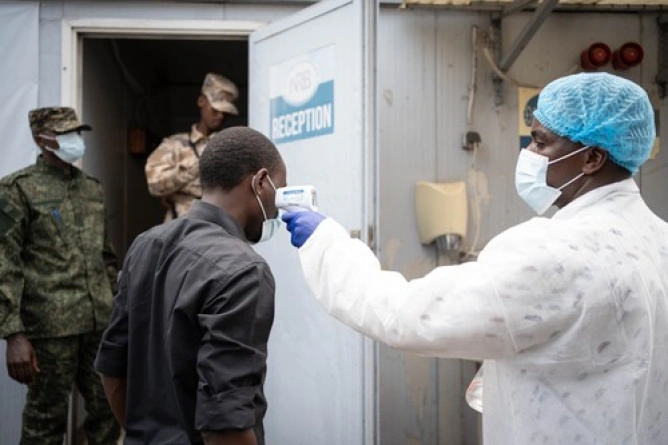
The WHO has activated the emergency response mechanism, and international medical teams – including "Doctors Without Borders" (MSF) – have mobilized within the affected communities for triage, isolation, supportive treatment, and contact tracing. The CDC indicates that, for now, the risk to populations outside Central and East Africa is considered low, but health authorities in numerous states have entered a state of heightened vigilance.
What is Ebola from a medical perspective
Ebola is a severe viral disease, often fatal, caused by viruses from the genus Orthoebolavirus (family Filoviridae), with three viruses recognized as responsible for major epidemics: Ebola, Sudan, and Bundibugyo. The virus is transmitted to humans through contact with the blood, secretions, organs, or other fluids of infected animals (especially fruit bats and primates), and then spreads from person to person through direct contact with bodily fluids or contaminated surfaces.
The incubation period is usually between 2 and 21 days, and the onset is acute, without chronic asymptomatic carriers. Initial symptoms ("dry") include fever, intense fatigue, muscle and headache pain, sore throat, which can be easily confused with other common infections. Subsequently, 4-5 days after onset, "wet" symptoms may appear: vomiting, severe diarrhea, abdominal pain, skin rash, impaired kidney and liver function, and sometimes internal and external bleeding. The average fatality rate of Ebola disease is approximately 50%, with variations between 25% and 90% depending on the strain, context, and access to medical care.
Diagnosis is made in the laboratory through RT-PCR tests, antigen tests, or ELISA, under strict biosafety conditions. There is no standard curative treatment for Ebola, and clinical management primarily relies on intensive supportive therapy: rehydration, correction of electrolyte disturbances, symptomatic treatment, and management of complications. Vaccines and approved therapies exist for the "classical" Ebola strain (Zaire), but for Bundibugyo – the strain involved in the current outbreak – options are limited and in the research stage.
Risk and implications for Romania and Europe
Assessments by the ECDC and WHO indicate, at this moment, a very low risk of virus importation into the European Union for the general population, including Romania. The main reasons are the relatively low number of confirmed cases reported relative to the global population, the location of outbreaks in rural areas, and the developed epidemiological surveillance and control systems at the European border.
For individuals traveling in affected towns and villages in the Ituri province or in bordering areas of Uganda, the risk of infection is considered low, but not zero, especially in the absence of adherence to hygiene measures and avoidance of contact with medical facilities or traditional funeral rituals. For Romania, the main theoretical vulnerability would be the importation of cases through flights or complex routes from Central Africa, but the experience of the West Africa epidemic (2014-2016) has shown that rapid detection, isolation, and contact tracing can break the transmission chain before community transmission establishes in Europe.
From a public policy perspective, the new outbreak brings attention back to Europe's dependence on cooperation with the WHO, ECDC, and African countries regarding epidemiological surveillance and laboratory capacity. At the same time, crises like Ebola generate pressure on humanitarian aid budgets and on the internal debate regarding the management of cross-border health risks, in a context where the collective memory of the COVID-19 pandemic remains fresh.
Local and global response: from the African village to the multilateral body
At the local level, authorities in the DRC and Uganda, with the support of the WHO and medical NGOs, are implementing the "standard package" of control measures for Ebola: rapid identification and isolation of cases, contact tracing, specialized treatment centers, strict protection procedures for medical staff, safe burials, and community awareness campaigns. Mobile teams go from village to village to identify symptomatic individuals, explain the risks associated with traditional funeral rituals, and combat misinformation and reluctance towards authorities.
At the global level, the WHO coordinates the international response, including sending protective equipment, diagnostic kits, and experts in epidemiology, while the CDC provides technical assistance and monitors risks for travelers and the American healthcare system. The ECDC provides guidance to EU member states regarding risk assessment, screening protocols, and preparation of infectious disease units in the event of imported cases. MSF and other humanitarian organizations have opened or expanded Ebola treatment centers and support local authorities with medical personnel, logistics, and training.
Regarding international mobility, some states, such as the USA, have introduced additional screening and entry restrictions for certain categories of travelers from affected areas. Although such measures cannot guarantee total prevention of case importation, they can delay the emergence of possible infections and can buy time for healthcare systems to prepare.
Analysis conducted with the support of Perplexity
Latest News
23:03
22:44
22:40
22:37
22:34
See more news
NEWS ON THE SAME TOPICS
.webp)