ANALYSIS. Access of minors to social networks. Regulations in Romania, Europe, and in the world



Always see our news on Google
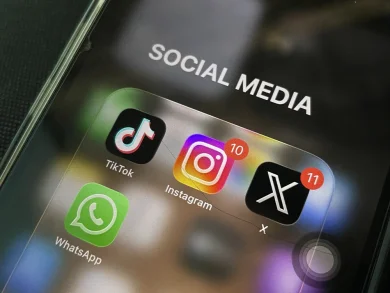
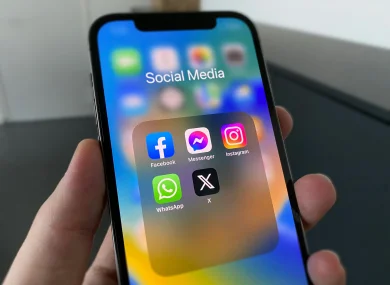
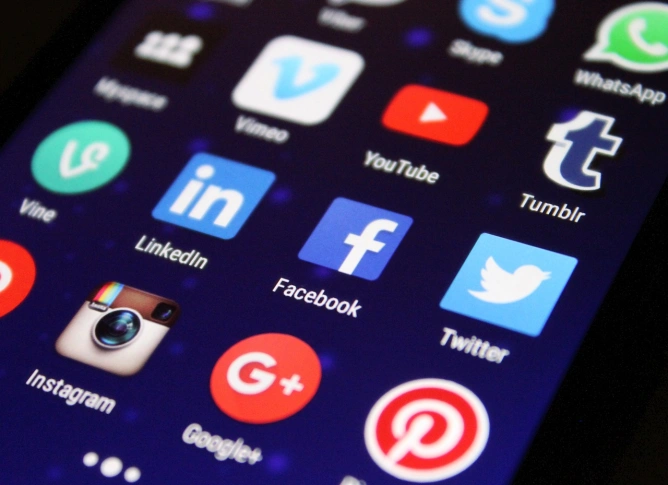
Access to social networks for children and adolescents has become, in recent years, one of the most sensitive public policy issues in Romania and Europe. Platforms such as TikTok, Instagram, Facebook, or YouTube are used daily by millions of minors, despite the age limits officially imposed by companies. In this context, authorities face a major dilemma: how can children be protected from the risks of the digital environment without excessively restricting their rights and freedoms?
The debate was recently reignited in Romania by the statements of the Minister of Health, Alexandru Rogobete, who stated that access for minors to social networks should be "regulated and controlled," either through parental involvement or through mechanisms established by authorities. His statements generated reactions both in the political environment and in civil society, in a broader European context where online child protection is already regulated by community legislation.
The current situation in Romania
Currently, Romania does not have a specific law that explicitly prohibits or limits minors' access to social networks. Regulation is done indirectly, through a combination of general legislation and rules imposed by platforms.
The most important benchmarks are:
The Civil Code and child protection legislation, which establish the role of parents or legal guardians in supervising minors' activities;
The General Data Protection Regulation (GDPR) of the European Union, applicable also in Romania, which establishes clear rules regarding the processing of minors' data;
The internal policies of social platforms, which generally impose a minimum age of 13 years for creating an account.
In practice, these rules are easily circumvented, and studies show that a significant number of children under 13 years old use social networks, either with parental consent or without their knowledge.
The position of the Minister of Health
The Minister of Health, Alexandru Rogobete, stated in several public interventions that access for children to social networks should be "controlled," emphasizing the negative impact that online content can have on minors' mental health. According to him, uncontrolled exposure to digital platforms can contribute to anxiety, depression, eating disorders, and distorted self-image.
Rogobete specified that he does not necessarily support a total ban, but rather a regulatory framework that involves:
real parental control;
technical age verification tools;
possible monitoring or sanctioning mechanisms for platforms that do not comply with the rules.
The Minister's statements align with a broader European trend, where the emphasis is on the responsibility of platforms and the role of the state in protecting minors.
What the European Parliament and EU legislation say
At the European level, the protection of minors in the online environment is regulated by several legislative instruments.
GDPR
The General Data Protection Regulation states that the processing of personal data of children under 16 years old is only permitted with the consent of parents or legal guardians. Member states can lower this limit to 13 years, and Romania has chosen the threshold of 16 years. In theory, this means that platforms should verify parental consent for minor users.
Digital Services Act (DSA)
Adopted at the level of the European Union, the Digital Services Act imposes clear obligations on online platforms regarding the protection of minors. Among these are:
the prohibition of targeted advertising based on profiling minors;
the obligation to assess and mitigate systemic risks, including those affecting children;
increased transparency requirements regarding algorithms and recommended content.
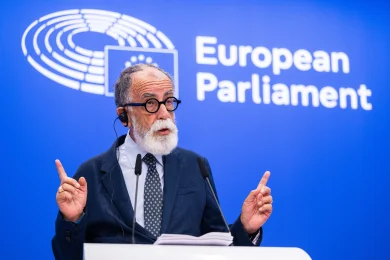
The European Parliament has repeatedly emphasized that the online environment must be "safe by design" for children, without transferring the entire responsibility to parents.
The European Union has also launched non-legislative strategies, such as "Better Internet for Kids," which promote digital education, parental control tools, and cooperation with technology platforms.
We also note that the European Parliament proposed at the end of last year a harmonized age limit at the European level of 16 years for accessing social communication platforms, video sharing services, and AI interlocutors. Minors between 13 and 16 years old could have access with parental consent.
What specialists say
Psychologists, pediatricians, and experts in digital education largely agree that the issue is not the existence of social networks, but the lack of control and digital education.
Frequently cited recommendations include:
limiting online time, depending on age;
gradual access, adapted to the child's maturity level;
constant discussions between parents and children about the risks of the online environment;
avoiding total bans, which can lead to rule-evading behaviors.
Organizations such as Save the Children Romania have drawn attention to the link between excessive use of social networks and mental health issues among adolescents, highlighting the need for coherent and data-driven public policies.
How other European states have regulated
France
France has adopted a law stating that minors under 15 years old can create accounts on social networks only with parental consent. The law emphasizes the responsibility of platforms to verify users' ages.
Spain
Spain has announced measures to strengthen parental control and develop national age verification systems, without currently introducing a total ban.
Germany
Germany strictly applies GDPR rules and has some of the harshest penalties for violating the protection of minors' data. The emphasis is on digital education and parental responsibility.
Italy
Italy has introduced measures that allow authorities to intervene quickly in cases of harmful content for minors, including temporarily blocking certain functionalities.
Examples from outside Europe
Australia
Social networks have been banned for individuals under 16 years old. Platforms such as Facebook, Instagram, TikTok, Snapchat, or YouTube must verify users' ages and remove accounts whose owners are below this threshold.
The United States
In the USA, regulation is fragmented. The COPPA law protects the data of children under 13 years old but does not explicitly prohibit their access to platforms. Some American states have proposed more restrictive laws.
Conclusions
The debate regarding minors' access to social networks reflects a paradigm shift: from individual responsibility to shared responsibility between parents, the state, and platforms. In Romania, the statements of the Minister of Health indicate a possible direction for regulation, aligned with European trends.
It remains to be seen whether authorities will opt for a dedicated law or for strengthening the enforcement of the existing framework. What is certain is that the subject can no longer be ignored, and future decisions will have a major impact on how Romanian children grow and develop in the digital age.
Synthesis created with the help of a data monitoring flow provided by the media monitoring platform NewsVibe Romania. The analysis was enhanced with the help of Machine Learning and Artificial Intelligence tools.
Latest News
22:57
22:53
22:42
22:30
22:28
See more news
NEWS ON THE SAME TOPICS