



The European Union and the UN estimate the cost of rebuilding Gaza at 71.4 billion dollars.



Always see our news on Google
The European Union and the United Nations estimated on Monday the cost of recovery and reconstruction in Gaza at 71.4 billion dollars over the next decade, stating that the process depends on a ceasefire, humanitarian access, and a functional governance framework.
In short
The rapid final assessment of damages and needs in Gaza, conducted by the EU and UN together with the World Bank, estimates the total recovery and reconstruction needs at 71.4 billion dollars over the next ten years.
The report estimates that 26.3 billion dollars are needed in the first 18 months to restore essential services, rebuild critical infrastructure, and support economic recovery.
Physical damages are estimated at 35.2 billion dollars, while economic and social losses are at 22.7 billion dollars.
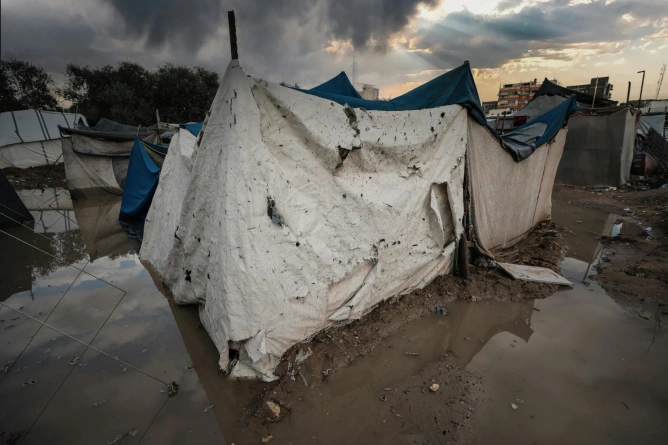
Over 371,888 housing units have been destroyed or damaged, more than half of hospitals are no longer operational, almost all schools have been destroyed or damaged, and the economy in Gaza has contracted by 84%.
The EU and UN state that reconstruction must be led by Palestinians, support the transfer of governance to the Palestinian Authority, and advance a two-state solution.
The European Union and the United Nations published the rapid final assessment of damages and needs in Gaza, conducted together with the World Bank, 24 months into the conflict. The document estimates both the extent of material destruction and economic losses, as well as the financial needs for recovery and reconstruction over the next decade.
According to the assessment, the total recovery and reconstruction needs amount to 71.4 billion dollars, of which 26.3 billion dollars should be mobilized in the first 18 months for the resumption of essential services, rebuilding critical infrastructure, and supporting economic recovery. Damage to physical infrastructure is estimated at 35.2 billion dollars, while economic and social losses are at 22.7 billion dollars.
The report identifies the most affected sectors as housing, health, education, commerce, and agriculture. Over 371,888 housing units have been destroyed or damaged, more than 50% of hospitals are non-functional, almost all schools have been destroyed or damaged, and the economy in Gaza has contracted by 84%.
The document also describes a severe impact on human development. The assessment estimates that human development in Gaza has been pushed back by 77 years. Approximately 1.9 million people have been displaced, often multiple times, and over 60% of the population has lost their homes. The report notes that women, children, persons with disabilities, and those with pre-existing vulnerabilities bear the brunt of the burden.
The EU and UN state that the assessment provides the analytical basis for planning early recovery and reconstruction, in accordance with UN Security Council resolutions, including Resolution 2803. The two organizations assert that, given the scale of needs, recovery efforts must proceed in parallel with humanitarian action and ensure an effective and phased transition from emergency aid to reconstruction, which should include both Gaza and the West Bank.
The joint statement emphasizes that recovery and reconstruction should be led by Palestinians and include approaches such as rebuilding better and building back better, which support the active transfer of governance to the Palestinian Authority, in line with Resolution 2803 and the Comprehensive Plan. The EU and UN also state that the process should be inclusive, transparent, and accountable, and pay special attention to the needs of women, children, the elderly, and persons with disabilities.
The two organizations also assert that a series of conditions must be met for Resolution 2803 to be effectively implemented on the ground and for recovery and reconstruction to succeed. These minimum conditions include a sustained ceasefire and an adequate level of security, unrestricted humanitarian access, immediate restoration of essential services, free movement of people, goods, and reconstruction materials within Gaza and between Gaza and the West Bank, as well as the existence of a functional and transparent financial system.
The statement further mentions that clear and accountable governance, defining mandates, and creating the necessary conditions for the transitional administrative bodies provided for by Resolution 2803 to fulfill their role, in coordination with the Palestinian Authority, are essential. The text also refers to the need for a credible path for the future governance of the Palestinian Authority over the entire occupied Palestinian territory, including Gaza, the West Bank, and East Jerusalem.
Additionally, the EU and UN state that debris clearance, management of explosive ordnance, and protection of housing, land, and property rights are prerequisites for reconstruction. The statement calls on the international community to mobilize resources in a timely, phased, and coordinated manner and to swiftly remove all obstacles to the deployment of necessary expertise and equipment.
The EU and UN assert that progress on recovery and reconstruction in Gaza, the implementation of Resolution 2803, and achieving a two-state solution are not parallel tracks, but are inherently interconnected. The statement says that Resolution 2803 cannot be implemented, and the Comprehensive Plan cannot fully succeed without the physical and institutional recovery of Gaza and without a clear path to Palestinian statehood across the entire occupied Palestinian territory.
The document also includes two statements attributed to the signatories. Alexandre Stutzmann is presented as the head of the European Union Delegation to the West Bank and Gaza Strip, and Ramiz Alakbarov as the deputy special coordinator for the Middle East peace process, UN resident coordinator, and humanitarian coordinator.
The final assessment published on Monday is presented by the EU and UN as the analytical basis for planning early recovery and reconstruction after 24 months of conflict. The document was prepared together with the World Bank and covers both the extent of physical destruction and the economic and social losses.
The text explicitly places reconstruction within the framework of UN Security Council Resolution 2803 and a broader governance and administrative transition plan. In the same logic, the EU and UN link Gaza's recovery to the future role of the Palestinian Authority and a political solution based on two states.
Latest News
14:36
14:24
14:24
14:15
14:11
See more news



.webp)

.webp)


