Tools4CAP brings together the tools used in the 27 states for the planning and evaluation of agricultural policy.
Liviu Brăteanu


.webp)
EU
Foto: Pixabay

Always see our news on Google
The authorities preparing agricultural policies in the European Union have at their disposal a public inventory of the methods and tools used in the 27 member states or available for the development, evaluation, and monitoring of the strategic plans of the Common Agricultural Policy. The inventory is one of the results of the Tools4CAP project, funded by the EU, which tests in practice analytical models, participatory methods, and monitoring technologies and prepares their use also for agricultural policy after 2027.
In short, Tools4CAP has created a public inventory of the methods and tools used in the 27 member states or available to the authorities that design and evaluate agricultural policies. The project works in three main areas: quantitative modeling and forecasting, the participation of authorities and interested stakeholders in decision-making, and the use of data and monitoring technologies. The selected tools are tested through national case studies within the Replication Lab, to see how they can be used in the design and implementation of the CAP. The Tools4CAP Academy offers training for ministries, managing authorities, paying agencies, and other organizations involved in the administration of the CAP. The materials are translated into at least 16 EU languages and will remain publicly available after the project is completed. The project supports the CAP period 2023–2027, and its results are also intended to prepare the framework for agricultural policy after 2027.
The Common Agricultural Policy is administered in the current period through national strategic plans. Member states must establish the interventions they finance and monitor how these contribute to objectives related to agriculture, food security, climate, biodiversity, and the resilience of rural areas.
This approach involves the use of data and methods that allow authorities to estimate the effects of a measure before its introduction and to monitor the results after implementation. CORDIS shows, however, that the use of these tools varies considerably among member states.
Tools4CAP aims to reduce these differences by identifying existing methods, comparing them, and testing the possibility of their use in other administrations. The project is coordinated by Ecorys Brussels NV and is funded by the European Union.
One of the main results is the public inventory of the methods and tools used in the 27 member states or available to decision-makers. Its purpose is for administrations and analysts to see what tools already exist, where they work well, and where there are still gaps.
The inventory does not represent a single European system that all states are required to use. It brings together different methods and allows for their comparison, in an agricultural policy where states have more flexibility in choosing interventions, but must demonstrate the results obtained.
Tools4CAP has also developed a conceptual framework for the entire agricultural policy cycle and has compared existing tools to identify methods that can be improved or replicated. Authorities can thus select the type of information suitable for different stages, from designing an intervention to monitoring its environmental performance.
The first category of tools is represented by quantitative models and forecasts. These can be used to estimate the effects of a policy before implementation and to evaluate the results after its application.
A ministry can use such models to compare several variants of a measure before deciding how funds are distributed. The result of a simulation remains an estimate and depends on the data, assumptions, and parameters used.
The second category is represented by participatory tools. These are designed to bring together authorities, experts, and interested organizations so that public policy needs can be identified and discussed before decisions are made.
Participation can be used in the stages where administrations need to establish the issues they want to address, compare intervention options, or collect information from organizations that implement measures in practice.
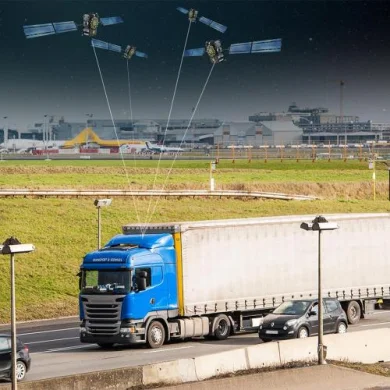
The third category concerns data and monitoring technologies. New data sources and digital systems can help administrations connect information from different programs and simplify the systems through which policy implementation is monitored.
The usefulness of these tools depends on the availability and comparability of data. The project does not establish that all states must use the same models or the same IT systems, but offers the possibility of comparing available methods.
Tools4CAP has not limited itself to creating the inventory. The selected tools are tested in concrete situations through a series of national case studies gathered in the Replication Lab.
These demonstrations verify different approaches for the design and implementation of the CAP and aim to provide information that can be used by other member states. The results will be integrated into the guidance and training materials prepared by the project.
The training component is organized through the Tools4CAP Academy. The program targets ministries, managing authorities, paying agencies, and other organizations involved in the governance of the Common Agricultural Policy.
Webinars and training tools aim to show how models can be adapted to national situations. This adaptation is relevant because the structure of agriculture, the size of farms, natural conditions, and administrative systems differ among states.
Training materials are translated into at least 16 languages of the European Union and will remain available in an open regime after the project ends.
Open access can also be used by administrations that do not have the resources to develop and independently test similar tools. CORDIS specifically mentions the advantage for smaller administrations.
The project also prepares a set of tools for developing administrative capacity, methodological guidelines, and a best practices manual. These results aim to enable better use of data and comparison of methods applied in different states.
The tools are developed in the context of a change in how the CAP is evaluated. Spending funds remains relevant, but administrations must also monitor the results obtained through the interventions planned in the strategic plans.
The current strategic plans cover the CAP period 2023–2027. Tools4CAP is designed for this stage, but CORDIS specifies that its results are also intended to prepare agricultural policy after 2027.
The preparation for the next cycle takes place while the integration of agricultural policy into a broader structure of national and regional partnership plans is discussed. The CORDIS material presents this evolution as part of the latest proposal, not as a system already adopted.
The tools developed through Tools4CAP can be used regardless of the final form of the future policy for comparing options, modeling effects, and monitoring results.
The project does not decide what interventions a state should choose and does not establish the level of funding for farmers. Decisions regarding the content of plans and measures remain within the framework of the institutional processes applicable to the CAP.
The role of the project is to provide methods through which administrations can build and evaluate these decisions based on available data.
CORDIS presented the results of Tools4CAP on August 10, 2026. CORDIS is the European Union's service for information about projects and results of research and innovation funded by the EU.
Tools4CAP is a European project dedicated to developing tools for the governance of the Common Agricultural Policy. The published information describes the inventory, testing activities, training, and materials in preparation, without providing in this presentation a quantitative assessment of the project's effects on farmers' incomes or environmental outcomes.

Latest News
15:50
Minister of Transport: Drivers will be able to travel on 13 kilometers of the A0 North, between Afumați and Glina, starting Wednesday
15:46
Dominic Fritz responds to Alice Weidel after she accused Romanian migrants
15:43
Nicuşor Dan promulgates the “Motorcyclists’ Law” / Motorcycles may use public transport lanes
15:38
A pensioner from the Republic of Moldova was sentenced to 14 years in prison in Russia for “treason against the motherland”
15:25
The head of the National Meteorological Administration announces that the employees targeted in the procurement case no longer work at the institution, and the loss will be recovered
See more news
NEWS ON THE SAME TOPICS




Personalized news feed, AI-powered search, and notifications in a more interactive experience.