The European Parliament is advancing new measures for sustainable fishing in the Mediterranean Sea and the Black Sea




Always see our news on Google
The Fisheries Committee of the European Parliament has approved the provisional agreement on the transposition into European Union legislation of some recommendations from the General Fisheries Commission for the Mediterranean. The new measures aim to conserve marine species, reduce the impact of fishing on vulnerable ecosystems, and combat illegal, unreported, and unregulated fishing.
The Fisheries Committee of the European Parliament approved on Wednesday the provisional agreement on the application into European Union legislation of some recommendations from the General Fisheries Commission for the Mediterranean, in a file that addresses sustainable fishing in the Mediterranean Sea and the Black Sea.
The agreement, concluded with the Council on April 28, 2026, was supported in committee with 23 votes in favor, three against, and one abstention. The text aims to improve conservation and control, sustainable exploitation of marine species, and reduce the impact of fishing on vulnerable ecosystems and non-target species.
In short
The Fisheries Committee of the European Parliament has approved the provisional agreement on the transposition of some recommendations from the General Fisheries Commission for the Mediterranean.
The new rules target fishing in the Mediterranean Sea and the Black Sea, including species such as eel, deep-sea shrimp, red coral, European hake, sprat, black-spotted sea bream, mahi-mahi, and turbot from the Black Sea.
The text introduces a ban on recreational eel fishing, spatial and temporal restrictions for several maritime areas, and a catch certificate for turbot from the Black Sea.
The measures include protections for sharks and rays, marine birds, reptiles, and cetaceans.
The agreement must be voted on by the plenary of the European Parliament, most likely in September, before coming into force after publication in the Official Journal of the European Union.
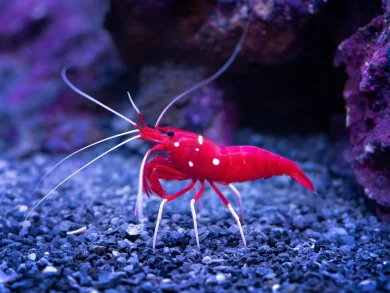
The new measures cover both the exploitation of commercial species and the protection of vulnerable ecosystems. The Parliament mentions the ban on recreational eel fishing, spatial and temporal restrictions in the Levant Sea, the Ionian Sea, and the Strait of Sicily for fishing giant red shrimp and blue and red shrimp, as well as the precautionary closure of red coral fishing when a certain catch level is reached.
The text also includes measures for demersal fishing of European hake and deep pink shrimp in the Strait of Sicily, closures in the Adriatic Sea and for European sprat in the Black Sea, measures for fishing of anchovy and sardine, spatial and temporal closures in the Alboran Sea for black-spotted sea bream, and management rules for mahi-mahi fishing.
For the Black Sea, the regulation introduces a catch certificate for turbot and scientific monitoring for fishing of dogfish sharks. These measures aim to strengthen traceability and control over species under pressure.
The agreement also includes measures to reduce the impact of fishing activities on vulnerable species. Protections are provided for elasmobranchs, a group that includes sharks and rays, as well as for marine birds, reptiles, and cetaceans. The text also establishes minimum standards for all restricted fishing areas.
The regulation contains provisions regarding transshipments and other measures to combat illegal, unreported, and unregulated fishing. This element is important because illegal fishing affects both fish stocks and fair competition among operators who comply with the rules.
The rapporteur of the European Parliament, Željana Zovko, from the European People's Party group, stated that timely implementation of these measures is necessary for sustainable fishing and international cooperation. She noted that fishing in the GFCM area concerns "economic resilience, food security, and cultural identity of coastal communities in the Mediterranean and Black Seas."
Zovko also stated that the implementation of GFCM recommendations is essential to ensure "fair conditions" for European fishermen who already comply with some of the highest standards in the world.
The General Fisheries Commission for the Mediterranean is the multilateral framework for cooperation for the development, conservation, management, and use of living marine resources in the Mediterranean and Black Seas at levels considered sustainable and with a low risk of collapse. The European Union is a contracting party to the GFCM agreement from 1998.
Ten member states of the European Union are also contracting parties: Bulgaria, Croatia, Cyprus, France, Greece, Italy, Malta, Slovenia, Spain, and Romania. The recommendations adopted by the GFCM are binding for the Union and must be transposed into European legislation when their content is not already covered by EU law.
The provisional agreement must be formally adopted by the European Parliament in plenary, with the vote expected in September. The regulation will enter into force the day after its publication in the Official Journal of the European Union.
Latest News
20:22
20:02
19:40
19:26
19:12
See more news
NEWS ON THE SAME TOPICS