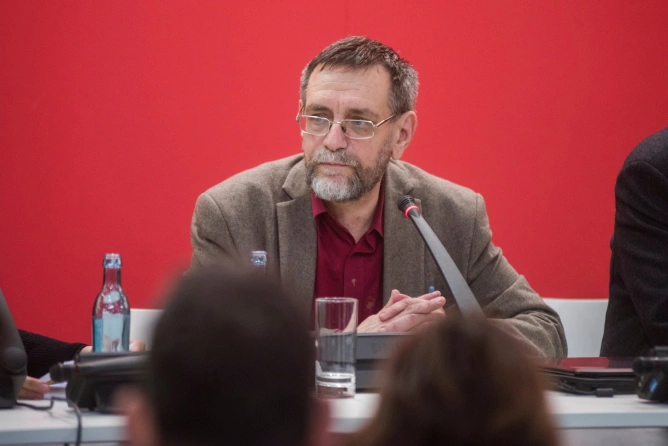
The European Digital Media Observatory warns about the increase of identity-based disinformation.
2eu.brussels



EU
Foto: 2eu.brussels

Always see our news on Google
The European Digital Media Observatory warns, in an analysis published on May 27, 2026, that online disinformation in Europe is becoming faster, more adaptable, and more strongly linked to identity issues, conspiracies, and content generated by artificial intelligence.
The analysis is signed by Paolo Cesarini, the president of the Executive Council of the European Digital Media Observatory, and is part of the May 2026 edition of the newsletter "Signals & Noise." The author notes that the opinions expressed belong to the author and do not necessarily reflect the official position of EDMO.
In short
Disinformation related to the conflict between the United States, Israel, and Iran decreased from 39% of the total detected cases in March to 11% in April. At the same time, EDMO identified increases in disinformation related to the war in Ukraine and migration. The analysis indicates a resurgence of pandemic-style conspiracy theories, adapted to new health, energy, or security crises. Violent events involving or invoking migrants and minorities are used to fuel xenophobic narratives and the "great replacement" theory. EDMO signals an increase in large-scale AI-generated content, referred to by researchers as "slogpaganda," and the monetization of fear, outrage, and conspiracies.
According to the analysis, disinformation related to the conflict between the United States, Israel, and Iran remains one of the main subjects of information manipulation, but its share in the total detected disinformation has significantly decreased, from 39% in March to 11% in April. The author shows that attention has shifted to other lines of geopolitical and social conflict, including the war in Ukraine and migration.
EDMO identifies five trends that marked May: the normalization of conspiratorial thinking, the instrumentalization of identity politics, campaigns to discredit political opponents, the industrial-scale dissemination of AI-generated content, and the monetization of fear and outrage.
One pattern targets the resurgence of conspiratorial theories. The author shows that the armed attack at the White House correspondents' dinner, the third attack against Donald Trump in two years, immediately generated online speculation that the incident was staged or represented a "false flag" operation. These theories emerged within minutes and spread on X, Reddit, TikTok, and fringe forums.
The analysis notes that users seem increasingly less willing to wait for verified information and more inclined to assume the existence of hidden motives or organized manipulation. At the same time, these narratives do not belong to a single ideological area but are amplified by influencers from different political spaces.
EDMO also signals the reactivation of narratives born during the pandemic. An outbreak of hantavirus aboard the cruise ship MV Hondius has revived themes such as alleged new lockdowns, accusations against pharmaceutical companies, theories about biological weapons, and variants of the "plandemic" narrative.
The author describes these theories as "plug-and-play" frameworks, meaning pre-existing narrative models that can be quickly attached to any new crisis. In another example, old theories about lockdowns have been adapted into a supposed "energy lockdown" variant, amid fears regarding the conflict in the Middle East, the blockage in the Strait of Hormuz, energy costs, and inflation.
A second important direction concerns migration and identity-based disinformation. EDMO shows that crimes or violent incidents attributed to migrants or minorities are used to support xenophobic narratives and to fuel the conspiratorial theory of the "great replacement," according to which political elites seek to replace native European populations through mass migration.
The analysis cites cases from Italy, Germany, and Spain where complex events have been simplified or falsely attributed to migrants and unaccompanied minors. In some cases, the narratives have been amplified in political debates and have contributed to the increase of online hate speech.
EDMO notes that the effects go beyond rhetorical levels. Monitoring indicates an increase in harassment campaigns against NGOs, organizations that support migrants, and human rights groups. In Ireland, several nonprofit organizations assisting migrants have reported coordinated abuses, severe enough to reduce their visibility on social media and to increase security measures for staff.
Another trend noted is the use of personal attacks as a geopolitical strategy. Instead of directly combating policies or military decisions, disinformation campaigns use fabricated scandals, false associations, or insinuations regarding moral corruption to discredit public figures. According to the analysis, pro-Russian networks have continued to respond to false claims about Ukrainian President Volodymyr Zelensky.
Similar tactics have targeted European leaders such as Emmanuel Macron, Péter Magyar, and Ursula von der Leyen. The author shows that such attacks work because emotional blows to personal integrity can have a greater impact than factual political arguments, and reputational damage can persist even after the falsehoods are dismantled.
Regarding artificial intelligence, the analysis shows that the share of AI-generated disinformation decreased from 20% to 14% between April and May 2026, but the phenomenon remains influential in political communication, electoral campaigns, and war-related propaganda.
In the 2026 electoral campaign in Malta, EDMO documented the spread of a phenomenon referred to by researchers as "slogpaganda": memes, video clips, and synthetic content produced en masse with artificial intelligence, designed more to provoke ridicule, anger, and viral distribution than to convince through a coherent argument.
This evolution changes the nature of propaganda. While traditional disinformation required coordination, ideological construction, and more sophisticated falsification techniques, AI tools allow for the rapid and cheap production of a large volume of emotional content. In this model, quantity may matter more than quality, and algorithmic repetition and amplification can change public perception.
The analysis also highlights the economic dimension of disinformation. According to EDMO, actors spreading conspiracies are motivated not only by ideology but also by profit. The monetization systems of social platforms reward interaction regardless of accuracy, and content based on fear, outrage, and conspiracies often generates more attention than factual information.
EDMO concludes that disinformation risks becoming a permanent structural force in democratic life if platforms, governments, researchers, media, fact-checkers, and civic organizations do not develop stronger mechanisms for protection, media literacy, and digital accountability.
For the European Union, the analysis is relevant as it directly touches on the functioning of democratic debate, information security, the protection of minorities, and the vulnerability of electoral processes. The stakes are not only about combating specific false claims but also about the ability of European societies to maintain a public space where verified facts can compete with viral, emotional, and monetized content.
The analysis is signed by Paolo Cesarini, the president of the Executive Council of the European Digital Media Observatory, and is part of the May 2026 edition of the newsletter "Signals & Noise." The author notes that the opinions expressed belong to the author and do not necessarily reflect the official position of EDMO.
In short
Disinformation related to the conflict between the United States, Israel, and Iran decreased from 39% of the total detected cases in March to 11% in April. At the same time, EDMO identified increases in disinformation related to the war in Ukraine and migration. The analysis indicates a resurgence of pandemic-style conspiracy theories, adapted to new health, energy, or security crises. Violent events involving or invoking migrants and minorities are used to fuel xenophobic narratives and the "great replacement" theory. EDMO signals an increase in large-scale AI-generated content, referred to by researchers as "slogpaganda," and the monetization of fear, outrage, and conspiracies.
According to the analysis, disinformation related to the conflict between the United States, Israel, and Iran remains one of the main subjects of information manipulation, but its share in the total detected disinformation has significantly decreased, from 39% in March to 11% in April. The author shows that attention has shifted to other lines of geopolitical and social conflict, including the war in Ukraine and migration.
EDMO identifies five trends that marked May: the normalization of conspiratorial thinking, the instrumentalization of identity politics, campaigns to discredit political opponents, the industrial-scale dissemination of AI-generated content, and the monetization of fear and outrage.
One pattern targets the resurgence of conspiratorial theories. The author shows that the armed attack at the White House correspondents' dinner, the third attack against Donald Trump in two years, immediately generated online speculation that the incident was staged or represented a "false flag" operation. These theories emerged within minutes and spread on X, Reddit, TikTok, and fringe forums.
The analysis notes that users seem increasingly less willing to wait for verified information and more inclined to assume the existence of hidden motives or organized manipulation. At the same time, these narratives do not belong to a single ideological area but are amplified by influencers from different political spaces.
EDMO also signals the reactivation of narratives born during the pandemic. An outbreak of hantavirus aboard the cruise ship MV Hondius has revived themes such as alleged new lockdowns, accusations against pharmaceutical companies, theories about biological weapons, and variants of the "plandemic" narrative.
The author describes these theories as "plug-and-play" frameworks, meaning pre-existing narrative models that can be quickly attached to any new crisis. In another example, old theories about lockdowns have been adapted into a supposed "energy lockdown" variant, amid fears regarding the conflict in the Middle East, the blockage in the Strait of Hormuz, energy costs, and inflation.
A second important direction concerns migration and identity-based disinformation. EDMO shows that crimes or violent incidents attributed to migrants or minorities are used to support xenophobic narratives and to fuel the conspiratorial theory of the "great replacement," according to which political elites seek to replace native European populations through mass migration.
The analysis cites cases from Italy, Germany, and Spain where complex events have been simplified or falsely attributed to migrants and unaccompanied minors. In some cases, the narratives have been amplified in political debates and have contributed to the increase of online hate speech.
EDMO notes that the effects go beyond rhetorical levels. Monitoring indicates an increase in harassment campaigns against NGOs, organizations that support migrants, and human rights groups. In Ireland, several nonprofit organizations assisting migrants have reported coordinated abuses, severe enough to reduce their visibility on social media and to increase security measures for staff.
Another trend noted is the use of personal attacks as a geopolitical strategy. Instead of directly combating policies or military decisions, disinformation campaigns use fabricated scandals, false associations, or insinuations regarding moral corruption to discredit public figures. According to the analysis, pro-Russian networks have continued to respond to false claims about Ukrainian President Volodymyr Zelensky.
Similar tactics have targeted European leaders such as Emmanuel Macron, Péter Magyar, and Ursula von der Leyen. The author shows that such attacks work because emotional blows to personal integrity can have a greater impact than factual political arguments, and reputational damage can persist even after the falsehoods are dismantled.
Regarding artificial intelligence, the analysis shows that the share of AI-generated disinformation decreased from 20% to 14% between April and May 2026, but the phenomenon remains influential in political communication, electoral campaigns, and war-related propaganda.
In the 2026 electoral campaign in Malta, EDMO documented the spread of a phenomenon referred to by researchers as "slogpaganda": memes, video clips, and synthetic content produced en masse with artificial intelligence, designed more to provoke ridicule, anger, and viral distribution than to convince through a coherent argument.
This evolution changes the nature of propaganda. While traditional disinformation required coordination, ideological construction, and more sophisticated falsification techniques, AI tools allow for the rapid and cheap production of a large volume of emotional content. In this model, quantity may matter more than quality, and algorithmic repetition and amplification can change public perception.
The analysis also highlights the economic dimension of disinformation. According to EDMO, actors spreading conspiracies are motivated not only by ideology but also by profit. The monetization systems of social platforms reward interaction regardless of accuracy, and content based on fear, outrage, and conspiracies often generates more attention than factual information.
EDMO concludes that disinformation risks becoming a permanent structural force in democratic life if platforms, governments, researchers, media, fact-checkers, and civic organizations do not develop stronger mechanisms for protection, media literacy, and digital accountability.
For the European Union, the analysis is relevant as it directly touches on the functioning of democratic debate, information security, the protection of minorities, and the vulnerability of electoral processes. The stakes are not only about combating specific false claims but also about the ability of European societies to maintain a public space where verified facts can compete with viral, emotional, and monetized content.

Latest News
21:39
Gloria Bistrița lost to Győr, 36–32, in the fourth round of the Champions League
21:25
Zelensky announces that Ukraine will strike Russian refineries more intensely, in response to Moscow’s new air strategy
21:08
Rapper Ian urinated on the stage of the Arenele Romane during a concert
20:36
ANPC imposed fines of over 4.8 million lei following a nationwide wave of inspections
20:17
A ShinyHunters leader who targeted the Pentagon was detained in Jordan / The hacker would cooperate with the FBI
See more news
NEWS ON THE SAME TOPICS






Personalized news feed, AI-powered search, and notifications in a more interactive experience.