Romania calls for more cohesion funding and simpler rules for small businesses and local authorities in the 2028–2034 EU budget



Always see our news on Google
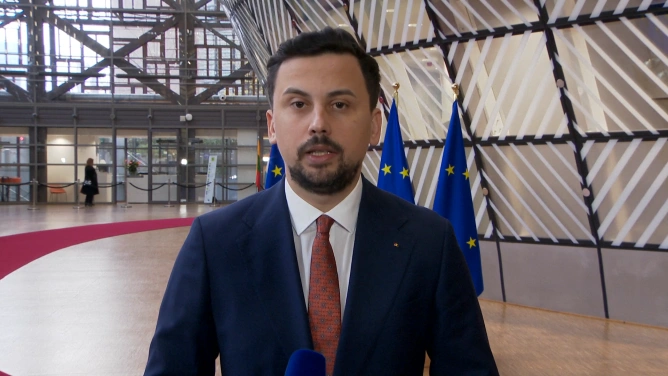
Romania is calling for more resources for the European Union’s cohesion policy and simpler funding procedures for small firms and local authorities. Minister of Investments and European Projects Alexandru-Mihai Ghigiu presented these priorities upon arriving at the General Affairs Council meeting dedicated to cohesion in Brussels. He maintains that investments in regional development and those aimed at competitiveness must support each other in the EU budget for 2028–2034.
Essential
Romania supports strengthening cohesion funding in the future multiannual budget. The minister did not specify a requested amount or a minimum allocation for Romania.
Small firms and local authorities are at the heart of the call for simplification. Ghigiu called for procedures that are easier to apply and the use of simplified costs to finance projects.
The Council debate concerns experience from the 2021–2027 period and the rules for 2028–2034. The presidency document emphasizes access for small organizations, local administrations, and applicants seeking funds for the first time.
Romania’s position feeds into negotiations on the future financial framework. The ministers’ exchange of views does not establish national allocations or new funding rules.
Ghigiu described cohesion as an essential policy for the development of member states, regions, and citizens. In his intervention on 23 November, he indicated that traditional development needs are being joined by requirements concerning competitiveness, connectivity within the single market, the Union’s enlargement, and defense. Romania considers that these priorities must be supported together while maintaining cohesion’s central role.
The call for additional resources expresses Romania’s position in negotiations on the multiannual financial framework, the instrument that sets limits on EU spending for seven years. The minister did not indicate how much Romania should receive or how funds should be distributed among states and regions. The level of funding and the conditions for its use will depend on agreements concerning the budget and programs for the period after 2027.
The second request concerns how beneficiaries obtain and use the funds. Ghigiu called for simpler procedures and simplified costs for small enterprises and local authorities. For these categories, the key issue is the ability to prepare projects and comply with administrative requirements without access to funding being hindered by disproportionate procedures.
The document prepared by the Council presidency for the ministers’ debate starts from the same issue. It states that funds must reach beneficiaries on time so that they can focus on investments. Small organizations, local authorities, and community groups still need easier access, including when they apply for European funding for the first time.
The presidency proposes examining the instruments used during the 2021–2027 period, including digital systems, simplified-cost options, and financing not linked to costs. The latter two concern different ways of providing support instead of reimbursing each actual expense. Their application depends on the program rules and funding conditions.
Simplification must be accompanied, according to the same document, by accountability in the use of money and rigorous financial management. For a local administration or a firm, more accessible procedures must enable projects to be implemented and results to be verified. They do not replace eligibility conditions and control of the funds.
Ministers are invited to answer two specific questions. The first concerns the simplification measures that have worked best during the current period and should be retained. The second asks them to identify one measure that would have the greatest impact on access to funds, especially for small beneficiaries, local authorities, and new applicants.
In this debate, Romania brings together the level of funding and beneficiaries’ ability to turn funds into investments. Ghigiu argued that cohesion policy can contribute to competitiveness and connectivity within the single market, including with a view to the Union’s enlargement. However, his statement does not include a detailed proposal concerning funding for future member states.
The Council’s agenda provides for an exchange of views on simplification, based on the presidency document. The outcome to be monitored is how the ministers’ proposals will be incorporated into the negotiations for 2028–2034, both with regard to the resources available and the rules that firms and local authorities will have to apply.
Latest News
13:52
13:49
13:48
13:43
13:39
See more news
NEWS ON THE SAME TOPICS