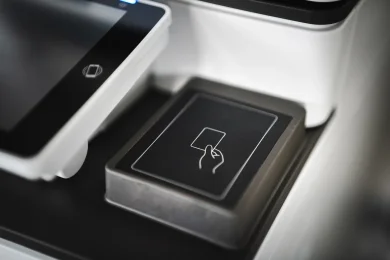
The European Union has begun to replace the stamps in passports with digital checks at the Schengen borders.




Always see our news on Google
The European Union began in 2025 the transition to a digital border control system for Schengen, through the progressive launch of the Entry/Exit System, EES, and the first major common biometric service managed by eu-LISA. The European agency responsible for major IT systems in the fields of freedom, security, and justice shows in its annual report that the EES started progressive operations on October 12, 2025, and full implementation at all border crossing points was scheduled for April 10, 2026.
In short The EES began to operate progressively on October 12, 2025.
The system replaces the manual stamping of passports with the electronic recording of entries and exits from Schengen.
The common biometric service, sBMS, became operational for VIS in May 2025 and for EES in October 2025.
In 2025, the EES recorded 8,180 entry refusals of citizens from third countries and 283 revoked residence permits.
The eu-LISA report also mentions delays in ECRIS-TCN and the platform for joint investigation teams.
The EES changes the way citizens from outside the European Union are controlled when entering the Schengen area for short stays. Instead of the manually applied stamp in the passport, the system electronically records entry, exit, and entry refusals. The aim is to more clearly verify the 90-day rule over a 180-day period and identify individuals who overstay the permitted time.
The eu-LISA report shows that the launch of the EES was prepared through an implementation plan, testing exercises, and coordination with other European systems, including VIS and the common biometric service. The progressive start allowed member states and carriers to gradually adapt to the new procedures, instead of a sudden transition at all border points.
In 2025, after becoming operational, the EES had an availability of 98.13% and three critical incidents. The system recorded 8,180 entry refusals of citizens from third countries, of which 31% were related to the unjustified purpose and conditions of stay, and 25% to exceeding the three-month limit within a six-month period. There were also 283 revoked residence permits and 479 extended permits recorded.
The common biometric service, sBMS, is the first element of the new European interoperability architecture that has effectively entered production. It allows for common biometric checks for multiple European systems and began operating for the Visa Information System, VIS, on May 19-20, 2025, and then for EES in October. eu-LISA migrated 45 million historical biometric data from the old VIS biometric system to sBMS.
VIS was connected to sBMS and EES so that consular and border authorities could better verify the identity and validity of visas. In 2025, VIS stored 49.7 million visa applications, 45.7 million sets of fingerprints, and 49.6 million facial images. The system processed 278 million operations, an increase of 7.3% compared to 2024.
The Schengen Information System, SIS, remains the largest operational system managed by eu-LISA in terms of alerts for persons and objects. In 2025, SIS contained 94.6 million alerts, of which 2 million were for persons and 92.6 million for objects. The number of searches reached 17.7 billion, an 18% increase compared to 2024.
The digital transformation of borders continues also through ETIAS, the system through which citizens from visa-exempt third countries will need an electronic authorization before traveling. In 2025, eu-LISA launched compliance testing for basic functionalities, updated the central simulator, and began developing support tools, including a chatbot and a support tool for citizens from third countries.
The report also mentions the public website Travel to Europe, developed together with Frontex and the European Commission. The static part of the site was launched in July 2025, with information about the new rules for international travelers. Key information is available in 27 languages for EES and in 30 languages for ETIAS.
In the area of migration and asylum, eu-LISA prepared the new Eurodac, necessary for the implementation of the Migration and Asylum Pact. The new system will transform Eurodac into a more comprehensive database for asylum and migration, including alphanumeric data and facial images, not just fingerprints. The entry into operation for key functionalities was scheduled for June 12, 2026.
The report also includes delays. The eu-LISA management board regrets that the platform for joint investigation teams did not become operational in December 2025. This platform should facilitate the exchange of information and evidence between judicial authorities, law enforcement authorities, Europol, Eurojust, the European Public Prosecutor's Office, and OLAF in cross-border investigations.
Another delay concerns ECRIS-TCN, the European system for the exchange of information on the criminal records of citizens from third countries convicted in the EU. eu-LISA completed a major upgrade of the reference ECRIS system in 2025 and began compliance testing with member states, but the technical preparation of ECRIS-TCN was not completed in 2025.
The agency managed a budget of 311 million euros in commitment credits and 338.1 million euros in payment credits from the EU contribution in 2025. The execution was 100% for commitments and payments, after a budget adjustment of 47 million euros, of which 41 million were related to the progressive entry into operation of the EES.
eu-LISA also received EMAS certification in 2025, but the agency's carbon footprint increased by 54%, reaching 7,761 tons of CO₂ equivalent. The report explains this increase through the acquisition of licenses and hardware, new buildings, a modular data center, more intensive use of infrastructure, and the implementation of large systems such as sBMS, VIS, and EES.

Latest News
23:03
22:44
22:40
22:37
22:34
See more news
NEWS ON THE SAME TOPICS