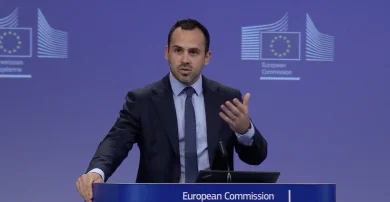
The European Commission finds fragmented application of the rules regarding migrant work in the EU



Always see our news on Google
The European Commission has published reports on the implementation of the Directive on sanctions against employers and the Directive on seasonal workers. Member States have intensified controls and imposed financial penalties of over 200 million euros per year in 2023 and 2024, but the enforcement of the rules remains uneven in the EU.
The European Commission found that member states have intensified controls and sanctions against the illegal employment of migrants, but the enforcement of EU rules remains fragmented between countries.
In short
The Commission has adopted reports on the implementation of the Directive on sanctions against employers and the Directive on seasonal workers.
Member States conducted nearly 600,000 targeted inspections in high-risk sectors in 2024.
Detection of migrant workers in irregular situations increased by over 28,000 in 2023 and 2024.
Financial penalties against employers who hire migrants in irregular situations exceeded 200 million euros per year in 2023 and 2024.
The Commission will launch an evaluation of the Directive on sanctions against employers in 2026.
The European Commission has adopted reports on the implementation of two European instruments that establish common rules for migrant workers in the European Union: the Directive on sanctions against employers, adopted in 2009, and the Directive on seasonal workers, adopted in 2014.
These two legislative acts are part of the EU's approach to migration. The Commission presents them as tools aimed at preventing and deterring illegal migration and the illegal employment of migrant workers, but also facilitating legal pathways for labor mobility.
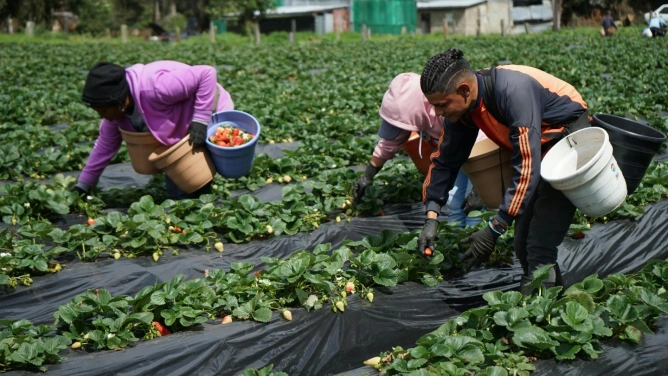
The Directive on seasonal workers establishes the framework for the orderly admission of seasonal migrant workers. Since its entry into force in 2014, the directive has contributed to clearer pathways for labor mobility, reducing incentives for illegal employment and undeclared work, according to the Commission.
The Commission states that it will continue to monitor the implementation of this directive in the European Union.
The Directive on sanctions against employers targets employers who use migrant workers in irregular situations. According to the Commission's report, member states have intensified targeted inspections in high-risk sectors.
In 2024, these inspections reached nearly 600,000. The Commission shows that the detection of migrant workers in irregular situations increased by over 28,000 in 2023 and 2024.
Member States have also imposed more deterrent penalties against employers who hire migrants in irregular situations. Financial penalties exceeded 200 million euros per year in 2023 and 2024.
However, the Commission warns that the enforcement of the Directive on sanctions against employers remains fragmented among member states.
The European executive will launch an evaluation of the directive in 2026 to determine whether it remains fit for purpose and how its effectiveness can be improved.
The Commission will also analyze the mandate of the European Labour Authority, as part of the review scheduled later in the year. The evaluation will look at how the Authority can better address abuses regarding the working conditions of migrants.
In parallel, the Commission announces additional support for member states through funding, targeted actions for cooperation, data exchange, and sharing of best practices.
The Commission links these measures to the priorities set out in the European Asylum and Migration Strategy for the next five years, published in January 2026.
The strategy aims to achieve three objectives: preventing illegal migration and dismantling the economic model of criminal networks involved in the illegal smuggling of migrants, protecting people fleeing war and persecution while preventing abuses of the system, and attracting talent to the EU to enhance the competitiveness of European economies.
The Commission emphasizes that the file also has an economic component. Seasonal workers are important for sectors such as agriculture and tourism, and common rules regarding legal labor mobility are linked to the competitiveness of the EU.
The Directive on sanctions against employers was adopted in 2009 to combat the employment of nationals from third countries in irregular situations. It establishes obligations and penalties for employers who use such workers.
The Directive on seasonal workers was adopted in 2014 to create a common framework for the admission and residence of seasonal workers from outside the EU. It aims to provide legal pathways for temporary work and reduce the risk of undeclared work and exploitation.
The publication of implementation reports does not change existing legislation. It provides the Commission with a basis for monitoring the application of the rules and for the evaluation announced in 2026 of the Directive on sanctions against employers.
The practical stake is whether the EU can combine the need for labor in seasonal sectors with more effective control of illegal employment and better protection of migrant workers against exploitation.
Latest News
22:52
22:51
22:27
22:24
22:23
See more news
NEWS ON THE SAME TOPICS