Commission proposes excluding around 60 Russian banks from SWIFT



Always see our news on Google
The proposed 22nd package also targets energy services, oil tankers insured in Russia, and participation in competitions in the EU under the Russian flag. The sanctions require adoption by the Council; separately, the Commission has adopted guidelines for stricter checks when issuing visas.
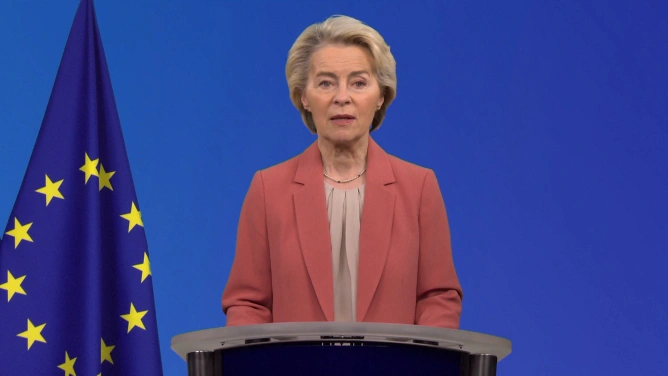
The European Commission proposes that around 60 Russian banks be excluded from the SWIFT system and targeted by the transaction ban, as part of the 22nd package of sanctions against Russia. The proposals presented by Commission President Ursula von der Leyen also include restrictions on energy services, oil tankers insured in Russia, and the participation of teams and athletes under the Russian flag in events in the EU. The package has not yet been adopted by the Council.
Key points
The Commission is targeting around 60 Russian banks and payment networks and crypto-assets used to evade sanctions. The statement does not publish the list of banks and does not allow a net number of newly sanctioned institutions to be established.
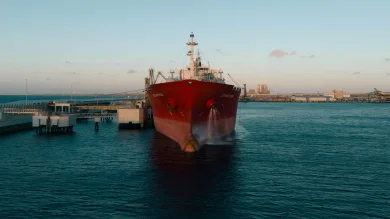
The proposed restrictions on energy services would include, for the first time, services in the electricity sector. The Commission also announces the targeting of more than 70 additional vessels, as well as a ban on oil tankers insured in Russia.
The sports measures concern teams and athletes competing under the Russian flag in the EU, the display of official symbols, and other financial or management links. The announcement does not establish a general ban on every Russian athlete.
The Commission has adopted revised visa guidelines, but the Council must decide when the entry ban for combatants will apply. The guidelines retain safeguards for people who need protection.
In the written statement, von der Leyen presents extending the transaction ban to around 60 banks and removing them from SWIFT as elements of the new proposed package. Action against payment networks and crypto-assets would target both Russia and third countries facilitating the evasion of sanctions. The Commission says it has already launched a sanctions task force in the area of crypto-assets to support cooperation with international partners.
SWIFT is a messaging network used by banks to transmit financial instructions. Exclusion from the network and a transaction ban are distinct measures: the former limits access to communication infrastructure, while the latter restricts the permitted operations with the institutions concerned.
These measures add to existing regimes, with different legal effects. On 16 November, the Council sanctioned nearly 50 Russian banks and financial institutions under a regime providing for the freezing of assets and a ban on making funds or economic resources available. The statement on package 22 does not specify the overlap between that list and the approximately 60 banks now targeted. The figures cannot be added together to calculate how many distinct institutions would be sanctioned.
In the energy sector, the Commission proposes extending the ban to services through which European companies help build, operate, or repair Russian infrastructure, particularly refineries. According to the announcement, services in the electricity sector would be included for the first time. The package would also target more than 70 additional vessels belonging to the so-called shadow fleet, used to evade restrictions, and introduce a ban on oil tankers insured in Russia.
Another component would prohibit Europeans from continuing to hold positions on the governing bodies of companies in Russia. The statement does not limit this announcement to the banking or energy sector.
In sport, the proposal concerns the participation of teams and athletes under the Russian flag in events held in the EU and the display of Russia’s official symbols. Restrictions are also announced on financial flows from Russian sponsors to sports and cultural associations based in Europe, as well as on Russians holding positions on the governing bodies of European sports federations. The wording does not amount to excluding all athletes solely on the basis of Russian citizenship.
Alongside the sanctions package, the Commission has adopted revised guidelines for assessing visa applications and an updated list of supporting documents. These provide tools for identifying combatants, including questions about military service, self-declarations, and the possibility of requesting a military record book. The basis for the entry ban was created through package 21, adopted in July; its activation, however, requires a Council decision. The adoption of the guidelines does not mean that this stage has been completed.
The enhanced checks described by the Commission target people who have served in the Russian armed forces or associated groups since 24 February 2022 and have directly participated in combat operations in the war against Ukraine, including people with other citizenships. The communiqué retains safeguards for human rights defenders, dissidents, and independent journalists. It also calls for humanitarian exceptions to be considered for Ukrainians who were imposed Russian citizenship and can prove their previous Ukrainian citizenship.
The guidelines also recommend a very strict approach to tourist visas and thorough individual assessments at borders. In the case of athletes competing on behalf of Russia, the Commission specifies that visa refusals under the new ban should be considered after its adoption. For artists, it recommends paying particular attention to those sponsored by the Russian authorities who may use their visibility to support the war. The Commission also recommends not recognizing non-biometric Russian passports, interviews, and systematic fingerprint checks in the Schengen Information System, as well as entering alerts following individual decisions to refuse entry on grounds of public order or internal security.
The next step for the new sanctions is the adoption of the acts by the Council. Decisions under the common foreign and security policy require unanimity among the Member States, while regulations establish the exact scope of the economic and financial restrictions. The Commission’s statement does not provide an application date for the entire package; for the ban concerning combatants, the communiqué explicitly states that the date of entry into force will be decided by the Council.
https://2eu.brussels/ro/news/comisia-propune-excluderea-din-swift-a-circa-60-de-banci-ruse
Latest News
21:00
20:54
20:47
20:42
20:36
See more news
NEWS ON THE SAME TOPICS

.webp)