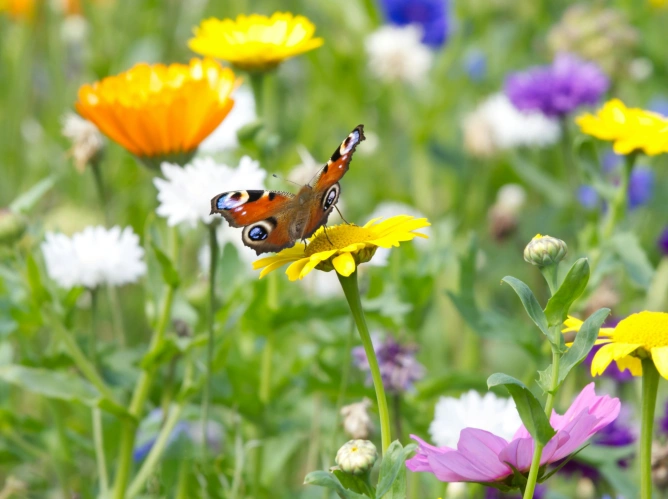
Eurobarometer shows broad support in the European Union for biodiversity protection



Always see our news on Google
Support from Europeans for protecting biodiversity remains very high, and the majority of citizens believe that nature is essential for health, economy, climate, food, and clean water, according to a new Eurobarometer special published by the European Commission at the beginning of EU Green Week.
The survey shows that almost all Europeans consider stopping biodiversity loss important. 96% say that people have a responsibility to take care of nature, 95% state that health and well-being depend on nature and biodiversity, and 94% link biodiversity and healthy nature to long-term economic development and combating climate change.
In short
96% of Europeans say that people have a responsibility to take care of nature.
95% believe that health and well-being depend on nature and biodiversity.
94% see air, soil, and water pollution as a threat to biodiversity.
51% say that the EU's priority should be the restoration of nature and biodiversity to repair the damage caused by human activities.
49% say that economic projects that destroy nature in protected areas should be banned, while 40% accept them only for major public interest and with full compensation for damages.
The special Eurobarometer 571, "European Attitudes Towards Biodiversity," was conducted between February and March 2026 in all 27 member states. Approximately 26,500 people were interviewed face-to-face, in their national language. The survey was commissioned by the European Commission's Directorate-General for Environment and continues the previous series from 2015 and 2018.
The Commission states that the results will fuel discussions during EU Green Week 2026, dedicated to how investments in nature and healthy ecosystems can strengthen Europe's economy, security, and resilience. The data will also contribute to the assessment, or "stress test," of the Birds and Habitats Directives, for which public consultation is open until August 10, 2026.
Jessika Roswall, the European Commissioner for Environment, Water Resilience, and Competitive Circular Economy, said that public support shows that Europeans see nature as part of the economy, not as an obstacle to development.
"Healthy ecosystems are the foundation of resilient and competitive economies. When we invest in them, we are not choosing nature over growth; we are choosing the type of growth that lasts," said Roswall.
The survey shows a strong increase in familiarity with the term "biodiversity." 83% of Europeans say they have heard of the term, 12 percentage points more than in 2018. Of these, 55% say they have heard of biodiversity and know what it means, an increase of 14 percentage points.
However, differences between countries remain significant. In Sweden, 99% of respondents have heard of the term, while in Denmark and the Netherlands, the proportion reaches 97%. In contrast, the highest percentages of those who have never heard of biodiversity are in Romania, 40%, the Czech Republic, 37%, and Latvia, 31%.
In Romania, only 35% of respondents say they have heard of biodiversity and know what it means, while 25% have heard the term but do not know its meaning. This difference matters politically, as the report shows that people familiar with the term biodiversity are more likely to identify threats to nature and support protection measures.
At the socio-demographic level, the report shows that education strongly influences familiarity with the term. 70% of respondents who remained in education until 20 years or more say they know what biodiversity means, compared to 28% among those who left education at 15 years or earlier.
Europeans identify multiple simultaneous pressures on biodiversity. Air, soil, and water pollution is considered the main threat, with 94% of respondents saying that biodiversity is threatened "very much" or "quite a lot" by this factor.
Human-induced disasters, such as oil spills or industrial accidents, are indicated by 92% of respondents. The transformation of natural areas into other land uses, including urban expansion, is seen as a threat by 90%.
Fragmentation or alteration of natural areas through transport, water, and energy infrastructure projects is mentioned by 89% of Europeans. Climate change is considered a threat by 87%, intensive agriculture, intensive forestry, and overfishing by 85%, and non-native plants and animals introduced from other regions by 77%.
The Eurobarometer infographic highlights four threats: pollution, 94%, human-induced disasters, 92%, transformation of natural areas, 90%, and fragmentation through infrastructure, 89%. This ranking shows that the public sees biodiversity as a problem related both to the environment and to how infrastructure, land, and economic activity are planned.
National differences are significant. In the case of pollution, at least 90% of respondents consider it a threat in 26 member states. Romania is at the lower end, with 85%, while Greece reaches 99%, and Portugal and Sweden at 98%.
Support for protecting biodiversity is nearly universal, but the report shows a change in intensity compared to 2018. The overall level of agreement remains very high, but in several cases, the proportion of those who say they are "totally in agreement" decreases while the proportion of those who "tend to agree" increases.
This change does not mean a withdrawal of support, but a moderation of the intensity of responses. For example, 96% of Europeans agree that we have a responsibility to take care of nature, the same overall level as in 2018, but the proportion of those who are totally in agreement has decreased by 8 percentage points.
95% of Europeans agree that health and well-being depend on nature and biodiversity. 94% believe that biodiversity and healthy nature are important for long-term economic development, and 94% say that protecting nature is essential for combating climate change.
93% state that biodiversity is indispensable for the production of goods such as food, materials, and medicines. This result is relevant for the economic debate, as it shows that the public does not perceive biodiversity only as an ecological issue but also as a fundamental infrastructure for production and health.
When asked what the European Union should do, Europeans place the restoration of nature at the top. 51% say that the EU should restore nature and biodiversity to repair the damage caused by human activities, including intensive agriculture, forestry, fishing, and unsustainable tourism.
40% say that biodiversity should be taken into account in planning new investments in infrastructure. This option indicates support for integrating biodiversity into economic and investment decisions, not just for separate environmental policies.
39% call for better enforcement of existing rules regarding nature and biodiversity conservation, and the same percentage mentions better informing citizens about the importance of biodiversity. 38% support the expansion of protected areas, and 36% call for more financial resources for the protection and restoration of nature.
The report notes a shift in emphasis: support for expanding protected areas remains high but decreases compared to 2018, while restoration and better enforcement of existing rules become more central. The public seems to be calling for a combination of ecosystem restoration, enforcement, funding, research, and integration into infrastructure decisions.
At the local level, priorities are very practical. 45% say that sufficient financial support is needed for those directly affected, such as farmers, fishermen, land managers, and local communities. 44% call for clear and easy-to-understand rules for companies. 39% demand the involvement of local communities in decision-making.
These figures are important for the implementation of European environmental policies. They show that citizens support the protection of nature but want measures to be funded, clear, participatory, and equitably distributed. 34% mention better informing citizens, and 32% say that the effort must be equitably distributed in society.
One of the most sensitive results concerns Natura 2000. The European network of protected areas is better known than in 2018, but remains poorly recognized by the general public. 42% of Europeans say they have heard of Natura 2000, 12 percentage points more than in 2018, but 58% say they have never heard of it.
Only 17% say they have heard of Natura 2000 and know what it is, while 25% have heard of the network but do not know exactly what it represents. This difference shows that the EU has a visibility problem for one of its main nature protection policies.
Differences between countries are very large. In Bulgaria, 84% of respondents have heard of Natura 2000, followed by Cyprus and Slovenia, each with 78%, and Finland, with 74%. At the opposite end, only 17% of respondents have heard of Natura 2000 in Ireland, 27% in Germany, and 29% in Romania and Spain.
However, even though many Europeans do not know the name of the network, they strongly support the functions of protected areas. 96% consider protected areas important for preventing the destruction of valuable natural areas on land and at sea, and 95% consider them important for protecting endangered animals and plants.
94% consider protected areas important for promoting land use in a nature-friendly way, and 94% for the role of nature in providing food, clean air, and clean water. 92% link protected areas to the quality of life of local communities, 90% to mitigating the impact of climate change, and 87% to sustainable local socio-economic development, including ecotourism and nature-related activities.
The survey also shows a restrictive position towards economic projects that affect protected areas. 49% of Europeans say that economic developments that lead to the deterioration or destruction of nature in protected areas should be banned, as these areas are among the most important natural spaces.
Another 40% say that such projects are acceptable only if they are of major public interest and if damages are fully compensated, through restoration or mitigation measures. Only 9% believe that economic development should take priority.
In 16 member states, the dominant position is to ban projects that affect protected areas. The highest levels of support for a ban are in Portugal, 70%, Italy, 69%, and Greece, 65%. In the Netherlands, Finland, and Sweden, the dominant position is strictly conditional acceptance, with percentages of 68%, 64%, and 64%, respectively.
This difference between states shows that the European public does not reject any development but demands strict conditions where protected nature is affected. The debate is not just about conservation but about the standards under which infrastructure, energy, agriculture, tourism, or other investments can be compatible with nature protection.
The Eurobarometer comes at an important moment for European environmental policy. The European Union has adopted the Nature Restoration Regulation and is already applying the Birds Directive, the Habitats Directive, the Invasive Species Regulation, and the EU Biodiversity Strategy 2030.
The survey results provide the Commission with an important political argument: public support for protecting biodiversity remains very high, and citizens demand policies that combine restoration, enforcement of rules, integration of biodiversity into infrastructure planning, and guarantees for protected areas.
For farmers, fishermen, land managers, and local communities, the data also convey a clear condition: support for nature protection must be accompanied by funding and easy-to-understand rules. Protecting biodiversity cannot be effectively implemented solely through bans but needs practical means, participation, and equitable distribution of costs.
For companies and public authorities, the message is equally direct. Europeans accept the economy and investments but want nature to be integrated into planning from the start, not treated as an administrative obstacle at the end of the project.
For the European Union, the challenge is not the lack of public support but transforming this support into applicable policies. The survey shows that Europeans want restoration, protection, and clear rules. At the same time, the still low level of knowledge about Natura 2000 shows that one of the EU's most important policies for nature remains insufficiently explained to the public.
Latest News
16:19
16:07
16:06
15:54
15:50
See more news
NEWS ON THE SAME TOPICS