Affordable housing is now on the agenda of EU leaders for the next European budget.



Always see our news on Google
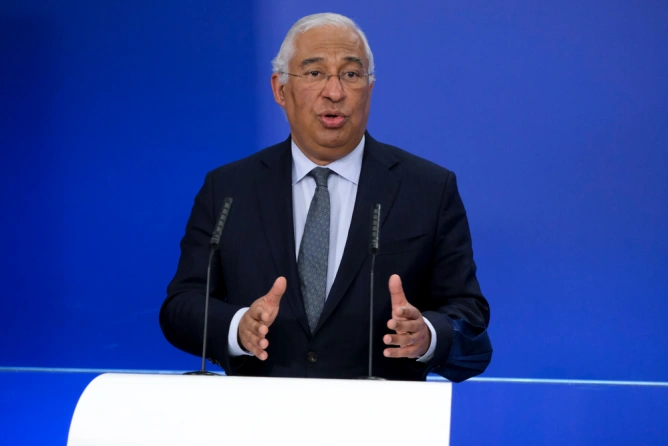
The President of the European Council, António Costa, says that housing will be discussed by EU leaders in June, as part of the debates on the next Multiannual Financial Framework. The Commission is preparing a Bill on affordable housing, and the topic will also be included in a summit organized under the upcoming Irish presidency of the EU Council.
The President of the European Council, António Costa, stated that housing will be one of the topics considered by European leaders when they discuss the next Multiannual Financial Framework at the European Council in June.
The statement was made after a meeting in Brussels with the Coalition of Mayors for Housing, described by Costa as a pan-European and cross-party alliance, representing cities and localities from all regions of Europe.
Costa reminded that, after the first meeting with mayors in 2025, the European Council had in October the first exchange of views dedicated to affordable housing. Since then, the topic has remained on the agenda of the European Union, and the European Commission is working on preparing the Bill on affordable housing and consulting stakeholders.
"Housing, its financial accessibility, and access to it, is one of the most pressing concrete issues for millions of Europeans. Affordable housing is vital for social cohesion and equity. And its absence is at the center of people's disillusionment with democratic institutions," said António Costa.
The President of the European Council linked the housing crisis to the competitiveness agenda, stating that 2026 has been designated as the year of European competitiveness. He said that European institutions recently approved the roadmap "One Europe, One Market," presented as the plan for increasing competitiveness, resilience, and European strategic autonomy.
"A competitive Europe must ensure access to affordable housing in all regions and for all groups of our population, especially for the younger generation and for vulnerable people," said Costa.
According to him, the housing deficit reduces labor mobility and productivity and has negative effects on demographics, consumption, and fiscal sustainability, increasing vulnerabilities and precariousness.
Costa said that mayors are on the front line in managing the housing deficit, reducing pressure on affordability in urban areas, mobilizing funding for the renovation of the existing housing stock, and the construction of new housing.
He emphasized that housing is a multi-level governance issue. Competences regarding affordable housing remain at the national, regional, and local levels, but the EU must analyze how it can complement and support these efforts, respecting the principle of subsidiarity.
"Because if an issue is important for European citizens, it must be important for European institutions," said Costa.
The President of the European Council specified that social and affordable housing, combating poverty and homelessness, and supporting investments in social infrastructure will be specific objectives of the new National and Regional Partnership Plans proposed by the European Commission.
This approach would provide member states, regions, and cities with the flexibility to prioritize housing solutions tailored to local needs. Costa emphasized that there are no one-size-fits-all solutions to this problem.
The Bill on affordable housing, which is set to be presented by the Commission later this year, should provide support to mayors and other actors for adapting public policy responses. Costa mentioned in this context issues such as short-term rentals and speculation.
The President of the European Council said that the subject will remain on the agenda of EU leaders. The European Commission and the upcoming Irish presidency of the EU Council will organize a summit on housing, and the topic will also be part of discussions regarding the next long-term budget of the Union.
Costa said that his agenda that same day was focused on issues affecting the daily lives of citizens. He also mentioned the drug phenomenon, stating that it is growing in complexity and scale in Europe and that over half of the most dangerous criminal networks in the EU are involved in trafficking.
The President of the European Council specified that he brought together experts and leaders from key EU agencies to discuss possible responses, from the public health dimension to law enforcement. He also described this issue as a multi-level governance problem that could be addressed by EU leaders in the future.
The issue of affordable housing thus enters a broader institutional stage, where the debate exceeds local and national competences. For EU leaders, the file is linked to the future European budget, social policies, competitiveness, and the ability of institutions to respond to concrete issues faced by citizens.
Sources

Latest News
14:53
14:47
14:46
14:44
14:44
See more news



.webp)


.webp)