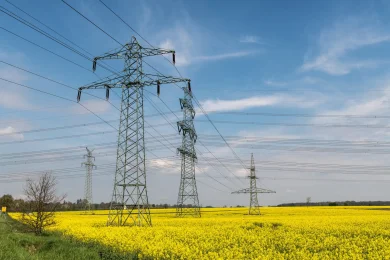
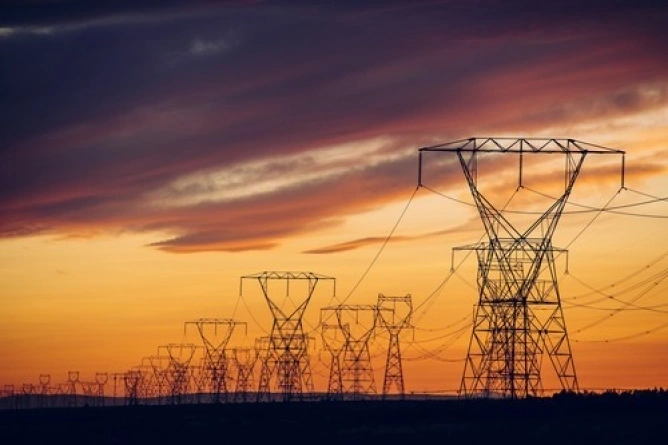
Electric grids are becoming the decisive test for cheap energy, competitive industry, and Europe's green transition.



Always see our news on Google
Clean Air Task Force warns that the European package for electricity grids will determine how quickly Europe can connect clean energy, electrify transport, industry, and buildings, and reduce dependence on imported fuels. The organization welcomes the position of the EU Council as a constructive step but calls for negotiations with the European Parliament to maintain planning of grids at the European level, to make infrastructure models transparent, and not to weaken the ambition regarding the rapid authorization of projects.
Europe needs larger, smarter, and better-planned electricity grids to deliver clean, safe, and affordable energy, according to an analysis published by Clean Air Task Force. The organization states that the European package for electricity grids, currently between the position of the Council and the upcoming position of the European Parliament, will directly influence the EU's ability to connect new renewable sources, electrify the economy, and reduce fossil fuel imports.
In short
Clean Air Task Force welcomes the position of the EU Council regarding the electricity grid package but says that the text needs to be strengthened in trilogues.
The organization calls for electricity infrastructure planning to remain European, independent, and based on transparent data.
CATF warns that transforming the central scenario from delegated act to implementing act may give member states more control over a framework that should be common.
The analysis calls for faster authorization for projects, but with digital portals, clear deadlines, dialogue with communities, and social and environmental guarantees.
The electricity grid package was presented by the European Commission in December 2025 and includes a revision of the TEN-E Regulation, as well as a proposal to accelerate authorization procedures. These two files will establish how cross-border energy infrastructure projects, on which the European electricity system depends, are planned, selected, and delivered.
The EU Council adopted the overall approach on June 26, and the file now enters a decisive political stage. The position of the European Parliament will complete the picture ahead of interinstitutional negotiations, where the Commission, Council, and Parliament will establish the final form of the legislation. For CATF, this stage is the moment when the text can be improved, especially regarding planning, transparency, and authorization.
The underlying issue is that the energy transition cannot advance solely by building wind farms, solar panels, batteries, or heat pumps. All of these must be connected to grids capable of transporting electricity where it is consumed. If the grids are not expanded and modernized quickly enough, Europe may have clean energy available on paper, but practically blocked by a lack of connections, congestion, or slow authorizations.
CATF argues that European planning must remain independent and truly common. The Commission proposed a "central scenario," meaning a reference framework at the EU level for infrastructure planning, shaped not only by transmission operators but led by the Commission. However, the Council proposed shifting from a delegated act to an implementing act, which would allow member states to block the content by qualified majority.
For the organization, this change could renationalize important parts of the central scenario. Such a scenario must be a common basis for investment decisions, not a sum of national preferences. If member states control too much of the assumptions, projects with European value can be pushed to the background, and planning risks reflecting immediate national priorities instead of the needs of the European system.
Data quality is one of the central stakes. CATF calls for the central scenario to use current, granular, and forward-looking assumptions, including regional profiles and peak consumption hours, the impact of new grid technologies, and the effects of integrating different sectors on system needs. Old or incomplete data can lead to poorly sized projects, delayed investments, or infrastructure built where it will not be most useful.
The organization welcomes the fact that the Council's position introduces mandatory sensitivity analyses. These would allow testing planning every two years based on multiple scenarios regarding the energy mix, demand patterns, and market developments. The pace would be aligned with the selection of priority European projects, which can help the EU not base its decisions on a single rigid projection.
CATF also calls for firmer checks between planning for electricity, gas, and hydrogen. Energy networks can no longer be treated separately, as electrification of industry, hydrogen, gases, decarbonization, and energy demand become increasingly interdependent. If each sector uses its own assumptions, Europe may end up with parallel plans that do not fit together. The Agency for the Cooperation of Energy Regulators, ACER, should have a clear role in the independent review of these assumptions.
The analysis also warns against using National Energy and Climate Plans as the main basis for planning. These plans are important, but they can quickly become outdated, use different data from one state to another, and are not always synchronized with infrastructure planning cycles. Used without caution, they can create an incomplete picture of future grid needs.
Transparency is where CATF sees one of the biggest shortcomings of the Council's position. Models that guide billions of euros in infrastructure investments should be verifiable by independent researchers, industry, civil society, and other stakeholders. The organization calls for the publication not only of selected data but also of assumptions, methodology, modeling tools, and stages in which external actors can provide feedback.
This transparency has practical effects. If models are closed or difficult to verify, investors, communities, and local authorities may have less confidence in projects. If assumptions are open and testable, decisions regarding power lines, interconnections, and cross-border projects can become more credible, and errors can be identified earlier.
The second major component of the package is authorization. CATF states that slow and fragmented authorization remains one of the biggest bottlenecks for clean energy infrastructure. Problems arise from a lack of clarity in processes and data, community opposition to certain projects, and insufficient administrative capacity of authorities.
The organization argues that faster authorization can go hand in hand with environmental protection and community support. The Council's position maintains acceleration areas for renewable energy, proposes simplifying authorization for independent storage, and encourages the co-location of clean production, storage, and grid assets. It also recognizes the need for dialogue with communities and provides for the possibility of an independent facilitator for discussions between developers and locals.
However, CATF also sees risks of weakening ambition. In the Council's position, interoperable digital portals for authorization become optional. This can create different procedures between member states from the start, especially for developers and stakeholders working on cross-border projects. Tacit approval mechanisms also become voluntary, which can lead to a fragmented map of rules in the EU.
Digitalizing authorization is presented as a practical condition for speed and trust. Digital portals can help with faster submission and verification of documents, tracking deadlines, collecting public concerns, and exchanging information between authorities. Without such tools, procedures may remain slow, opaque, and difficult to coordinate between states.
CATF states that final negotiations should maintain a European framework for central planning, prioritize projects based on their value for the entire European system, and use transparent and harmonized criteria. These criteria should include supply security, decarbonization, market integration, and cost efficiency.
For Europe, the electricity grid file is directly linked to energy, industry, and climate. Without infrastructure capable of keeping pace with the transition, clean energy cannot reach households, factories, transport, and heating systems quickly enough. The electricity grid package can become the basis for better planning, but only if the final text remains European, transparent, and ambitious enough to accelerate projects.
Latest News
21:01
20:56
20:31
20:25
20:22
See more news
NEWS ON THE SAME TOPICS