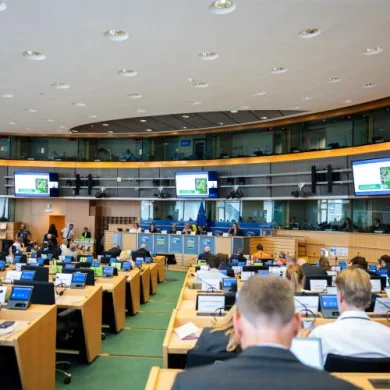
Before the EFSA assessment considered in the article, the European Commission advocated at an AGRI–ENVI meeting on 2 September 2026 for simplifying the rules on pesticide authorization, arguing that this would free up resources for substances considered a priority. However, the dispute also arose over the timetable for the assessments: delays were attributed to the length of the analysis stages at the rapporteur Member State level and the coordinated examination by EFSA, while experts called for the system to remain capable of identifying new risks as the process unfolds. The discussions mentioned controversies including derogations, emergency authorizations and the treatment of neonicotinoids, as well as how consistency in assessments and the application of the rules can be ensured.
EFSA identifies a high chronic risk to bees for all assessed uses of fatty-acid-based pesticides




Always see our news on Google
The European Food Safety Authority (EFSA) identified a high chronic risk for adult honey bees and a high risk for brood in all representative uses of the two formulations assessed. The products contain fatty acids obtained from hydrolysed vegetable oils and are used against insects and mites. Additional studies changed the conclusion regarding short-term contact, but did not remove the concern regarding chronic exposure.
In brief
The chronic risk remained high for all representative uses of the ABP 617 and NEU 1128 I SL formulations.
An additional study supported a conclusion of low acute contact risk. The data were insufficient to remove the chronic risk.
EFSA identified a high risk for springtails when NEU 1128 I SL is used on ornamental plants and was unable to conclude the chronic risk assessment for aquatic invertebrates for any representative use of this formulation.
The document is a scientific assessment in the procedure for renewing approval of the active substance. It is not a ban decision.
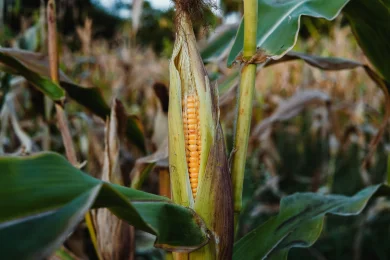
The assessment, published in the EFSA Journal on 11 November, concerns two formulations: ABP 617, based on fatty acids from hydrolysed olive oil, and NEU 1128 I SL, based on fatty acids from hydrolysed rapeseed oil. Greece and Austria carried out the initial assessments. Experts examined representative uses on crops such as strawberries, tomatoes, cucumbers, fruit trees and ornamental plants.
The first stage of the assessment indicated a high risk for adult bees exposed over the long term and for brood, in all representative scenarios for the two formulations. EFSA then analysed tunnel studies, which allow bees to be observed under conditions closer to those in the field. One of the studies supported a conclusion of low acute contact risk. However, the Authority considered that the available studies were insufficient to reduce the estimates of acute or chronic risk through ingestion. For certain crops, the initial assessment had also indicated a high acute ingestion risk when NEU 1128 I SL was used.
Chronic risk concerns the effects of repeated or prolonged exposure. A favourable short-term result in adult bees does not, by itself, show that brood is protected. The assessment describes the risk in the scenarios examined; it does not measure losses observed in apiaries.
For uses of NEU 1128 I SL on ornamental plants, EFSA identified a high risk for springtails, small invertebrates that contribute to the decomposition of organic matter in soil. For the same formulation, the lack of data prevented assessment of the chronic risk for aquatic invertebrates for all representative uses. Here, the conclusion is that the risk could not be established.
EFSA concluded that the substance does not meet the EU criteria for identification as an endocrine disruptor. The Authority also did not identify a “critical area of concern”, a category defined separately in the assessment procedure. This classification does not change the findings regarding bees and the other organisms examined.
The European Commission and the Member States will use the assessment in the procedure concerning renewal of approval of the active substance. Approval of the substance at EU level and authorisation of products containing it are distinct stages: products are authorised by national authorities in accordance with European rules. Publication of the report does not, in itself, change the conditions for marketing or use.

Latest News
23:50
23:45
23:32
23:25
23:05
See more news
NEWS ON THE SAME TOPICS