Democracy Shield and the strategic moment of Europe. Why I insisted that democracy should be treated as a European security issue.
Liviu Brăteanu


EU
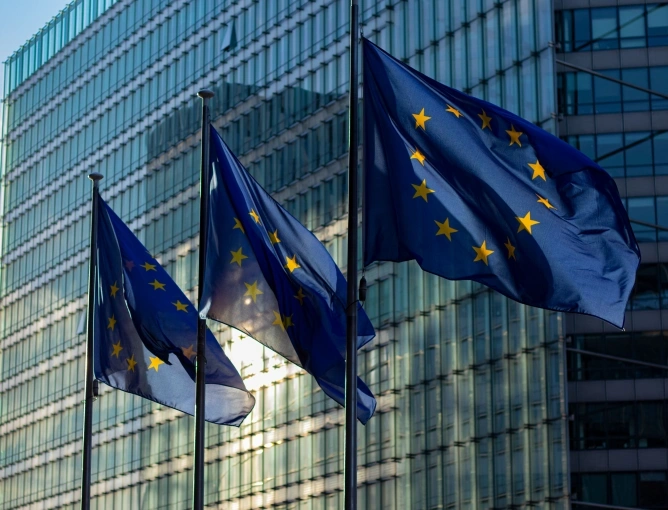
Foto pexels.com

Always see our news on Google
In European politics, there are moments when a report is more than just a report; it becomes a signal, a change in language, sometimes even the beginning of a new doctrine. I believe that the vote in the Special Committee for the European Democracy Shield represented such a moment.
At first glance, the report seems to continue a familiar debate: disinformation, foreign interference, election protection, platform responsibility, press freedom. All these are important themes, and I am glad that the Group of Socialists and Democrats managed to introduce numerous essential priorities regarding civil society, independent media, technological autonomy, and the application of European legislation. But, from my point of view, the real stakes of the negotiations were different. The fundamental question was not how we combat disinformation, but whether Europe is ready to understand that democracy has become a domain of security.
For nearly two decades, we have treated information attacks as a secondary phenomenon, a communication problem, or a challenge for journalists, digital experts, and regulatory authorities. In the meantime, the world has changed. Russia did not just attack Ukraine; it attacked the trust infrastructure of Europe. It has become increasingly evident that hostile actors are not only seeking to occupy territories; they are seeking to occupy cognitive space. They are not just trying to conquer cities but also to fragment societies. They are not only aiming to destroy institutions but to destroy trust in the most important institutions.
However, there is another idea that I insisted on during the negotiations, which I believe is essential for the future of Europe. For too long, we have discussed external interference as if it represented the only threat to democracy. The reality is more complex; no external operation succeeds in a healthy and trusting society in its own institutions. Hostile actors exploit existing cracks; they do not create distrust but amplify it, do not create polarization but instrumentalize it. For this reason, I argued that democratic resilience also involves the ability to identify the internal vulnerabilities of the Union. The erosion of the rule of law, the degradation of public space, excessive inequalities, informational precariousness, and the loss of trust in institutions represent strategic vulnerabilities as important as cyberattacks or foreign influence campaigns.
A European doctrine of resilience must look both outward and inward simultaneously.
I considered it essential to integrate Ukraine into this strategic reflection. Too often, we view Ukraine exclusively through the lens of military support or the accession process, but Ukraine is also the most important European laboratory of democratic resilience in recent years. Under the pressure of war, it has developed mechanisms for societal defense, capacities to respond to information operations, and forms of civic mobilization that many European states have never experienced. Europe must not view Ukraine only as a beneficiary of European security; it must also see it as a provider of strategic expertise for the future European architecture of resilience.
Sabotages of critical infrastructures, cyberattacks, influence operations, algorithmic manipulation, exploitation of polarization, and instrumentalization of social discontent are part of the same family of strategic threats.
For this reason, I proposed, from the very first amendments, the explicit introduction of an idea that until now has only appeared implicitly in European documents: democratic resilience and European security are inseparable. This formulation is not a semantic exercise; it changes the entire intellectual architecture of the project, meaning that defending democracy is no longer just a moral or constitutional obligation; it becomes an investment in the security of the European Union, a part of our strategic autonomy, and a part of Europe's preparation for the geopolitical competition of the 21st century.
I then insisted on a second idea: the protection of democracy must be treated as a European public good. In the European Union, there are large and small states, rich and resource-limited states, states in the center of the continent and states on the front line of geopolitical pressures. Moreover, a successful influence campaign in one member state never remains limited to that state. A local democratic vulnerability produces European effects; a national electoral destabilization produces European consequences. For this reason, I argued that the defense of democracy must benefit from the same logic of solidarity that governs border defense, energy security, or the protection of critical infrastructures. Europe cannot afford a resilience architecture with two speeds.
The same principle was also the basis of my interventions regarding the future of the European Center for Democratic Resilience. I support the creation of the center; Europe needs more strategic coordination, anticipation, and expertise sharing, but I also warned against a typically European temptation: that of responding to every problem by creating a new bureaucratic structure.
Europe does not need a super minister of truth; Europe needs a center for coordination, analysis, and resilience. I insisted that the future center should not duplicate existing responsibilities, especially those related to the application of the Digital Services Act, and that institutional credibility depends on the clarity of competencies.
Another direction I tried to introduce in the report concerns the relationship between democracy and strategic autonomy. In recent years, we have talked a lot about energy autonomy, industrial autonomy, and military autonomy. Far too little about democratic autonomy, which may seem at first glance a strange concept. But I can explain: Europe operates through digital infrastructures that it does not fully control. European public communication takes place on platforms that are not European; a significant part of the data, cloud, and European digital ecosystem depends on external actors. This situation represents not only an economic problem but also a democratic problem.
Technological dependencies produce political dependencies; political dependencies produce democratic vulnerabilities. For this reason, I proposed the explicit integration of reducing strategic dependencies and strengthening European technological capacities into the philosophy of Democracy Shield.
I also tried to bring this initiative closer to the major security and defense dossiers of the Union. In my opinion, the Strategic Compass, Readiness 2030, societal preparedness, cybersecurity, democratic resilience, and strategic autonomy are not separate policies; they are components of the same European security architecture.
This is where I believe the most important contribution of the amendments I proposed lies. They seek to transcend the paradigm that has dominated the last decade, the paradigm according to which disinformation is merely a content problem. No, disinformation is a problem of power, of strategic vulnerability, of societal resilience, so it is a problem of European security. And if we accept this reality, then the European response must also be different. More strategic, much more integrated, and less bureaucratic.
I wanted our response to be closer to the realities of geopolitical competition.
In the end, the greatest mistake that Europe could make would be to consider Democracy Shield as yet another project about platforms, algorithms, and fact-checking. These tools are necessary, but they do not represent the essence of the problem. The real challenge is whether Europe can build a new culture of democratic resilience, a culture that unites security, technology, civic education, strategic autonomy, and citizen participation into a single political project.
If we succeed in this, Democracy Shield will become more than just a legislative initiative; it will become one of the great European doctrines of the decade that is beginning. Essentially, the debate about Democracy Shield is a debate about transforming the European state into a new historical era. In the last century, we built the welfare state to respond to the economic and social risks of industrialization. Today, we are obliged to build the resilient state, capable of responding to the informational, technological, and geopolitical risks of the digital age. It is not about militarizing democracy; it is about understanding that freedom, pluralism, and public trust have become strategic resources that must be protected as seriously as energy infrastructure, transport networks, or defense capabilities.

Latest News
09:55
Iran's reaction after the US elections: Americans said “no” to war
09:53
U.S. Elections / Abdul El-Sayed becomes the first Muslim elected to the U.S. Senate
09:41
Border police officers caught four Turkish citizens who illegally crossed the border from Serbia into Romania
09:38
How Donald Trump explains the Republicans’ defeat in the U.S. elections: “I think Iran played a role”
09:34
Consequences of the US elections
See more news
NEWS ON THE SAME TOPICS

Opinions
Europe’s new energy doctrine



Personalized news feed, AI-powered search, and notifications in a more interactive experience.