



The DUNE experiment will create a cryogenic particle detector 1.6 km deep in South Dakota that uses over 50,000 tons of liquid argon.
Radu Burcă


Environment
Foto: shutterstock.com

Always see our news on Google
The Deep Underground Neutrino Project (DUNE), led by the Fermilab laboratory in the USA, will build the largest cryogenic particle detector in the world, located at a depth of approximately 1.6 kilometers in Lead, South Dakota. The detector will consist of huge modules, each requiring immense amounts of liquid argon, equivalent to five Olympic swimming pools. The first two modules will require approximately 17,000 metric tons of liquid argon each, transported by 1,000 truckloads. The project, which will last about 20 years, will operate at temperatures of minus 186 degrees Celsius. Once completed, DUNE will provide a deeper understanding of the mysteries of the universe, including the matter-antimatter asymmetry and the properties of neutrinos, with the ability to "photograph" interactions through a detailed 3D tracking system. The first modules are expected to become operational by 2032.
Sources

Latest News
15:12
Authorities are demolishing the upper floors of the Rahova apartment building damaged by the explosion
15:09
The General Council of the Capital declared Valea Saulei a protected natural area after five years of research and monitoring
15:05
PSD proposes merging small localities, and over 400 town halls could disappear
14:56
The Ministry of Health announces that 370,000 doses of influenza vaccine are available in warehouses in Romania and can be ordered by pharmacies
14:49
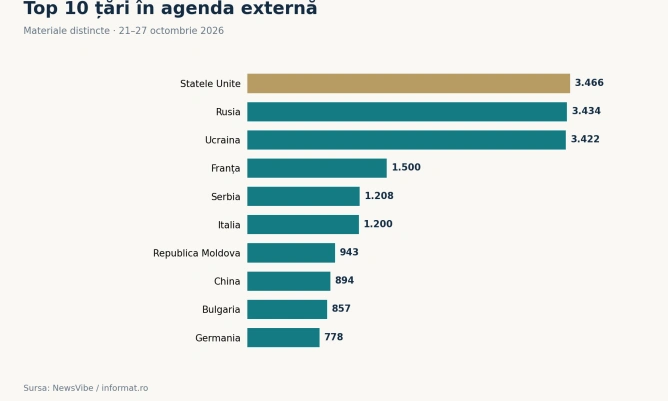
EXCLUSIVE Ranking of countries in relevant online sources in Romania: the US, Russia, and Ukraine lead the foreign agenda. Security dominates the conversation
See more news
NEWS ON THE SAME TOPICS
IT&C knowledge
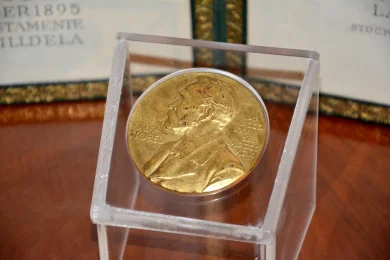
Francis Halzen receives the 2026 Nobel Prize in Physics for his contributions to the observation of cosmic neutrinos

International
Moody’s estimates that the US will build more than 30 GW of power capacity for data centers

International
Donald Trump announces the construction of the largest steel mill in U.S. history in Iowa



Personalized news feed, AI-powered search, and notifications in a more interactive experience.


.webp)

.webp)


