search icon
search icon
Flag Arrow Down
Română
Română
Magyar
Magyar
English
English
Français
Français
Deutsch
Deutsch
Italiano
Italiano
Español
Español
Русский
Русский
日本語
日本語
中国人
中国人

Change Language

arrow down
  • Română
    Română
  • Magyar
    Magyar
  • English
    English
  • Français
    Français
  • Deutsch
    Deutsch
  • Italiano
    Italiano
  • Español
    Español
  • Русский
    Русский
  • 日本語
    日本語
  • 中国人
    中国人
Sections
  • News
  • Exclusive
  • INSCOP Surveys
  • Podcast
  • EU
  • Diaspora
  • Republic of Moldova
  • Politics
  • Economy
  • Current Affairs
  • International
  • Sport
  • Health
  • Education
  • IT&C knowledge
  • Arts & Lifestyle
  • Opinions
  • Elections 2025
  • Environment
About Us
Contact
Privacy policy
Terms and conditions
Quickly scroll through news digests and see how they are covered in different publications!
  • News
  • Exclusive
    • INSCOP Surveys
    • Podcast
    • EU
    • Diaspora
    • Republic of Moldova
    • Politics
    • Economy
    • Current Affairs
    • International
    • Sport
    • Health
    • Education
    • IT&C knowledge
    • Arts & Lifestyle
    • Opinions
    • Elections 2025
    • Environment
140 new news items in the last 24 hours
  1. Home
  2. Current Affairs

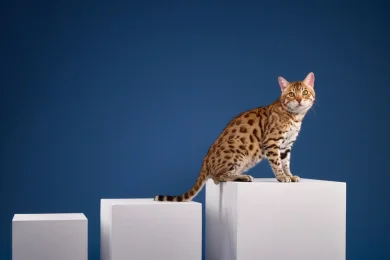
A study published by Science Daily analyzed nearly 500 tumors in cats and found genetic mutations similar to those encountered in humans, including in the case of breast cancer.

Liviu Brăteanu
whatsapp
facebook
linkedin
x
copy-link copy-link
24 May 2026, 15:39
main event image
Current Affairs
Foto: Pixabay
google-preference

Always see our news on Google

A study conducted by teams from the Wellcome Sanger Institute, University of Guelph, and University of Bern analyzed nearly 500 tumors from domestic cats in five countries, highlighting genetic similarities with human cancer. Researchers identified mutations in the FBXW7 gene, associated with aggressive forms of breast cancer, present in over half of the breast tumors analyzed in cats. In humans, these mutations are linked to severe forms of breast cancer and lower survival rates.


The study also revealed similarities in cancers affecting the blood, bones, lungs, and other organs. Geoffrey Wood, a professor at the University of Guelph, emphasized that cancer in cats has been poorly understood until now. Additionally, researchers observed that certain chemotherapy drugs showed promising results in cases of feline tumors with FBXW7 gene mutations. This research supports collaboration between veterinary and human medicine, having the potential to contribute to the development of personalized treatments for cats and improving cancer therapies for humans.

Sources

sursa imagine
Mediafax
Pisicile ar putea ajuta la descoperirea unor noi tratamente împotriva cancerului
sursa imagine
G4Media
Pisicile ar putea ajuta la descoperirea unor noi tratamente împotriva cancerului / „Cancerul la pisici era foarte puțin înțeles până acum”

Latest News

20:50

Analysts consulted by the ECB ahead of the October meeting expected an interest rate of 2.75% in December

20:50

European Commission pays nearly €6.5 billion to France, Austria and Luxembourg through recovery mechanism

20:48

Canada will contribute €500 million to the EU loan for Ukraine, Prime Minister Mark Carney announces

20:42

Angela Merkel argues that the time has come for a woman to be elected president of Germany

20:35

Congressional Democrats are asking Trump to preserve discussions with Grok about the capture of Maduro and to explain AI’s role in decision-making

See more news

NEWS ON THE SAME TOPICS
event image
Arts & Lifestyle
PLOS One study: Countries with more cats reported higher levels of happiness
event image
IT&C knowledge
DOC Felina “tilcayo”, the new breed of wild cat discovered in the Bolivian Andes
event image
IT&C knowledge
Sergiu Pașca, Romanian physician and researcher, reconstructed the cerebral cortex of mice using human neurons
event image
International
A study from the University of Vienna: Dogs can distinguish human emotions from facial expressions
event image
Current Affairs
British researchers show that each additional hour of uninterrupted sedentary time increases the risk of death from cancer by 9%
event image
International
An experimental cancer vaccine, developed by Moderna and Merck, has shown promising results in patients with melanoma.
app preview
Personalized news feed, AI-powered search, and notifications in a more interactive experience.
app preview app preview
cats Genetic mutations cancer

Editor’s Recommendations

main event image
Economy
5 hours ago

Government adopts budget revision / Deficit increases by 3.5 billion lei

Sources
imagine sursa
imagine sursa
imagine sursa
main event image
Opinions
9 hours ago

Andrei Cornea: Under the Shock of Violence

main event image
Exclusive
10 hours ago

SPECIAL Informat.ro / Romania, in the European press: Top topics from the past two weeks. Black Sea security, Europe's focus

main event image
Exclusive
3 hours ago

DOC The Roots of the Conflict in the Middle East: The Power Map Drawn in the Sand by European Interests

app preview
Personalized news feed, AI-powered search, and notifications in a more interactive experience.
app preview
app store badge google play badge
  • News
  • Exclusive
  • INSCOP Surveys
  • Podcast
  • EU
  • Diaspora
  • Republic of Moldova
  • Politics
  • Economy
  • Current Affairs
  • International
  • Sport
  • Health
  • Education
  • IT&C knowledge
  • Arts & Lifestyle
  • Opinions
  • Elections 2025
  • Environment
  • About Us
  • Contact
Privacy policy
Cookies Policy
Terms and conditions
Open source licenses
All rights reserved Strategic Media Team SRL

Technology in partnership with

anpc-sal anpc-sol