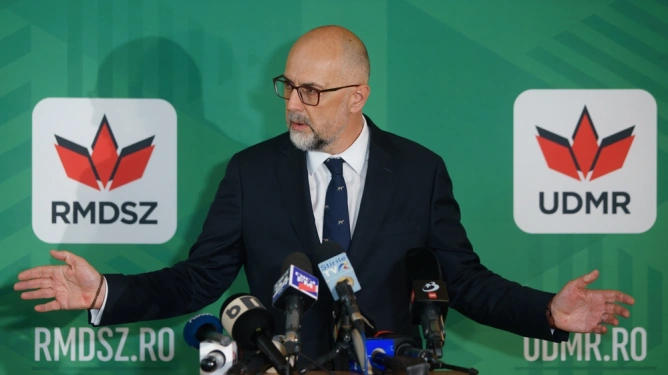

Before Monday’s specific criticisms, UDMR leader Kelemen Hunor drew a distinction between administrative-territorial reform, which would require analysis and preparation, and the reorganization of government institutions, which he considered feasible in a shorter time. He argued that reorganizations decided “from an office” cannot take into account the geography of the areas, the life of communities, and the ethnic situation, citing the case of the Apuseni Mountains, where reaching the demographic threshold would require including localities located at considerable distances.
At the same time, Kelemen Hunor also invoked the principles set out in the European Charter of Local Self-Government and the Framework Convention for the Protection of National Minorities, which he linked to the obligation to consult through a referendum and to avoiding changes in the ethnic balance after reorganization. In parallel, UDMR also reacted to PSD’s intention to include in the reform package not only the merger of localities, but also the reduction/reorganization of certain state agencies and companies, as well as the Government assuming responsibility, with an implementation deadline of March 2027.