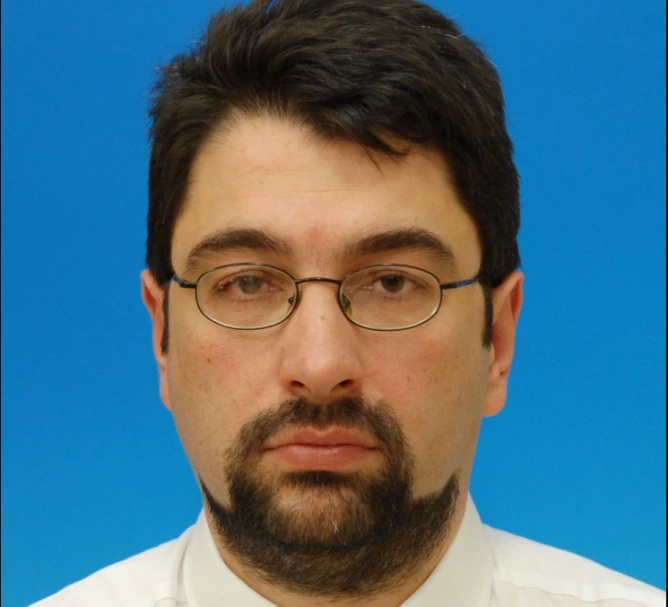
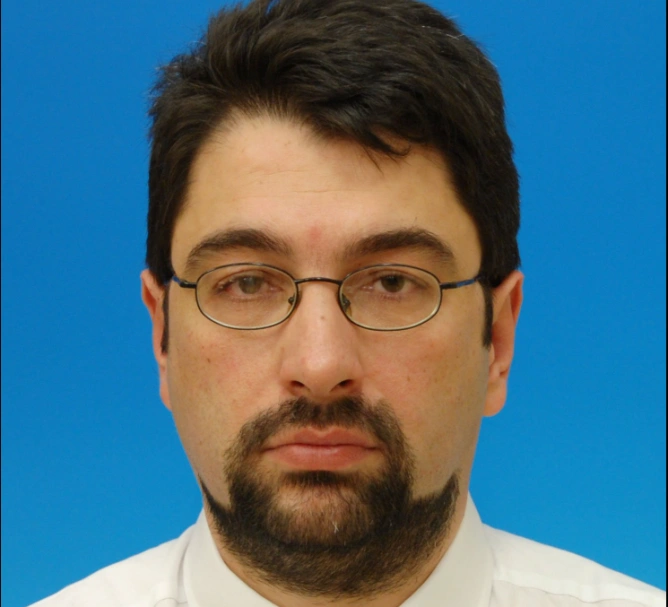
Sever Voinescu, Dilema.ro: Brâncuși – a serious problem!



Always see our news on Google
On February 19, 150 years will have passed since the birth of Constantin Brâncuși. Apparently, it is pointless to declare a "Brâncuși Year" in a country where there is constant discussion about Brâncuși. Can you find in the cultural calendar of post-communist Romania a year without Brâncuși, a year in which the great sculptor might have been somewhat forgotten? It could be said that we do this out of a kind of bureaucratic habit, naming the years according to the date of birth or death of some great Romanian. The bureaucratic habit has an effect, then, in the cultural agendas of institutions, of course. But Brâncuși's case is, however, special, uniquely so. The reason why Brâncuși is a unique case in our culture is that there is no other Romanian artist who has marked his field of creation on a universal scale as Brâncuși did with sculpture. Romanian culture has, of course, personalities of universal significance, from Cantemir to Mircea Eliade and George Enescu. But none have marked their field as vigorously and decisively as Brâncuși did with sculpture. With Brâncuși, universal sculpture takes a direction; no other Romanian artist has produced such a consequence in his field. Therefore, we have a Romanian artist who far exceeds what Romania usually offers to universal culture, and it is precisely this uniqueness, this singularity that creates problems for us.
As someone passionate about Brâncuși for several decades, I can observe that we, Romanians, have a genuine tradition of his poor reception. In Romania, over time, Brâncuși was, in turn, misunderstood, ignored, and then glorified. He was celebrated in a folkloric and nationalist key. He was almost sanctified in an Orthodox line. In response to these ridiculous exaggerations, voices arose that considered him so universal that they saw him as completely detached from Romanian culture, without any connection to any Romanian tradition. In the end, there were also those who regarded him as a kind of guru, a sort of Zamolxis, a manipulator of symbols with ancestral powers. Especially after 1990, when the freedom of opinions turned into the obligation of opinions and the great chatter erupted, so many Romanians appeared who felt the need to publicly express their views on Brâncuși, and the discourse became filled with their chatter, while the absorption of the theme at the level of the collective mentality became chaotic. I hasten to specify that the abundance of Romanian opinions about Brâncuși, as well as the frequent attempts to annex the Brâncușian spirit or, more primitively, the "brand" pure and simple, all based on the manipulation of great misunderstandings, are not entirely to be condemned. They denote the fact that, at least regarding Brâncuși's value, we have unanimity – which, in itself, is formidable and rarely encountered in our culture.
A serious contribution to the spread of many untruths about Brâncuși has come, it must be said, from politicians, culminating with that prime minister who had almost an obsession with bringing Brâncuși's remains to Hobița, on the grounds that this would have been the artist's last wish. In the same vein, I was very pleased with the recent statement from the president of the Academy, Mr. Ioan-Aurel Pop, which clarified the false rumor that has persisted for about 70 years in our cultural circles, that Brâncuși had offered his workshop to the Romanian state sometime in the early 1950s, and that the Romanian state, after consulting with the Academy, had refused it. There are many reasons for shame in the cultural history of those years, but this is not among them. Simply put, Brâncuși never made such an offer. Just think that Brâncuși was a world celebrity in his last decade of life, that he was visited, interviewed, and frequented by many people. Brâncuși's life during those years is very well documented. Moreover, Brâncuși was very concerned about the fate of his workshop, which I believe he had come to be convinced was, in fact, his great work. His workshop was not his museum; it was his masterpiece. We know that Brâncuși consulted with friends about the posthumous fate of the workshop. He wrote letters and addressed memos in this regard. But there is no evidence, no testimony, no document from which we can deduce even that he intended to leave it to the Romanian state. No witness from those years, no writing, no evidence indicates even a thought of Brâncuși in this regard. If he had intended to leave the workshop to Romania or if he had actually done so, it is impossible that there would not have been testimonies and evidence in this regard.
I believe that removing the false information surrounding this great man would be the first and most important thing to do. My impression is that, in the last decade, we have begun to do this and must continue. Moreover, it seems to me that now, in 2025, celebrating Constantin Brâncuși, this would be the most useful thing to do: to try to uncover his truth.
In the third volume of the Trilogy of Culture, entitled The Genesis of Metaphor and the Meaning of Culture, right at the beginning, Lucian Blaga distinguishes between minor culture and major culture. He operates the distinction based on the content of cultures, rejecting the possible criterion of size. The important idea for me now is that Blaga distinguishes between major cultures and minor cultures based on their agenda, based on the recurring themes that construct them. Minor cultures are always concerned with themselves – what am I?, what do I mean among others?, how do others see me?, what is my identity? do I lose it or not? etc. Major cultures do not pose such problems; they venture without complexity into universal issues, such as the human condition, the general course of the world, the essences of life, love, and death, etc. Major cultures are not anxious regarding their own identity. I repeat, to be clear, the issue of value is not at stake. There are remarkable geniuses and talents in minor cultures (in our case, no one doubts the genius of some Eminescu or Caragiale, for example). The difference, according to Blaga, is, I repeat, one of agenda, of program, of themes.
Well, for minor cultures, like ours, a question arises once in a great cosmic cycle, perhaps, this: what do you do when a specific genius of a major culture appears in a minor culture? What does a minor culture do when it gives birth to a genius specific to a higher-level culture? How does it receive him, how does it recognize him, how does it metabolize him? The sum of untruths, even flattering, of silly and endearing nonsense and passions surrounding Brâncuși is the clearest evidence that, despite our efforts, it is difficult for us to internalize, within the frameworks of our culture, his magnitude. A difficult problem!
Latest News
23:12
22:53
22:53
22:25
22:06
See more news