search icon
search icon
Flag Arrow Down
Română
Română
Magyar
Magyar
English
English
Français
Français
Deutsch
Deutsch
Italiano
Italiano
Español
Español
Русский
Русский
日本語
日本語
中国人
中国人

Change Language

arrow down
  • Română
    Română
  • Magyar
    Magyar
  • English
    English
  • Français
    Français
  • Deutsch
    Deutsch
  • Italiano
    Italiano
  • Español
    Español
  • Русский
    Русский
  • 日本語
    日本語
  • 中国人
    中国人
Sections
  • News
  • Exclusive
  • INSCOP Surveys
  • Podcast
  • EU
  • Diaspora
  • Republic of Moldova
  • Politics
  • Economy
  • Current Affairs
  • International
  • Sport
  • Health
  • Education
  • IT&C knowledge
  • Arts & Lifestyle
  • Opinions
  • Elections 2025
  • Environment
About Us
Contact
Privacy policy
Terms and conditions
Quickly scroll through news digests and see how they are covered in different publications!
  • News
  • Exclusive
    • INSCOP Surveys
    • Podcast
    • EU
    • Diaspora
    • Republic of Moldova
    • Politics
    • Economy
    • Current Affairs
    • International
    • Sport
    • Health
    • Education
    • IT&C knowledge
    • Arts & Lifestyle
    • Opinions
    • Elections 2025
    • Environment
134 new news items in the last 24 hours
  1. Home
  2. International

Astronauts have identified the first stages of planet formation around the star HOPS-315, similar to the process in the Solar System.

Emese Grancsa
whatsapp
facebook
linkedin
x
copy-link copy-link
16 July 2025, 19:54
main event image
International
pexels.com
google-preference

Always see our news on Google

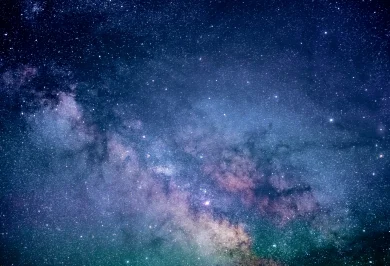
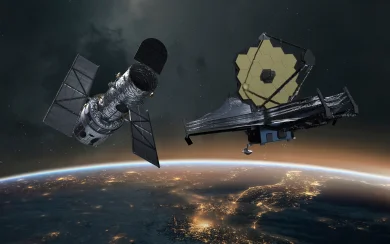
A recent study published in the journal Nature has revealed the earliest stages of planet formation around the star HOPS-315, located in the Orion nebula 1,300 light-years away. The researchers observed protoplanetary disks in which crystalline minerals such as silicon monoxide begin to condense to form planetesimals. This process, observed for the first time outside the Solar System, provides valuable insights into planet formation and the origins of our Solar System. The James Webb telescope played a crucial role in identifying these minerals.

Sources

sursa imagine
News.ro
Astronomi observă naşterea unui sistem solar
sursa imagine
Adevarul
Naşterea unui nou sistem stelar la 1.300 de ani lumină de Soare, observată pentru prima dată de astronomi
sursa imagine
Agerpres
Astronomii observă nașterea unui nou sistem stelar la 1300 de ani lumină de Soare

sursa imagine
G4Media
Astronomii observă pentru prima oară nașterea unui sistem solar
sursa imagine
NBC News
Astronomers capture the birth of a solar system
sursa imagine
independent.co.uk
Scientists just saw a solar system being born for the first ever time

Latest News

22:59

Traian Băsescu, critic of the political class: "When we are left without electricity, when drones are falling around us, they are getting their hair done and going to Cotroceni"

22:48

Midfielder Damjan Djokovic unilaterally terminated the contract with CFR Cluj

22:40

Trade exchanges between Romania and the USA exceeded 7.8 billion dollars in 2025

22:33

Craiova University drew 1-1 in the first leg of the Europa League play-off against Ararat-Armenia.

22:19

USA: a 35-year-old woman has been accused of supporting ISIS and planning an attack on the Congress building in New York

See more news

NEWS ON THE SAME TOPICS
event image
IT&C knowledge
Discovery by astronomers with the James Webb Space Telescope: The pair of supermassive black holes LID-1166, located 4,900 light-years apart in a galaxy in fusion.
event image
IT&C knowledge
Astronomers face difficulties in observing the cosmos due to satellites
event image
International
Australian authorities are analyzing six silver spheres found on Forrest Beach.
event image
IT&C knowledge
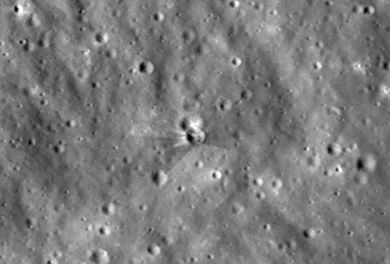
NASA has published images of the crater formed on the Moon after the Falcon 9 rocket stage crashed on August 5.
event image
IT&C knowledge
PHOTO │ NASA has published images of the crater formed by the impact of a SpaceX rocket with the Moon
event image
IT&C knowledge
NASA will conduct experiments in Spain and Iceland during the total solar eclipse on August 12, to study the Sun and the Earth's atmosphere.
app preview
Personalized news feed, AI-powered search, and notifications in a more interactive experience.

app preview app preview
solar system astronauts NASA

Editor’s Recommendations

main event image
Opinions
Yesterday 08:35

Andrei Pleșu: About public speaking

app preview
Personalized news feed, AI-powered search, and notifications in a more interactive experience.

app preview
app store badge google play badge
  • News
  • Exclusive
  • INSCOP Surveys
  • Podcast
  • EU
  • Diaspora
  • Republic of Moldova
  • Politics
  • Economy
  • Current Affairs
  • International
  • Sport
  • Health
  • Education
  • IT&C knowledge
  • Arts & Lifestyle
  • Opinions
  • Elections 2025
  • Environment
  • About Us
  • Contact
Privacy policy
Cookies Policy
Terms and conditions
Open source licenses
All rights reserved Strategic Media Team SRL

Technology in partnership with

anpc-sal anpc-sol