Six nominations enter the selection process for the 2026 Sakharov Prize



Always see our news on Google
Hussam Abu Safiya, Nayib Bukele, the International Criminal Court and its officials, Tundu Lissu, Taraneh and Romina Rahimi, and the Standing Together organisation have been nominated for the Sakharov Prize for Freedom of Thought. MEPs will narrow the list to three nominations on 19 October, and the laureate will be chosen three days later by the Conference of Presidents of the European Parliament.
Six nominations were presented for the 2026 Sakharov Prize for Freedom of Thought at a joint meeting of the European Parliament’s Committee on Foreign Affairs, Subcommittee on Human Rights and Committee on Development. The list includes individuals and organisations from Palestine, El Salvador, Tanzania, Iran and Israel, as well as the International Criminal Court and its officials.
In brief
Hussam Abu Safiya was nominated by the Greens and the Left groups.
Nayib Bukele, the president of El Salvador, is the nomination of the Europe of Sovereign Nations group, while the International Criminal Court and its officials were nominated by the Socialists and Democrats.
Tundu Lissu of Tanzania is supported by the European People’s Party and the European Conservatives and Reformists, while Taraneh and Romina Rahimi of Iran were nominated by Patriots for Europe.
Standing Together from Israel is the Renew Europe nomination.
AFET and DEVE will select three finalists on 19 October in Strasbourg, while the Conference of Presidents will decide the laureate on 22 October.
The nominations were presented on 1 October at a joint meeting of the three parliamentary bodies involved in the initial stage of the procedure. The presentation does not represent the selection of a shortlist of finalists or the awarding of the prize. All six nominations remain at this stage of the selection process.
Hussam Abu Safiya, presented by Parliament as a nomination from Palestine, was jointly proposed by the Greens and the Left. The official communication on the nominations does not include a detailed biography or the full reasoning submitted in support of the nomination, so these must be treated separately from the mere fact of the nomination.
The president of El Salvador, Nayib Bukele, was nominated by the Europe of Sovereign Nations group. His inclusion on the list represents that political group’s nomination and not an assessment or endorsement adopted by the European Parliament as a whole.
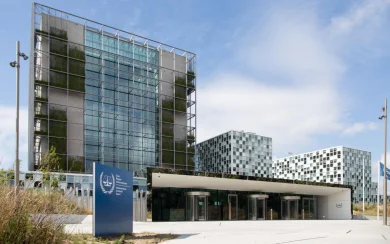
The Socialists and Democrats nominated the International Criminal Court and its officials. The wording used by Parliament includes both the international organisation and the people working within it. The nomination should not be confused with the ICC’s selection for the final list of three or with the awarding of the prize.
Tundu Lissu of Tanzania was jointly nominated by the European People’s Party and the European Conservatives and Reformists group. In this case too, the presentation communiqué identifies the nomination and the groups that supported it, without providing in the material consulted the full biography and justification submitted as part of the procedure.
Patriots for Europe proposed the joint nomination of Taraneh and Romina Rahimi from Iran. Renew Europe nominated Standing Together, an organisation from Israel. The six nominations are presented by Parliament in alphabetical order, without any ranking among them.
The Sakharov Prize procedure separates nomination from final selection. A nomination may be put forward by a political group in Parliament or by at least 40 MEPs, and each MEP may support only one nomination.
After the nominations are submitted, the supporting documents are examined within the parliamentary bodies responsible for foreign affairs, development and human rights. The next step is to reduce the list to three nominations.
In 2026, this vote is scheduled for 19 October in Strasbourg. Members of the Committee on Foreign Affairs and the Committee on Development will decide on the shortlist of three candidates to be sent to the Conference of Presidents.
The Subcommittee on Human Rights participates in the assessment and presentation of the nominations, but the selection of the list of three is made by a vote of AFET and DEVE, according to Parliament’s official procedure.
The final decision is scheduled for 22 October. The Conference of Presidents brings together the President of the European Parliament and the leaders of the political groups, and is the body that selects the laureate from among the three remaining nominations.
The Sakharov Prize for Freedom of Thought is awarded by Parliament to individuals or organisations involved in defending human rights and fundamental freedoms. Its criteria include freedom of expression, minority rights, respect for international law, the development of democracy and the rule of law.
The prize is worth EUR 50,000 and may be awarded to an individual, association or organisation. The candidate’s nationality, place of residence or registered office do not constitute criteria limiting eligibility.
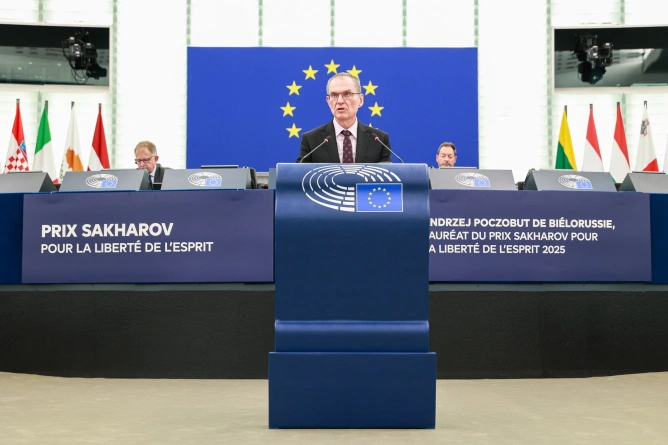
In 2025, the European Parliament awarded the Sakharov Prize to journalists Andrzej Poczobut and Mzia Amaglobeli. They are mentioned in the current communication as the laureates of the previous edition, before the decisive stage for the 2026 prize begins.
The presentation on 1 October therefore represents the beginning of the public selection phase among the submitted nominations. At this stage, none of the six nominations can be described as a finalist or laureate, and the result will first depend on the vote on 19 October and then on the decision of the Conference of Presidents on 22 October.
https://2eu.brussels/ro/news/sase-candidaturi-intra-in-selectia-pentru-premiul-saharov-2026
Latest News
22:57
22:50
22:36
22:14
21:56
See more news
NEWS ON THE SAME TOPICS
.webp)
.webp)