The Commission launches the strategy for gender equality 2026-2030 and warns that, at the current pace, the EU is over 50 years away from full equality.



Always see our news on Google
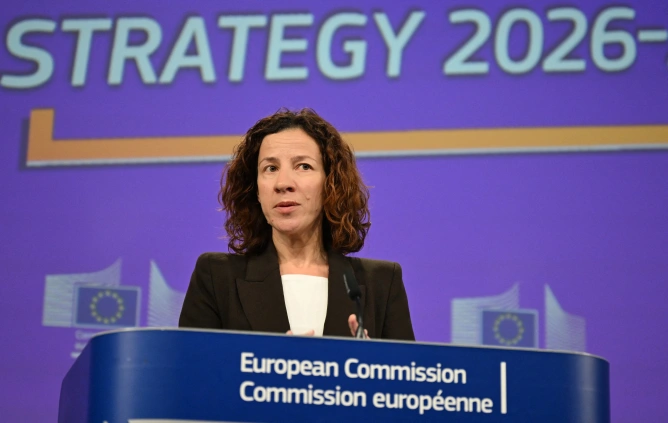
The European Commission has presented the Gender Equality Strategy 2026-2030, a new framework that extends the EU's action from gender-based violence and cyber violence to women's health, political participation, pay and pension gaps, education, and the labor market, warning that, at the current pace, the Union would need over 50 years to achieve full equality between women and men.
The European Commission has presented the Gender Equality Strategy 2026-2030, warning that, at the current pace, the European Union would need over 50 years to achieve full equality between women and men and announcing a new phase of measures targeting gender-based violence, including cyber violence, women's health, equal access to the labor market, political participation, and the integration of gender equality into EU policies and budget.
In short
1. The Commission states that, at the current pace, it would take over 50 years to achieve full equality in the EU, while one in three women has experienced gender-based violence in their lifetime.
2. The new strategy emphasizes combating violence against women, including cyber violence, sexual deepfakes, deepnudes, and online abuse, by implementing the directive on violence against women and applying the Digital Services Act.
3. For the first time, health is treated as a distinct area in the strategy, with a joint initiative with the World Health Organization focusing on research, diagnosis, and treatments sensitive to gender dimensions.
4. The strategy aims to reduce pay, pension, care, financial literacy, and investment gaps, as well as increase women's participation in STEM and leadership positions.
5. The Commission links gender equality to economic competitiveness, stating that reducing employment and pay gaps could increase GDP per capita by up to 10% and could generate up to 10 million additional jobs by 2050.
The European Commission has presented the new Gender Equality Strategy 2026-2030, a document that transforms the roadmap objectives for women's rights into concrete actions and extends the European gender equality agenda to new areas, from cyber violence and risks related to artificial intelligence to women's health, political representation, and participation in the labor market. The Commission states that, although progress has been made, estimates from the European Institute for Gender Equality show that, at the current pace, it would still take 50 years for the EU to achieve full equality between women and men.
The strategy is also presented as a political response to the global backlash on women's rights. Executive Vice-President Roxana Menzatu stated that "gender equality is not a luxury, it is a necessity" and that "at a time when we see a backlash against women's rights in some parts of the world, we must be very clear, Europe will not go backward." Menzatu said that the first objective of the strategy is "to make gender equality a lived reality," and the second is to adapt the European response to the present, in conditions where "violence, discrimination, and gender-related prejudices have moved online. Our response must do the same."
The Commission places combating gender-based violence at the center of the new strategy. According to explanations accompanying the document, one in three women in the EU has experienced gender-based violence in their lifetime, 18 women die every week in the Union due to femicide, and one in five women has suffered physical or sexual violence from a partner, ex-partner, relative, or another person in the household. The strategy insists on implementing the directive on violence against women ahead of the transposition deadline in June 2027 and pays special attention to cyber violence, including the removal of illegal content and support for victims.
In this area, the Commission announces regulatory dialogues with very large online platforms and the application of the guarantees from the Digital Services Act to combat sexual deepfakes, deepnudes, and other forms of online abuse. Commissioner Hadja Lahbib stated that "we are taking measures against explicit sexual deepfakes. 98% of AI-manipulated images are pornographic, and 99% of these feature women." She added that "gender-based online violence is a systemic risk that online platforms must address, and we are applying the rules" and that "freedom of expression must never become freedom to abuse."
The strategy extends, for the first time, the gender equality agenda to a distinct chapter on health. The Commission announces a joint initiative with the World Health Organization to improve the quality and accessibility of healthcare services for women and emphasizes that health is not gender-neutral. Explanatory documents show that the lack of medical research, diagnoses, and treatments sensitive to gender dimensions affects women's health, and the Commission will work with the European Medicines Agency to analyze the feasibility of introducing gender-sensitive controls in the formulation, authorization, and administration of medicines. Lahbib summarized this change by stating that "for the first time, health policy is brought to the forefront in our Gender Equality Strategy" and that "women are still underdiagnosed in heart diseases. Too much medical research still ignores sex differences. And women's pain is too often minimized."
The document also includes an explicit dimension regarding sexual and reproductive health. In the Q&A, the Commission shows that it will map practices and international frameworks to support member states' action in this area, following the communication adopted in response to the European citizens' initiative My Voice My Choice. Menzatu made a direct link between the two files, stating that "last week we adopted a clear position on providing access to support for vulnerable women who need medical care. It was a great achievement. My Voice, My Choice has been heard." In parallel, the Commission launches the SHIELD initiative to improve access to sexual and reproductive health in crisis situations and to support survivors of gender-based violence.
On the economic and social front, the strategy maintains a focus on reducing persistent gaps. The Commission's documents indicate a 12% pay gap and a 25% pension gap in the EU, while the cost of the employment difference between women and men is estimated at over 390 billion euros per year. The Commission explicitly links gender equality to competitiveness and productivity, and the cited estimates show that reducing employment and pay gaps could bring a 9.6% increase in GDP per capita, equivalent to 3.15 trillion euros, and 10.5 million additional jobs by 2050. Menzatu stated that "Europe cannot afford to waste talent" and that "investing in our human capital, in skills, and in quality jobs can generate growth." She added that "if we succeed, the gains can be truly significant" and that "closing gender gaps in employment and pay could increase the EU's GDP per capita by up to 10% and could create up to 10 million additional jobs by 2050."
The strategy announces support for implementing the directive on pay transparency, exchanges of good practices regarding the fight against period poverty and menopause-related poverty, as well as cooperation with the European Investment Bank to improve access to financing for women entrepreneurs and their representation in the financial sector. In her speech, Menzatu also highlighted the dimension of poverty, stating that the future European anti-poverty strategy will address the reality that poverty disproportionately affects women.
In education and the labor market, the Commission wants to attract more girls and women into STEM, as well as increase the presence of boys and men in traditionally female-dominated fields. The strategy announces a new action plan regarding women in research, innovation, and startups and the continuation of initiatives to train a million girls and young women in STEM by 2028. Menzatu stated that "a year ago we launched the Skills Union, with a clear goal, a million girls in STEM by 2028" and that "we are on the right track, with already over 280,000 women and girls benefiting from the STEM education strategic plan." In parallel, the Commission will adopt a "Boys in HEAL" approach to encourage boys to study and work in health, education, administration, and literacy. Lahbib summarized this logic by stating that "boys and young men are not spectators in this change. They are partners" and that "talent has no gender. We cannot afford to waste any of it."
The strategy pays distinct attention to women's participation in politics and their safety in public spaces. The Commission will update the mapping of measures in member states to support women's participation and leadership in politics, public administration, and parliaments and will present a recommendation on safety in politics, with special attention to women. Lahbib stated that "when women reach the top, they often become targets" and that "democracy cannot function if women are driven out of public life through intimidation." She added that the EU will propose "a clear recommendation on safety in politics to protect political candidates and elected representatives from threats, offline and online, including disinformation."
The Commission also places a new emphasis on involving men and boys in promoting gender equality and combating anti-gender narratives, especially in the online environment. The strategy provides for a study on networks and online narratives targeting young men and boys and community-building measures to counter polarization and information manipulation. Lahbib stated that "true equality unites. It does not divide" and that the EU will confront "toxic narratives that lure young men and boys into a world of hate."
From a budgetary perspective, the Commission reminds that gender equality is a cross-cutting priority in EU funds. Explanatory documents indicate 271 million euros allocated to gender equality through the CERV program 2021-2027 and 4.3 billion euros from the EU contribution to ESF+ for actions directly targeting gender equality in the same period. In her speech, Menzatu went further and emphasized that nearly 85 billion euros from ESF+ contributes to gender equality, of which over 4 billion euros specifically. The strategy also provides for strengthening the integration of the gender perspective in the next multiannual financial framework and in a future AgoraEU program, which would include a dedicated pillar for gender equality and combating gender-based violence.
In the political message accompanying the strategy, Roxana Menzatu stated that "I cannot accept that in 2026 school results, career opportunities, medical treatments, and political participation still depend on gender" and that the fact that "one in three women in the EU has been a victim of physical or sexual violence is simply unacceptable." She presented the strategy as "an invitation for everyone to work together to ensure truly equal opportunities for women and men, in the spirit of the Union of Equality," emphasizing that "a gender-equal society means a stronger economy and a more robust democracy." Hadja Lahbib added that "gender equality is the engine of strong democracies" and that the new strategy must be "a moment of legacy for Europe, and this legacy must be one of action." She further stated that "while others turn back the clock on gender equality, the European Union moves forward. We will protect hard-won rights, reignite stalled progress, and respond to backlash with courage and clarity."
The Gender Equality Strategy 2026-2030 continues the framework launched for the period 2020-2025 and translates the roadmap objectives for women's rights, approved in 2025 by the member states, into concrete measures. The Commission states that the new strategy will be implemented through already adopted legislation, including the directive on violence against women, the directive on pay transparency, rules on work-life balance, and gender balance rules in boards of directors, but also through new policy instruments, from thematic action plans to the future European Product Act, the future Quality Jobs Act, and external initiatives such as Gender Action Plan IV and the Women, Peace and Security plan for 2028-2034.
Latest News
23:12
22:53
22:53
22:25
22:06
See more news
NEWS ON THE SAME TOPICS