The European Union clarifies the rules for green labels, so that companies no longer sell products with vague promises about the environment.



Always see our news on Google
The European Commission welcomes the agreement of national consumer protection authorities regarding the application of rules that will limit vague or misleading environmental claims, such as "green", "eco", "climate friendly" or "carbon neutral". The directive on empowering consumers for the green transition will apply from September 27, 2026, and authorities will take into account the real difficulties faced by companies for products already manufactured or in stock, preferring preventive measures before sanctions when there are practical constraints.
The European Commission welcomes the agreement of national consumer protection authorities regarding the application of new European rules for green labels, sustainability claims, and information about product durability. The rules will start to apply on September 27, 2026, and aim to limit greenwashing, that is, the use of vague, unverified environmental messages or presented in a way that may make products seem more environmentally friendly than they are.
In short
The directive on empowering consumers for the green transition applies from September 27, 2026.
Member states had until March 27, 2026, to transpose the directive into national legislation.
National consumer protection authorities have established a common understanding for the application of the rules, including for products already manufactured or in stock.
Generic claims such as "green", "eco-friendly", "climate friendly" or "biodegradable" will be prohibited if the company cannot demonstrate an excellent recognized environmental performance.
Private sustainability labels will need to be based on credible, transparent certification schemes verified by independent third parties.
The new rules amend two existing European acts: the Directive on Unfair Commercial Practices and the Directive on Consumer Rights. They do not establish how a product should be manufactured, but how it can be presented to consumers through packaging, advertising, labels, online interfaces, trade names, and marketing communications.
The change affects how companies use environmental and sustainability messages. Terms such as "green", "eco-friendly", "nature's friend", "climate friendly", "energy efficient", "biodegradable" or similar formulations cannot be used generically if the claim is not clarified on the same medium or if an excellent recognized environmental performance cannot be demonstrated.
Excellent recognized environmental performance can be demonstrated through the EU Ecolabel, through officially recognized national or regional labeling schemes of the EN ISO 14024 type in member states, such as Nordic Swan, Blue Angel, Austrian Ecolabel, or Dutch Ecolabel, or through top performance established by other applicable European standards, for example, in the context of energy labeling.
The difference between a vague claim and a specific one becomes important for traders. A claim such as "climate-friendly packaging", without further explanation, may be treated as a generic promise. A formulation like "100% of the energy used to produce this packaging comes from renewable sources" is a specific claim but must be supported by evidence and presented correctly.
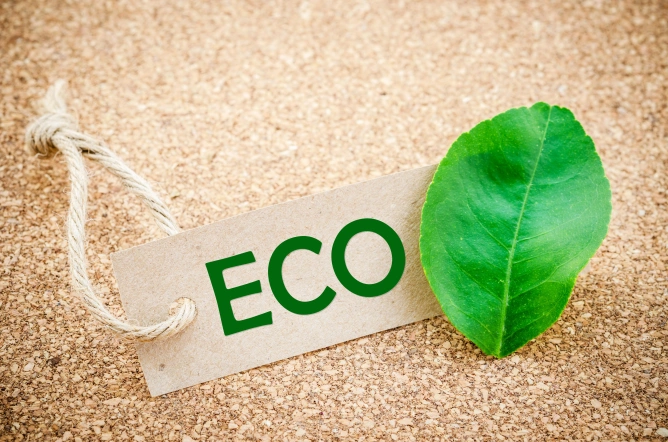
The rules also target visual presentation. Green leaves, water droplets, colors, natural symbols, or logos can create an impression of ecological benefit, especially when combined with texts about sustainability or natural ingredients. Authorities will analyze the effect on the average consumer, not just whether the claim is explicit.
Brand or product names are not automatically protected by the rules regarding greenwashing. If a trade name uses terms such as "green", "eco", "natural" or "climate neutral" in a context that creates an environmental association for the average consumer, it may be evaluated as an environmental claim. Intellectual property rights do not block the application of consumer protection legislation.
Claims related to climate neutrality are treated strictly. Promises such as "carbon neutral", "climate neutral", "carbon compensated" or "carbon positive" are subject to the rules for generic environmental claims. Additionally, claims about a product stating that it has a neutral, reduced, or positive impact on the environment in terms of greenhouse gas emissions, if based on offsetting emissions outside the product's value chain, will be prohibited.
A relevant example is a flight presented as "climate neutral" because the airline invests in a reforestation project in another region. The rules allow for the communication of investments in environmental projects, including carbon credits, but do not allow these to be used to suggest that the consumed product has no climate impact if the reduction does not result from the actual life cycle of the product.
Sustainability labels will need to be more credible. A private label cannot be displayed if it is not based on a certification scheme or is not established by a public authority. A certification scheme must have public requirements, monitoring by an independent third party, transparency, credibility, and open access for traders who can meet the conditions.
Existing labels do not receive an additional transition period after September 27, 2026. If they do not comply with the new requirements, the schemes must be adapted, and the associated labels must be removed from commercial communications.
The rules also include claims about future environmental performance. Companies that promise the transition to climate neutrality or other future goals must have clear, objective, public, and verifiable commitments, with a realistic implementation plan, measurable milestones, and clear deadlines. The plan must be periodically verified by an independent expert, and the verification findings must be accessible to consumers.
The directive also covers social promises used in communication to consumers. Claims about working conditions, fair wages, social protection, workplace safety, human rights, equality, diversity, social initiatives, ethical commitments, or animal welfare must not be presented in a misleading way.
Another element concerns irrelevant benefits. A company cannot present as a distinctive advantage something that does not matter for the product or does not result from a real characteristic of the product or company. Examples from the Commission's document include "bottled water without gluten" or "paper without plastic", when such claims create the impression of a special advantage, even though the characteristic is irrelevant or common to the category.
National consumer protection authorities have agreed on a common approach for products already manufactured, ordered, distributed, or on shelves before the application date. In these cases, authorities will take into account real transition difficulties and practical constraints, such as stock volumes, product lifespan, and technical feasibility.
The Commission shows that companies may have practical options for existing products. They can cover or correct claims with stickers, can add additional information at the point of sale, or can take other proportional measures so that the product does not mislead after September 27, 2026.
Authorities will retain the ability to sanction violations, but the common agreement encourages them to take into account reasonable and proportional efforts by companies. In cases with real difficulties and practical constraints, authorities will prefer preventive measures before sanctions, including clarifications for the targeted companies.
Henna Virkkunen, Executive Vice-President for technological sovereignty, security, and democracy, stated that companies must also be supported in applying the rules and that economic realities must be taken into account. She stated that the common understanding ensures an orderly, fair transition for both companies and consumers.
Michael McGrath, Commissioner for democracy, justice, rule of law, and consumer protection, stated that people need clear and reliable information to make sustainable choices. He emphasized that the application of the rules must be consistent and proportional in the single market.
The new rules also include information about repairability and durability. From June 20, 2025, new smartphones and tablets introduced to the EU market must display an energy label that includes a repairability score. From September 27, 2026, traders will need to provide consumers, when the information is available from manufacturers, clear data about durability, repairability, and the minimum period of software updates.
Latest News
00:32
22:56
22:37
22:23
22:09
See more news
NEWS ON THE SAME TOPICS