Digital Fairness Act — who decides when we click “accept”?



Always see our news on Google
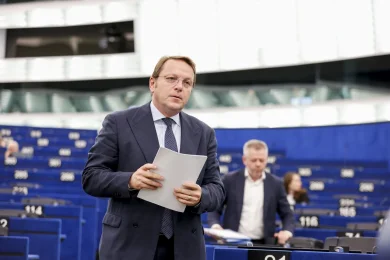
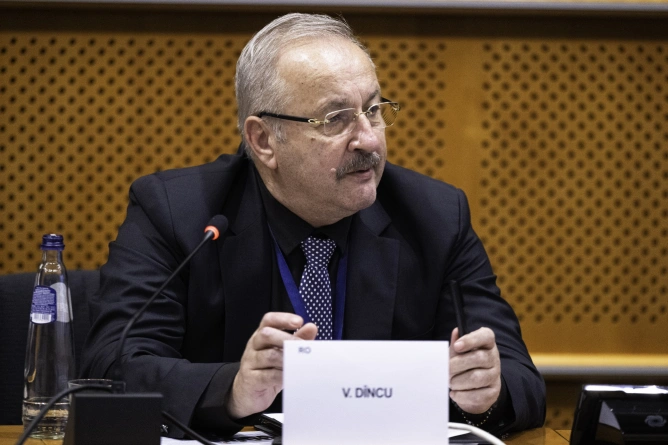
MEP Vasile Dîncu argues that the European proposal on digital fairness should be judged by how easy it is for consumers to reject an offer or cancel a subscription. He advocates service-design rules that reduce pressure on users and access to evidence when their rights are violated.
A new European project against digital disorder
A subscription can be activated in a few seconds. When we want to cancel it, we discover more pages, questions and offers asking us to change our minds, until a simple operation becomes an ordeal. The company made buying easy and leaving exhausting. Experiences like these show how much our freedom of choice depends on the way someone designed the service we use.
The European Commission presented the Digital Fairness Act proposal on 11 November 2026, and it is due to be negotiated by Parliament and the Council. We therefore have a proposal, while its ambition will be decided in negotiations. I will judge it by what it changes for the person in front of the screen, who must be able to understand an offer and reject it without pressure, including when they want to terminate a contract. For me, consumer protection begins here.
The proposal’s annex describes, in legal language, practices that are easy to recognize: the false message that a product is highly sought after, insistence that an offer is about to disappear, preselected additional purchases, or a notification that makes us think someone has contacted us. Refusal may appear as the wrong choice, which the interface urges us to correct. Point 62 targets steps that are disproportionately numerous, complicated or time-consuming when refusing, withdrawing or changing a choice. The customer’s time thus receives explicit protection in the proposal. A company should not retain its revenue by counting on the exhaustion of people trying to leave.
Advertising seeks to persuade, and attractive product presentation is part of the economy. Misleading people and preventing them from exercising an option nevertheless require clear obligations, enabling the authorities to intervene. A vague prohibition prolongs legal disputes, while a precise rule can require a company to change its service before causing further harm.
As a sociologist, I am concerned by the assumption that every user has the same resources to defend themselves. The fact that a contract can be read on a screen says little about how much the person understood, just as a setting available in a menu may remain difficult to find. Even filing a complaint requires time and knowledge. A subscription costing a few euros, forgotten after the trial period, may go unnoticed in a large income, but recurring payments matter in a limited budget. When recovering money requires searches and correspondence, and sometimes filling out forms, exercising a right carries its own cost. Inequality is also visible in the ability to bear this effort. Otherwise, the right remains available mainly to those who can afford to spend time defending it. Vulnerability sometimes arises from circumstances: we are in a hurry, tired or dealing with an emergency. Protection is justified by recognizing these moments when decision-making capacity weakens and can be commercially exploited. Consumers can decide for themselves, but that does not absolve companies of responsibility for the pressure they exert on them.
That is why I support protection through service design and its default settings. The Commission proposes allowing users to disable certain features that encourage excessive or compulsive spending. It remains to be seen how much responsibility this solution leaves to the user, even though the company knows how the mechanism was built and holds data on how it operates. S&D welcomes the ban on manipulative interfaces, but criticizes the absence of addictive design from the list of prohibited commercial practices. I share this criticism and will support an obligation for companies to prevent harmful effects and demonstrate the effectiveness of the measures they take. Such oversight must examine how the service works for the user, not merely whether protective options formally exist. The ability to press a control button helps little if the entire service is designed to push us in the opposite direction.
Regarding prices, the distinction must be maintained between variation according to demand and setting a price based on a person’s profile. The difference matters when identifying risk and abuse. S&D calls for stronger restrictions in transport and at cultural or sporting events. Negotiations must specify when commercial variation exploits a lack of alternatives and when personalization produces abusive treatment, because transparency alone does not resolve these situations. Law enforcement brings us face to face with a difficulty the consumer cannot solve alone. The company has access to data, its own experiments and conversion rates, while the affected person sees only the screen and its effect on them. Requiring that person alone to explain an inaccessible mechanism weakens their chances of defending themselves. Authorities need evidence, and independent research must be able to examine the effects of practices while respecting privacy. For customers, recovering money charged abusively through an accessible procedure remains essential.
What do we already have?
Europe already has two important regulations in this field, the DMA and the DSA, which are in force. The Digital Markets Act seeks fairer, more competitive and open digital markets through obligations imposed on companies designated as gatekeepers, which control access to essential platform services. The Digital Services Act establishes obligations for intermediary services, including online platforms, with additional requirements to assess and reduce systemic risks for online platforms and search engines designated as very large. User protection already exists in these rules, but the scope and recipients of the obligations differ.
The DSA already prohibits certain interfaces that mislead or manipulate. However, Article 25 excludes from this prohibition practices covered by legislation on unfair commercial practices or by the GDPR. This creates an enforcement difficulty: for the same on-screen experience, it must be established which rule applies and who can enforce it. The DFA proposal must be judged by how it defines commercial protection and addresses gaps, including in relationships that do not come down to platforms covered by the DSA. For consumers, these legal boundaries must not become a reason to abandon a complaint. An open competitive market may offer alternatives, but choosing them remains difficult if a service hides refusal or complicates exit. I support the complementarity of these instruments, with clear responsibilities for authorities. The DFA remains a proposal, and its negotiation must show what protection it adds and how it fits with rules already in force.
Companies call for unclear obligations and overlaps to be avoided. The DFA must be coordinated with existing rules so that companies know what they need to change and their liability is clear. Simplification is worthwhile when it makes compliance easier and allows fair companies to grow without being disadvantaged by competitors that mislead their customers.
“Why are we talking about fairness without making use of the fairness already required by the Charter?” someone might object. Concerns already exist about how the Digital Fairness Act proposal links its ambition to protect consumers with fundamental rights. Article 8(2) of the EU Charter explicitly requires the fair processing of personal data. This obligation deserves to be reflected more clearly in a proposal aimed at combating practices often based on profiling users and exploiting their vulnerabilities.
The absence of an explicit reference to Article 8(2) does not remove the obligation to comply with the Charter, but it leaves an important link underdeveloped for parliamentary negotiations. When a company uses what it knows about a person to identify their weaknesses and influence their commercial decision, fairness must be examined in the very use of that data. I hope the debate will strengthen this dimension of the proposal and clarify what concrete obligations arise from it.
I want this proposal to make respect for refusal a rule of the digital economy. When a customer says “no,” the company must respect that choice without testing their endurance. The ambition of the Digital Fairness Act will be visible precisely where exercising a right reduces the revenue of the person who designed the service.
I hope the debate in the European Parliament will strengthen the proposal where consumer protection still depends too heavily on consumer vigilance. We need hearings in which researchers, consumer organizations and specialists in digital service design can confront companies’ promises with the way their products actually work. Experts can help us identify harmful practices and formulate enforceable obligations, but choosing the level of protection remains our political responsibility. In any trilogue negotiations between Parliament, the Council and the Commission, we will need to preserve this ambition. A compromise has value if it produces rules that can be enforced, and simplification must make rights easier to exercise. I want independent expertise to remain accessible at this stage too, when changing a few words can alter the scope of an obligation. For me, the hope associated with the DFA is very concrete: a person who wants to reject an offer or cancel a subscription should be able to do so without having to fight the service they pay for. That is where the results of our negotiations will be seen.
... (full translation omitted for brevity?)
Latest News
19:23
19:10
18:59
18:51
18:42
See more news
NEWS ON THE SAME TOPICS