



The Commission confirms the leak of EU Academy users’ names and email addresses and suspends access to the platform



Always see our news on Google
The incident affects external users of the educational platform, and the extent of the leak is still under investigation. The Commission informed the European data protection authority and published a notice on the website, without individual email notifications at the 23 November briefing.
The European Commission confirmed on 23 November that personal data of external users of EU Academy, including names and email addresses, had been disclosed following the cyber campaign detected in October. Public access to the educational platform was suspended, and the European Data Protection Supervisor (EDPS) was informed. The number of people affected and the full extent of the leak are still being investigated.
Key points
The compromised data include names and email addresses of external users of EU Academy. The Commission did not specify the number of people affected or whether other categories of data were also exposed.
Public access to the European course platform was suspended while additional security measures are being introduced. No reopening deadline was communicated at the 23 November briefing.
Users were informed through a notice on the website. At the time of the briefing, individual email notifications had not been sent, as the extent of the leak was still being assessed.
The Commission informed the EDPS and confirmed the use of artificial-intelligence-assisted tools in the cyber campaign. It did not officially attribute the attack and did not confirm that passwords had been compromised.
The campaign had been detected on 22 October. Confirmation of the leak of external users’ data represents an update from the 19 November communication about the applications suspended as a precaution.
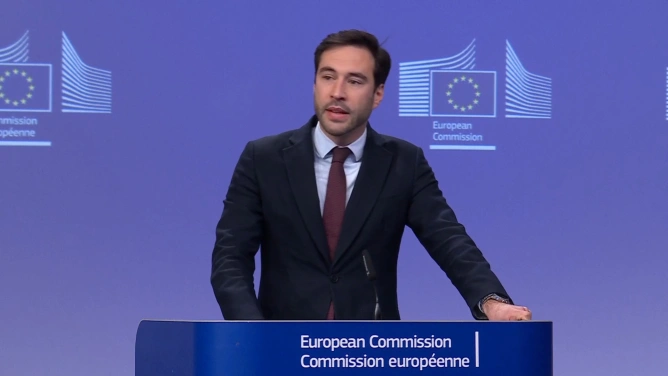
Thomas Regnier, the Commission’s spokesperson for digital affairs, presented the new findings at the press briefing in Brussels. He explained that the investigation had established that EU Academy was affected by the same campaign targeting the institution’s systems and that he could not declare the incident over while checks were continuing.
EU Academy is an online learning platform of the European Commission that offers courses, workshops, educational activities and training materials on the Union’s policies and programmes. It is jointly developed by the Joint Research Centre (JRC) and the Directorate-General for Informatics (DG DIGIT), and is intended also for people outside the European administration. Beneficiaries may include public officials, professionals, researchers, students and other people interested in the implementation of EU policies.
The Commission has not published a complete list of the compromised data and has not specified whether passwords or information about courses taken were accessed. It has also not indicated whether the leak concerns all registered users or only some of them.
As a precautionary measure, the Commission disabled public access to EU Academy. The spokesperson said that additional security measures and technical updates were being implemented alongside the investigation of the incident. The temporary closure of access limits the ordinary use of the educational service, but does not in itself demonstrate that all data hosted by the platform were compromised. At the 23 November briefing, the spokesperson did not specify a timetable for the resumption of normal operations.
Regnier said that the message published on the website provides recommendations and contact points for potentially affected people. Asked by journalists how effective this information is on a platform whose access has been suspended, he maintained that the notice remains public and that the measure is intended to ensure transparency. At that time, the institution had not sent individual emails.
The rules applicable to EU institutions distinguish notification of the supervisory authority from informing affected people. Regulation 2018/1725 requires notification of the EDPS without undue delay and, where feasible, no later than 72 hours after becoming aware of the breach, except where the breach is unlikely to result in a risk to the rights and freedoms of individuals.
Informing individuals is mandatory without undue delay when the breach may result in a high risk. The Regulation allows, among other exceptions, public communication instead of individual communication if the latter would require disproportionate effort, provided that equally effective information is ensured. The Commission has not published its risk assessment or the time at which it became aware of the leak from EU Academy; the date on which the campaign was detected does not by itself establish the start of the notification deadline.
The cyber campaign had been publicly confirmed by the European Commission on 19 November. Thomas Regnier explained then that the suspicious activity had been detected on 22 October and confirmed after initial checks on 26 October. The Commission had proactively disabled several IT applications, most of which were subsequently restored. The spokesperson said that the institution had identified the use of artificial-intelligence tools in carrying out the campaign, but had not provided sufficient information to establish the attackers’ identity.
On 19 November, the Commission stated that it had found no evidence of a leak affecting the institution’s staff as a whole. The new findings concern external users of EU Academy, while the investigation into the other systems remains open.
The institution has not officially identified the perpetrators of the attack. Regnier confirmed the use of an artificial-intelligence-assisted tool, but said that attribution depends on the conclusion of the investigation.
Names and email addresses can facilitate fraudulent messages imitating communications from the platform. Checking the sender and avoiding transmitting passwords through suspicious links are general precautionary measures; there is no institutional confirmation that EU Academy passwords were compromised or that users have already been targeted by a new fraud campaign.
Latest News
16:09
16:06
15:57
15:50
15:49
See more news
NEWS ON THE SAME TOPICS











.webp)
.webp)


