
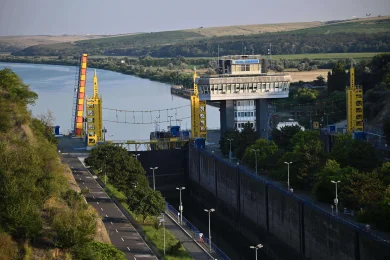
Before approving the report, the authorities took measures amid the decline in the Danube’s flow: the National Committee for Emergency Situations (CNSU) adopted a phased plan that was to be activated if the water level fell below 1.58 meters in the water intake basin at Cernavodă, with temporary modular interventions (vessels directing the water, followed by a closure with pontoons) and, if necessary, the use of high-capacity pumps. The decision was published in the Official Gazette no. 741 of September 2, 2026.
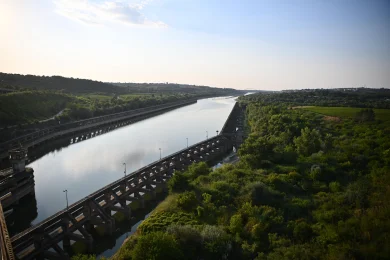
A few weeks earlier, works to ensure raw cooling water involved dredging and redistributing the flow in the Cernavodă area: three dredging machines intervened to reshape the riverbed and redirect part of the flow, while the Lower Danube River Administration and the National Administration “Apele Române” carried out operations including in areas such as Caragheorghe-Turcescu and Cochirleni, at costs of 7 million lei for sinking barges at the mouth of the Bala Branch and 5.1 million lei for dredging 100,000 cubic meters. In the first stage, the works cost 12.1 million lei.
In the same context, interim Prime Minister Ilie Bolojan announced the unblocking of the “Bala 2” project through an interministerial group, presenting the project as a set of hydraulic engineering and dredging works that, according to the cited data, could raise the water level on the Old Danube by more than one meter and could almost double the flow; he also mentioned the intention to organize the tender for the design and execution.






.webp)